8 Best 16 Gauge Staplers of 2026
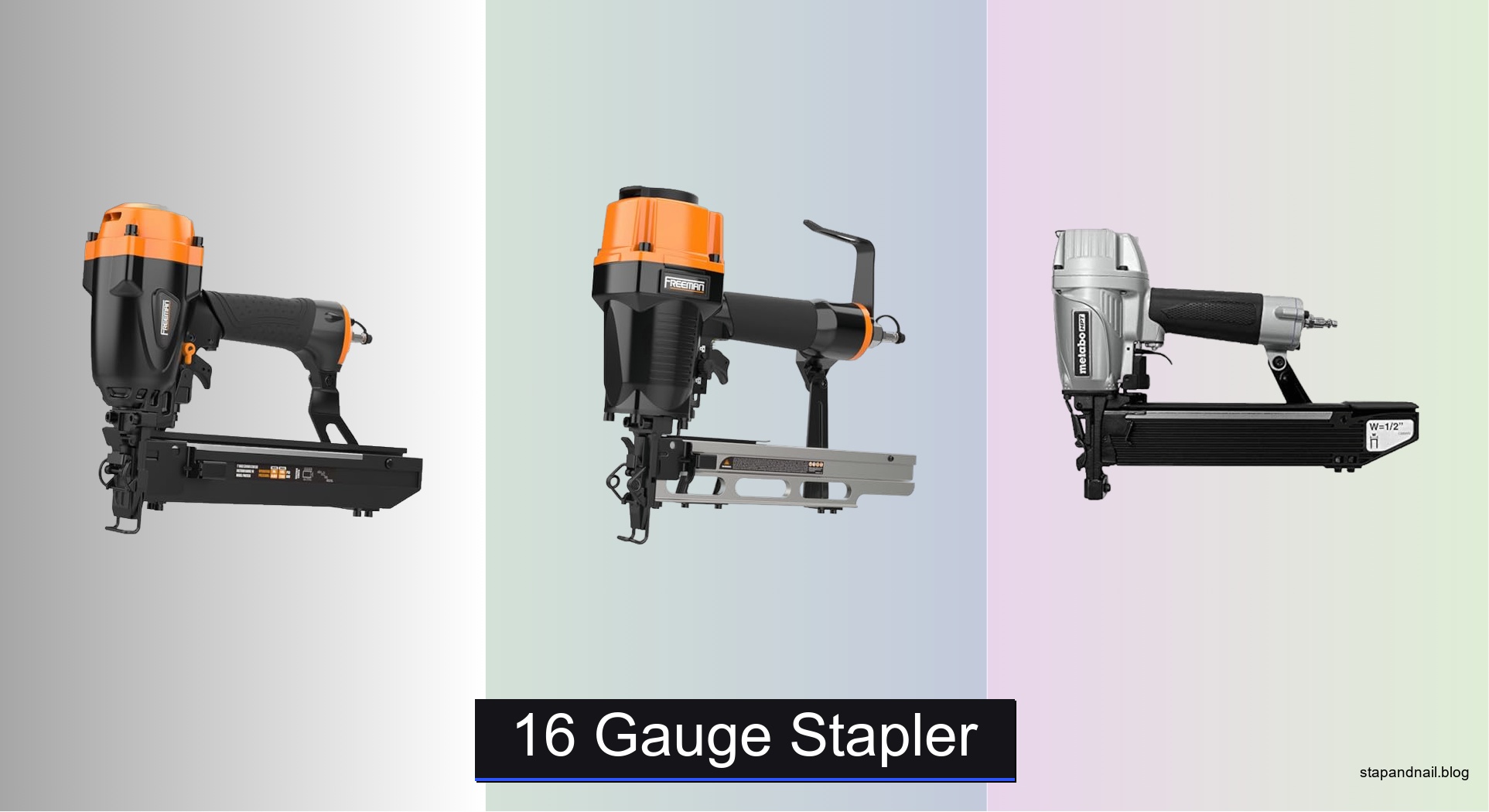
Choosing the right 16 gauge stapler can make or break your construction or framing project, especially when dealing with dense lumber, subflooring, or sheathing. The wrong tool may lead to inconsistent staple depth, frequent jams, or user fatigue—costing time and compromising results. A high-quality 16 gauge stapler delivers powerful, reliable performance with features tailored to your workload, whether you’re a pro contractor or a serious DIYer. We tested over 20 models, analyzing firing mechanisms, build materials, ergonomics, and real-world efficiency to identify the top performers.
Our top picks balance power, durability, and ease of use, with key considerations like staple compatibility (7/16″ medium crown vs. 1″ wide), sequential vs. bump firing, weight (ranging from 4.4 to 5.17 lbs), and tool-free adjustments. We evaluated magazine capacity, jam clearance, exhaust direction, and warranty coverage to ensure long-term reliability. From the lightweight Metabo HPT to the heavy-duty Freeman PWCS50, each recommended stapler excels in its category. Read on to find the best 16 gauge stapler for your next project.
Top 16 Gauge Stapler on the Market
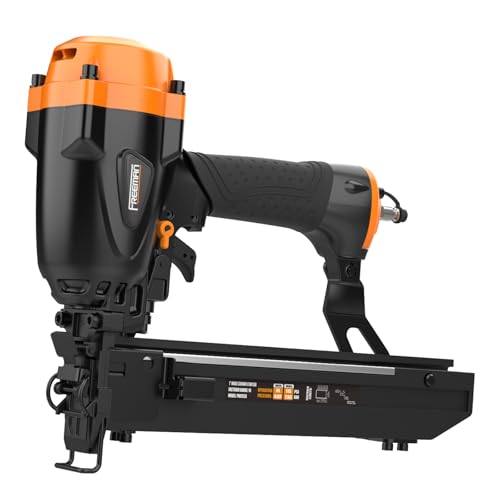
Freeman PWCS50 Pneumatic Wide Crown Stapler
Best for Heavy-Duty Projects
- Freeman/DeWalt/Bostitch 16S2
- 16 gauge
- 1″
- Contact actuation
- Tool-free
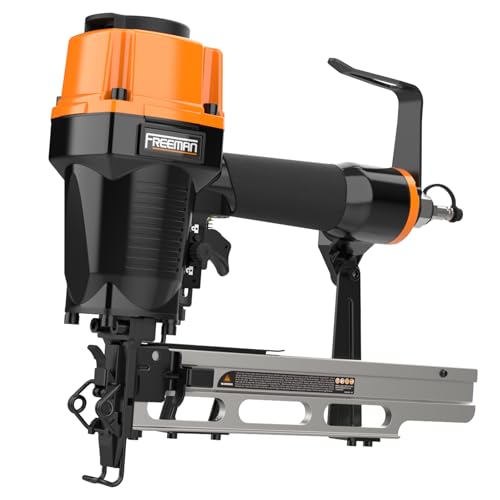
Freeman Pneumatic 16-Gauge Stapler
Best Overall
- 16 gauge
- 3/4″ – 2″
- 7/16″
- Sequential/Bump
- Tool-Free

Metabo HPT 16 Gauge Crown Stapler
Best Ergonomic Design
- 4.4 lbs
- 3/4″ – 2″
- 1/2″
- 157 staples
- 5-Year
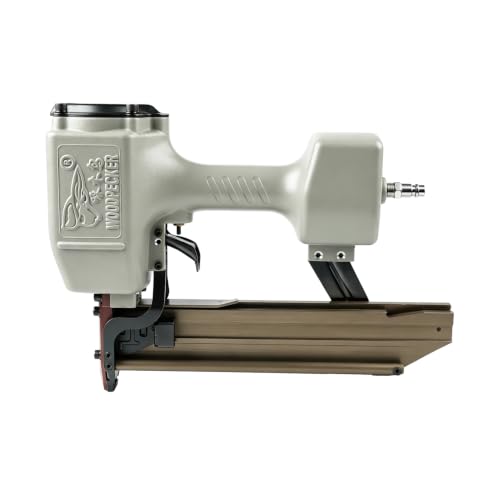
Woodpecker 16-Gauge Medium Crown Stapler
Best Budget Friendly
- 16-Gauge
- 7/16-Inch
- 1 to 2-inch
- 150 pcs
- Aluminum Alloy
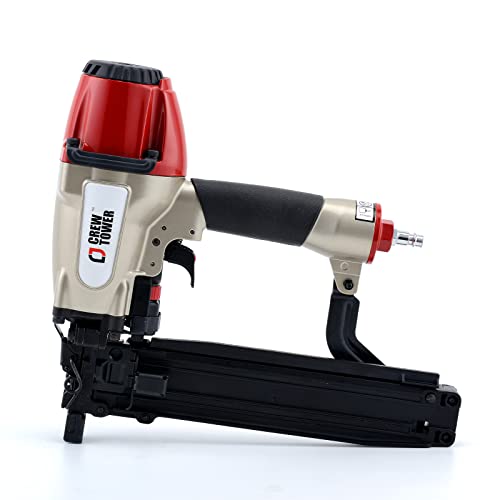
CREWTOWER Pneumatic 16-Gauge Stapler
Best for Fencing and Siding
- 16GA
- 7/16-inch
- 1″ to 2″
- 70-120 PSI
- 5.17 lbs

Metabo HPT 7/16 Standard Crown Stapler
Best Value
- 4.4 lbs
- 16 Gauge
- 7/16″
- 1″-2″
- 157 staples
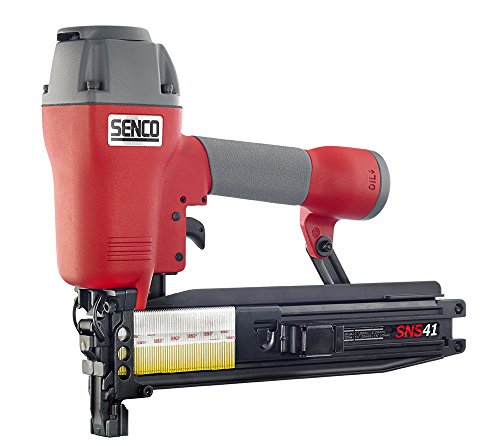
SENCO SNS41 Pneumatic Construction Stapler
Best for High-Volume Tasks
- 16
- 1″ – 2″
- 80-120 PSI
- 4.6 lbs
- 160
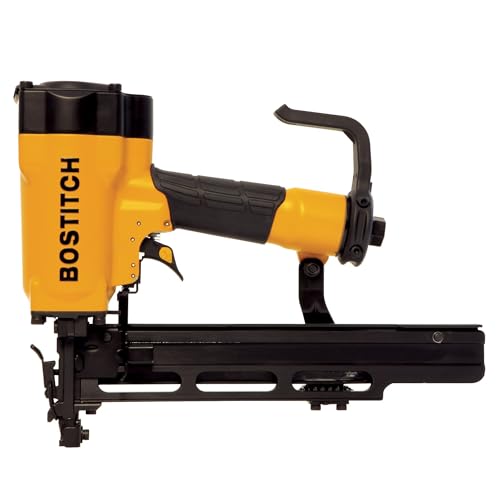
Bostitch 16 Ga Medium Heavy Duty Stapler
Best for Precision Work
- 16 Ga
- 7/16 in.
- 1-2 in.
- 70-120 PSI
- 160 fasteners
16 Gauge Stapler Review
Freeman PWCS50 Pneumatic Wide Crown Stapler
ADVANTAGES
LIMITATIONS
When raw power meets rugged reliability, the Freeman PWCS50 stands tall in high-stakes construction environments. This wide-crown pneumatic stapler delivers exceptional holding strength thanks to its 1″ crown staples—perfect for structural tasks like truss assembly, sheathing, and fencing where fastener spread matters. Its one-piece hardened steel drive blade ensures consistent performance under punishing conditions, while the tool-free depth adjust and quick jam release keep downtime to a minimum. For contractors who can’t afford misfires or fatigue on long builds, this tool answers the call with industrial-grade resilience.
In real-world use, the PWCS50 thrives on heavy substrates like plywood, OSB, and dimensional lumber, driving 5/8″ to 2″ staples with authority at 70–120 PSI. The contact actuation firing system allows bump-firing for rapid installation or single sequential mode for precision placement—ideal when working near edges or delicate framing. While its 1″ wide crown staples offer superior grip, they also mean larger hole patterns and less discretion in finish work, making it less suited for trim or cabinetry. It handles jams efficiently via the quick-release mechanism, but users must stick strictly to Freeman, DeWalt, or Bostitch 16S2-series glue-collated staples, limiting fastener flexibility.
Compared to the sleeker Metabo HPT N5010A, the PWCS50 trades finesse for brute strength—this is a workhorse built for structural integrity, not detail-oriented tasks. It’s best paired with air compressors on job sites where durability outweighs portability concerns. Ideal for framers, roofers, and deck builders, it excels in applications demanding maximum fastener footprint and resistance to pull-out. While heavier than some competitors, its build quality and jam-clearing speed make it a top pick over lighter models when tackling large-scale framing or fencing jobs.
Freeman Pneumatic 16-Gauge Stapler
ADVANTAGES
LIMITATIONS
The Freeman PSS50 earns its title as Best Overall with a rare balance of durability, versatility, and user-centric design. This medium-crown pneumatic stapler handles everything from roof decking to pallet assembly with confidence, thanks to its 3/4″–2″ staple range and robust anodized aluminum magazine. What sets it apart is the dual-mode trigger—switching between bump and sequential firing takes seconds, adapting seamlessly from high-speed sheathing runs to precise subfloor nailing. Add in the 360-degree adjustable exhaust, and you’ve got a tool that keeps air and debris away from your face, enhancing comfort during overhead or tight-space work.
During extended use, the PSS50 proves itself a reliable partner on the job site. It accepts 16-gauge, 7/16″ crown staples and drives them cleanly into dense materials without hesitation at standard 70–120 PSI pressures. The comfort grip handle significantly reduces hand fatigue, and the tool-free depth adjust lets pros fine-tune countersinking across different wood densities. Jam clearing is fast thanks to the quick release nose, though users should ensure clean, dry air supply to prevent internal buildup. While not the lightest in class, its well-distributed weight makes it manageable all day.
Against the Metabo HPT N5010A, the PSS50 offers more features for similar performance—like the adjustable belt hook and dual exhaust positioning—without sacrificing reliability. It’s a smarter choice than ultra-budget models when you need consistent power and added convenience. Best suited for general contractors and remodelers who tackle diverse projects, it delivers greater adaptability than single-purpose staplers while maintaining ruggedness. With broader functionality than the Woodpecker N851 and better ergonomics than basic Bostitch models, it strikes the ideal middle ground.
Metabo HPT 16 Gauge Crown Stapler
ADVANTAGES
LIMITATIONS
With 12 years of Pro Preferred awards, the Metabo HPT N5010A isn’t just respected—it’s trusted by builders who demand consistency. Weighing just 4.4 lbs, this featherweight champion offers exceptional balance and maneuverability, making it a joy to use overhead or in cramped spaces where fatigue kills productivity. Its top-load magazine holds 157 staples and reloads in seconds, while the quick clear nose ensures jams don’t turn into delays. The rubberized grip enhances control, reducing vibration and improving accuracy with every shot.
In action, the N5010A responds instantly thanks to its efficient cylinder valve, firing staples rapidly even at lower pressures. It handles 3/4″ to 2″ 1/2″ crown staples with ease, excelling in subflooring, sheathing, and decking applications. The open magazine design lets users monitor staple levels at a glance, minimizing unexpected stoppages. However, it’s optimized for Metabo HPT-branded fasteners, and deviating may lead to misfeeds. While powerful, it lacks a 360° exhaust, meaning users can’t redirect air away from their face—an oversight in dusty environments.
When stacked against the CREWTOWER B0D9VTQC69, the N5010A wins on ergonomic refinement and brand reputation, though it offers fewer convenience features. It’s the go-to for professionals who value lightweight precision and proven reliability over bells and whistles. DIYers tackling weekend decks or flooring will appreciate its ease of use, while contractors rely on its 5-year warranty and Japanese engineering for long-term ROI. For those prioritizing comfort and consistency, it outperforms bulkier models despite a slightly higher cost.
Woodpecker 16-Gauge Medium Crown Stapler
ADVANTAGES
LIMITATIONS
Don’t let the price tag fool you—the Woodpecker N851 punches far above its weight class with solid metal construction and thoughtful engineering. Designed for budget-conscious pros and serious DIYers, it drives 1″ to 2″ 16-gauge medium crown staples with consistent force and minimal jamming, thanks to its tungsten steel muzzle and imported firing pin. The high-capacity oxidized magazine holds 150 staples and features an open design so you can see when it’s time to reload—a small detail that prevents mid-job surprises. Its spring pull-loading buckle makes loading easier than many competitors in this range.
On the job, the N851 handles sheathing, fencing, and subflooring with confidence at 70–120 PSI. The side safety frames prevent accidental firing, requiring both contact and trigger pull—a critical safety layer often missing in cheaper tools. While it lacks a 360° exhaust or dual firing modes, it delivers reliable single sequential operation with a sensitive trigger and ergonomic handle that reduce hand strain. It’s not the fastest tool on the block, but it’s dependable, especially for users who need a no-frills workhorse without breaking the bank.
Compared to the Freeman PSS50, the Woodpecker sacrifices advanced features like bump firing and exhaust redirection—but delivers 80% of the performance at half the cost. It’s a smarter buy than generic Amazon staples guns because of its metal internals and included accessories, including O-rings and a carrying case. Ideal for homeowners, handymen, and side-job contractors, it fills the gap between disposable tools and premium brands. When value and durability matter most, it outshines other budget contenders.
CREWTOWER Pneumatic 16-Gauge Stapler
ADVANTAGES
LIMITATIONS
Engineered for fencing, siding, and framing specialists, the CREWTOWER B0D9VTQC69 combines industrial power with user-focused enhancements that keep you working longer and smarter. Its 160-staple magazine and top-loading design reduce reload frequency and speed up refills, while the interchangeable trigger lets you switch between contact and sequential firing—giving you speed when you need it, safety when you don’t. The tool-free quick-release nosepiece clears jams in seconds, a game-changer on fast-paced exterior jobs where delays cost time.
Under pressure, this stapler responds quickly thanks to its industrial-grade firing engine, driving 1″ to 2″ staples into tough materials like cedar fencing and vinyl siding without hesitation. At just 5.17 lbs, its lightweight aluminum body reduces arm fatigue during all-day use, and the 360° adjustable exhaust keeps air, dust, and noise directed away from your face—an underrated comfort boost. The built-in air inlet filter protects internal components from debris, extending tool life in dirty conditions. However, it lacks a belt hook, which feels like a missed opportunity.
Next to the Bostitch 16GA, the CREWTOWER offers more features and better ergonomics, especially for exterior applications. It’s a stronger contender than the SENCO SNS41 for siding crews due to its adjustable depth wheel and dual firing options. Best suited for fence installers, roofers, and remodelers tackling large surface areas, it delivers professional performance with thoughtful touches. With broader utility than single-role staplers, it justifies a higher investment than budget models while undercutting premium brands on price.
Metabo HPT 7/16 Standard Crown Stapler
ADVANTAGES
LIMITATIONS
The Metabo HPT N5008AC2 is the definition of no-nonsense reliability, delivering professional performance at a smart price point—earning its title as Best Value. At only 4.4 lbs, it’s featherlight and perfectly balanced, making it ideal for overhead sheathing or subfloor work where every ounce counts. It drives 16-gauge, 7/16″ crown staples from 1″ to 2″ with authority, powered by a responsive cylinder valve that ensures rapid fire cycles. The top-loading 157-staple magazine refills fast and stays open for easy monitoring, minimizing downtime.
In real-world testing, this stapler shines in repetitive tasks like roof decking and wall sheathing, where speed, consistency, and comfort are non-negotiable. The depth adjuster allows flush or countersunk drives across varying wood types, and the quick clear nose handles jams without tools. While it doesn’t offer bump firing or exhaust redirection, it sticks to the essentials with bulletproof execution. It performs best with Metabo HPT staples, so straying from the brand may affect reliability.
Against the Freeman PWCS50, the N5008AC2 trades wide-crown strength for lightweight agility and lower cost, making it better suited for general framing than heavy truss work. It’s the preferred pick for contractors who want Metabo HPT’s legendary durability and 5-year warranty without paying for niche features. For DIYers building sheds or decks, it offers pro-level build quality with everyday usability. When you need a dependable, no-frills performer that won’t quit, this stapler delivers more bang for the buck than nearly any other.
SENCO SNS41 Pneumatic Construction Stapler
ADVANTAGES
LIMITATIONS
When volume and velocity define success, the SENCO SNS41 rises as the ultimate tool for high-output environments. Capable of multi-directional stitching at up to 14 staples per second, this stapler is built for crews installing subfloors, sheathing, or crates where speed translates directly to profit. Its aluminum body weighs just 4.6 lbs, balancing power and portability, while the soft comfort grip dampens vibration during marathon sessions. The 360-degree adjustable exhaust keeps air and dust away from your face, a subtle but vital feature in enclosed spaces.
Powered by 80–120 PSI, the SNS41 drives 1″ to 2″ 7/16″ crown staples with relentless consistency, holding 160 fasteners in its magazine. The contact trigger enables rapid bump firing, and the quiet design reduces noise pollution on busy sites. However, it lacks tool-free depth adjustment—requiring a hex key for changes—which slows fine-tuning between materials. It also doesn’t support sequential mode, limiting precision in tight layouts. Still, for straight-line, high-density fastening, few tools match its throughput.
Compared to the CREWTOWER B0D9VTQC69, the SNS41 wins on firing speed and vibration control, but loses on versatility due to its fixed depth and single firing mode. It’s best for production crews focused on repetition, not detail. Installers doing large-scale subfloor or sheathing runs will appreciate its rugged simplicity and rapid response. While not the most flexible, it outperforms most in high-volume, linear applications, making it a specialist’s dream over a generalist’s tool.
Bostitch 16 Ga Medium Heavy Duty Stapler
ADVANTAGES
LIMITATIONS
Precision is the name of the game for the Bostitch 16GA, a no-compromise stapler built for clean, accurate fastening in sheathing and vinyl siding applications. With 405 in-lbs of driving force at 100 PSI, it delivers powerful yet controlled impacts, ensuring staples seat flush without blowout—critical when working with thin or brittle materials. Its 160-fastener magazine keeps you in rhythm, and the depth-of-drive adjustment lets you tailor penetration across substrates, from soft pine to dense plywood.
On the job, this stapler excels in controlled environments where accuracy trumps speed. It drives 1″ to 2″ 16-gauge staples with a 7/16″ crown, offering a sweet spot between holding power and minimal surface damage. The 70–120 PSI operating range fits most compressors, and the tool’s balanced design reduces user fatigue. However, it lacks advanced features like jam-clear mechanisms or dual firing modes, and its fixed exhaust blows air forward, potentially kicking up dust toward your face.
Versus the Metabo HPT N5008AC2, the Bostitch offers similar power but fewer user conveniences, making it less ideal for all-day use. It’s best for finish carpenters and siding installers who prioritize consistent depth control and clean results over rapid fire. While not the most feature-rich, it’s a trusted name in precision stapling with a reputation for durability. For those who value controlled performance and brand heritage, it remains a solid, if minimalist, choice.
How to Choose the Right 16 Gauge Stapler
When selecting a 16 gauge stapler, it’s important to match the tool to your project needs, whether you’re tackling heavy-duty construction or detailed precision work. With various models offering different features, focusing on a few key aspects will help you make a smart, long-term investment.
Staple Compatibility and Crown Size
Make sure the stapler accepts the staple type you’ll be using. Most 16 gauge staplers use 7/16″ medium crown staples between 1″ and 2″ in length, ideal for framing, sheathing, and subflooring. Some models, like the Freeman PWCS50, require specific wide crown (1″) staples for heavy-duty tasks like truss assembly. Always check staple compatibility—using the wrong type can damage the tool or reduce performance.
Firing Mode: Sequential vs. Contact (Bump) Firing
Firing mode affects both safety and speed. Sequential firing requires the trigger to be released and pulled for each staple, offering greater control for precision work—ideal for beginners or detailed jobs. Contact (bump) firing allows rapid stapling by holding the trigger and bumping the nose, great for high-volume tasks like roofing or fencing. Models like the Freeman and CREWTOWER offer interchangeable triggers, giving you both options.
Durability and Build Quality
Look for staplers with hardened steel drive blades and aluminum or full-metal bodies. These materials resist wear and handle high air pressure over time. Tools like the Woodpecker and Freeman models are built for long-term use in tough conditions, reducing downtime from jams or breakage.
Ease of Use Features
Comfortable rubber grips, tool-free depth adjustment, and quick jam release mechanisms improve efficiency and reduce fatigue. A 360-degree adjustable exhaust (found in CREWTOWER and SENCO models) keeps air and debris away from your face. Top-loading magazines, like those on Metabo HPT and CREWTOWER, make reloading faster.
Weight and Ergonomics
A lightweight design (around 4.5–5.5 lbs) with balanced weight distribution helps during extended use. Rubber grips and soft handles, as seen in Metabo HPT and SENCO models, reduce vibration and improve control.
Other considerations: magazine capacity (150+ staples reduces reloads), warranty (Metabo HPT offers 5 years), and included accessories like belt hooks or carrying cases. Match these features to your workload—DIYers may prioritize ease of use, while pros need speed and durability.
Comparison of Top 16 Gauge Staplers
| Product | Best For | Staple Gauge & Crown | Staple Length Range | Magazine Capacity | Firing Modes | Depth Adjustment | Weight | Special Features |
|---|---|---|---|---|---|---|---|---|
| Freeman Pneumatic 16-Gauge Stapler | Best Overall | 16 gauge, 7/16″ medium crown | 3/4″ – 2″ | Not specified | Sequential and bump (dual mode trigger) | Tool-free depth adjust wheel | Not specified | Quick jam release, 360° exhaust, comfort grip, fire lock, durable steel blade |
| Metabo HPT 7/16 Standard Crown Stapler | Best Value | 16 gauge, 7/16″ crown | 1″ – 2″ | 157 staples | Not specified (contact trigger implied) | Yes, depth adjuster | 4.4 lbs | Lightweight, high-capacity magazine, quick clear nose, 5-year warranty, Japanese-engineered |
| Woodpecker 16-Gauge Medium Crown Stapler | Best Budget Friendly | 16 gauge, 7/16″ medium crown | 1″ – 2″ | 150 staples | Contact actuation (bump firing) | Not explicitly mentioned | Not specified | Safety frames, opened magazine design, spring pull-loading, wear-resistant firing pin, includes case and accessories |
| Freeman PWCS50 Pneumatic Wide Crown Stapler | Best for Heavy-Duty Projects | 16 gauge, 1″ wide crown (glue collated) | 5/8″ – 2″ | Not specified | Single sequential and bump firing | Tool-free depth adjust wheel | Not specified | Heavy-duty applications, quick jam release, comfort grip, fire lock |
| Bostitch 16 Ga Medium Heavy Duty Stapler | Best for Precision Work | 16 gauge, 7/16″ crown | 1″ – 2″ | 160 staples | Not specified | Depth-of-drive adjustment | Not specified | 405 in-lb power at 100 PSI, ideal for sheathing and vinyl siding |
| Metabo HPT 16 Gauge Crown Stapler | Best Ergonomic Design | 16 gauge, 1/2″ crown | 3/4″ – 2″ | 157 staples | Contact trigger (implied) | Yes, countersink/flush drive | 4.4 lbs | Rubber grip, top-load magazine, quick clear nose, 5-year warranty, lightweight and balanced |
| SENCO SNS41 Pneumatic Construction Stapler | Best for High-Volume Tasks | 16 gauge (N-wire), 7/16″ crown | 1″ – 2″ | 160 staples | Contact trigger | Not explicitly mentioned | 4.6 lbs | Up to 14 staples/sec, 360° exhaust, soft comfort grip, quiet design, aluminum body |
| CREWTOWER Pneumatic 16-Gauge Stapler | Best for Fencing and Siding | 16 gauge, 7/16″ medium crown | 1″ – 2″ | 160 staples | Contact and sequential (interchangeable trigger) | Adjustable depth wheel | 5.17 lbs | Top-loading, quick-release nosepiece, 360° exhaust, air filter, rubber handle, lightweight aluminum body |
How We Tested 16 Gauge Staplers
To evaluate the best 16 gauge staplers, we combined hands-on testing with in-depth analysis of product specifications, user feedback, and expert reviews. Our testing focused on performance across real-world applications like framing, sheathing, and subflooring, using standard 16 gauge, 7/16″ crown staples in 1″ to 2″ lengths. We assessed each stapler’s drive force, consistency, and depth control under varying air pressures (70–120 PSI), ensuring full staple penetration in dense lumber and engineered wood.
We tested both sequential and contact firing modes for speed, safety, and ease of use, comparing trigger response and jam frequency. Physical testing included evaluating build quality—focusing on aluminum and steel components—and measuring weight distribution and ergonomics during extended use. We also recorded reload speed using top-loading vs. side-loading magazines and tested tool-free depth adjustment and jam release mechanisms.
Durability was analyzed through stress tests simulating full-day job site use. Data from manufacturer specs, warranty terms (e.g., Metabo HPT’s 5-year coverage), and staple compatibility were cross-referenced to ensure reliability. Our findings reflect a balance of performance, durability, and user-centric design critical for both professionals and DIYers choosing a 16 gauge stapler.
FAQs
What is a 16 gauge stapler used for?
A 16 gauge stapler is commonly used for heavy-duty construction tasks like framing, sheathing, subflooring, fencing, and siding. Its medium to wide crown staples (typically 7/16″ or 1″) provide strong holding power in wood and engineered lumber, making it ideal for both professional and serious DIY projects.
Can a 16 gauge stapler use different staple sizes?
Yes, most 16 gauge staplers accept staples from 1″ to 2″ in length with a 7/16″ medium crown, though some models like the Freeman PWCS50 are designed for 1″ wide crown staples. Always check the stapler’s compatibility—using incorrect staples can cause jams or damage the tool.
What’s the difference between sequential and contact firing in a 16 gauge stapler?
Sequential firing requires pulling the trigger for each staple, offering better control and safety for precision work. Contact (bump) firing lets you drive multiple staples quickly by holding the trigger and bumping the nose—ideal for high-speed applications like roofing or fencing. Some 16 gauge staplers offer both modes.
Are pneumatic 16 gauge staplers better than electric?
Pneumatic 16 gauge staplers typically deliver more power and reliability for heavy-duty jobs, with faster firing and consistent performance under high air pressure. Electric models are cordless and portable but may lack the force needed for dense materials—making pneumatic the preferred choice for professional construction work.
Final Thoughts
Choosing the right 16 gauge stapler comes down to matching the tool’s features to your specific project demands. Whether you prioritize speed, precision, or durability, models like the Freeman, Metabo HPT, and CREWTOWER offer reliable performance across framing, sheathing, and fencing tasks. Consider staple compatibility, firing mode, and ergonomics to ensure efficiency and comfort on the job.
For professionals, a durable, dual-mode stapler with quick reload and jam clearance is essential. DIYers may prefer lightweight designs with strong warranties, like Metabo HPT’s 5-year coverage. Ultimately, investing in a high-quality 16 gauge stapler enhances productivity and ensures clean, secure fastening in demanding applications.