How a Stapler Works: Simple Guide
You press down on the handle, and—click—a staple binds your papers together. It feels effortless, but behind that simple motion is a precisely engineered mechanism. How does a stapler work? It uses leverage, spring power, and a clever bending system to drive a metal staple through paper and lock it in place. This is not just a desk tool. It is a mini mechanical marvel. Whether you are fixing a report or building a booklet, understanding the inner workings helps you troubleshoot jams, choose the right model, and appreciate the engineering in something so ordinary. Here is exactly how each part contributes to that satisfying thud.
Core Stapling Mechanism Explained
A stapler does not just punch. It drives, penetrates, and clinches. The entire process hinges on a seamless chain of mechanical actions triggered by your hand.
The Three-Stage Binding Process
The stapling cycle breaks down into three distinct phases that happen in under a second:
- Driving: When you press the handle, the driver plate inside the head forces the front staple downward.
- Penetration: The staple sharp legs pierce through the paper stack.
- Clinching: The legs hit the anvil, which bends them inward or outward to lock the pages.
The key is mechanical advantage. The stapler acts as a second-class lever, where the load sits between the fulcrum and your hand effort. This design multiplies your force, making it easy to staple dozens of sheets without straining.
Without the anvil bending action, the staple would just fall out. The real magic happens in that final deformation, turning a loose U-shape into a secure fastener.
Force Transmission Path
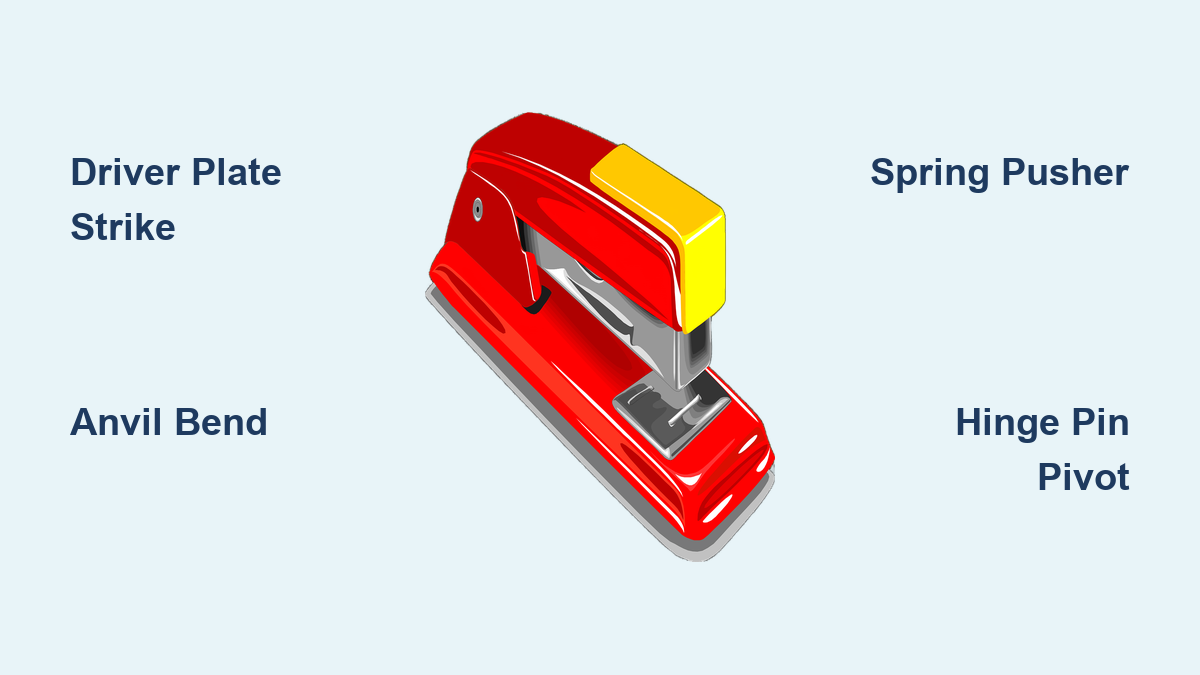
Your hand pressure travels through a precise sequence of components. The handle connects to the hinge pin, which transfers force to the driver plate. The driver plate strikes the staple, pushing it through the paper. Finally, the staple legs contact the anvil and bend into place.
Each component must align perfectly. Even a bent needle groove or weak spring disrupts this chain. That is why high-quality staplers use metal rails and tight-tolerance parts to ensure every stroke delivers full force where it is needed.
Key Components and Their Roles

Every stapler relies on eight essential parts working in sync. Know these, and you will never see your desk tool the same way again.
Head and Driver Plate
The head is the moving upper body of the stapler. Inside it, the driver plate strikes the staple top, forcing it down. It is spring-loaded so it retracts after firing. On heavy-duty models, this plate is reinforced to handle thick stacks without bending.
Base and Support Plate
The base is the foundation. It stays still while the head moves. Mounted on it is the support plate, which keeps the internal parts aligned. If this warps, staples skew or jam. High-end staplers use alloy die-casting here for durability.
Magazine and Staple Path
The magazine is the long chamber that holds the staple strip. Staples load with points facing down. A smooth interior called the needle groove guides each staple forward. Any dent or debris here causes misfeeds. Capacity ranges from 50 to 200 staples, depending on model size.
Hinge Pin and Pivot Action
The hinge pin connects the head to the base. It serves as the fulcrum, letting the head pivot like a seesaw. This pin must stay tight. Loose rivets reduce force and cause inconsistent stapling. In industrial models, it is often welded or press-fitted for stability.
Staple Advancement and Reset System
After each staple fires, the next one must slide into position automatically. That is where the pusher and spring come in.
Spring-Loaded Pusher Mechanism
Inside the magazine, a pusher presses against the back of the staple strip. It is pushed forward by a coiled push spring. When you fire a staple, the pusher temporarily retracts. Once you release the handle, the spring snaps it forward, advancing the next staple.
If the spring weakens, staples do not feed. That is a common cause of empty shots, when you press down but nothing happens.
Shrapnel Return System
A thin, flexible metal strip called the shrapnel helps reset the driver and handle. It stores energy during the downstroke and releases it on the upstroke, ensuring a quick return. If it is bent or misaligned, the stapler feels sluggish or sticks halfway.
Anvil: The Staple-Bending Engine
The anvil does not just catch the staple. It shapes it. Its curved surface bends the legs to create a secure lock.
Inward vs. Outward Clinching
Most staplers let you switch between two anvil modes. Permanent mode bends legs toward the center, creating a tight, tamper-resistant bind ideal for reports and contracts. Temporary mode bends legs outward, making removal easier for drafts or short-term attachments.
To switch modes, simply flip the anvil. Some models have a sliding mechanism instead.
Flat Clinch Technology
Advanced staplers use flat clinch anvil design. Instead of bending legs at 90 degrees, they flatten them completely against the paper. This creates a smooth finish with no sharp ends, perfect for filing or stacking. The anvil has a recessed groove that forces the legs flat, reducing bulk in binders.
Step-by-Step Stapling Cycle
Here is what happens from the moment you press the handle to when the stapler resets.
1. Paper Positioning
Place your stack under the front tip of the stapler. Align it with the anvil. Some models have margin guides or rods to ensure consistent placement, critical for professional-looking documents.
2. Handle Depressed
You press down. The handle leverages your force through the hinge pin. The head descends, and the driver plate hits the top of the staple.
3. Staple Driven Through Paper
The staple legs pierce the stack. The magazine guides it straight. Any tilt causes jams. Thicker stacks require more force. If the driver pin is dull, penetration fails.
4. Legs Contact Anvil
The staple exits the paper and hits the anvil. The curved groove redirects the legs inward or outward, depending on your setting. This bending is what locks the staple in place.
5. Release and Reset
You let go. The shrapnel snaps the head back up. The push spring advances the next staple. The stapler is now ready for the next use. The entire cycle takes less than one second.
Dual-Function Binding Modes
Modern staplers do more than flat binding. Many support multiple modes for different tasks.
Flat Stapling Mode
Standard mode places paper flat on the base. The staple drives straight down through the edge. This is used for everyday documents like letters, invoices, and handouts. Best for 5 to 50 sheets depending on model.
Saddle Stapling Mode
For booklets and brochures, the base flips into a V-shaped saddle. You fold the paper and place it over the peak. The staple drives through the spine, binding the center fold. This is common in photocopiers and finishers. Some models like the Rayson stapler have a flat riding fast switching table that lets you toggle between modes in seconds.
Tacking Mode
The anvil folds down or out of the way. Now when you press, the staple drives straight into a bulletin board or wall without bending. It acts like a mini staple gun, useful for hanging notices or temporary displays.
Pinning Function
Rare in modern models, one leg bends inward while the other bends outward. This offers moderate hold with easy removal, a compromise between permanent and temporary binding.
Specialized Stapler Types
Not all staplers are for paper. Different jobs need different tools.
Manual vs. Electric Staplers
Manual staplers are hand-powered and lever-based. They are common in offices, lightweight, and have no cords. Electric staplers are motor-driven. You press a button and it fires automatically. These are used in print shops or legal offices for high-volume work. Electric models often include a speedometer to monitor firing rate and ensure consistency.
Heavy-Duty and Industrial Models
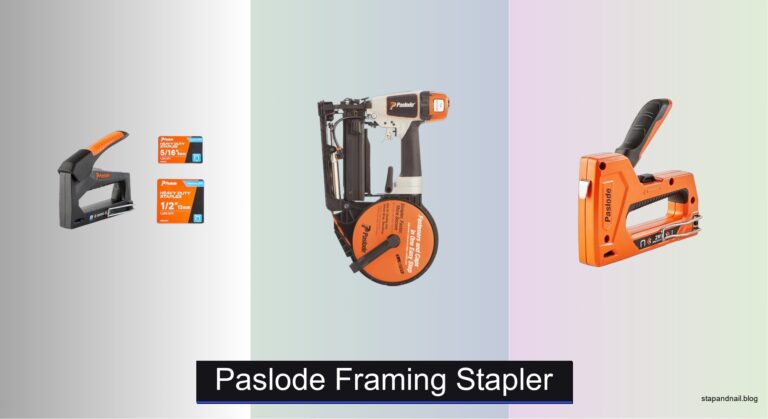
Built for 100 or more sheets, these feature reinforced alloy brackets, deeper magazines, and stronger springs. They are used in packaging, binding, or manufacturing. Some are foot-operated, freeing your hands for positioning large stacks.
Surgical Staplers
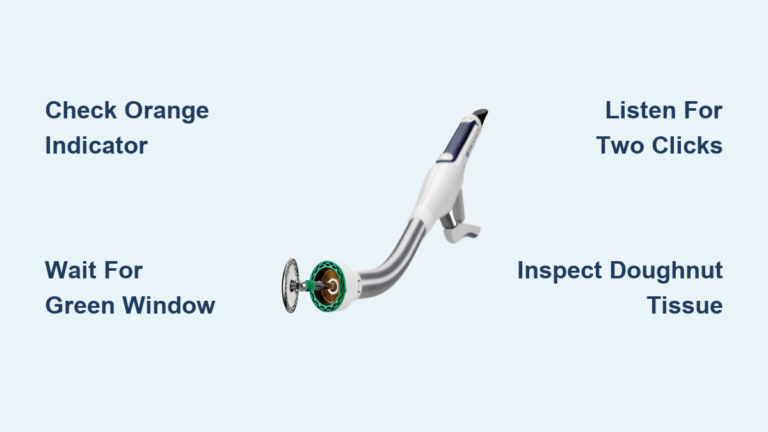
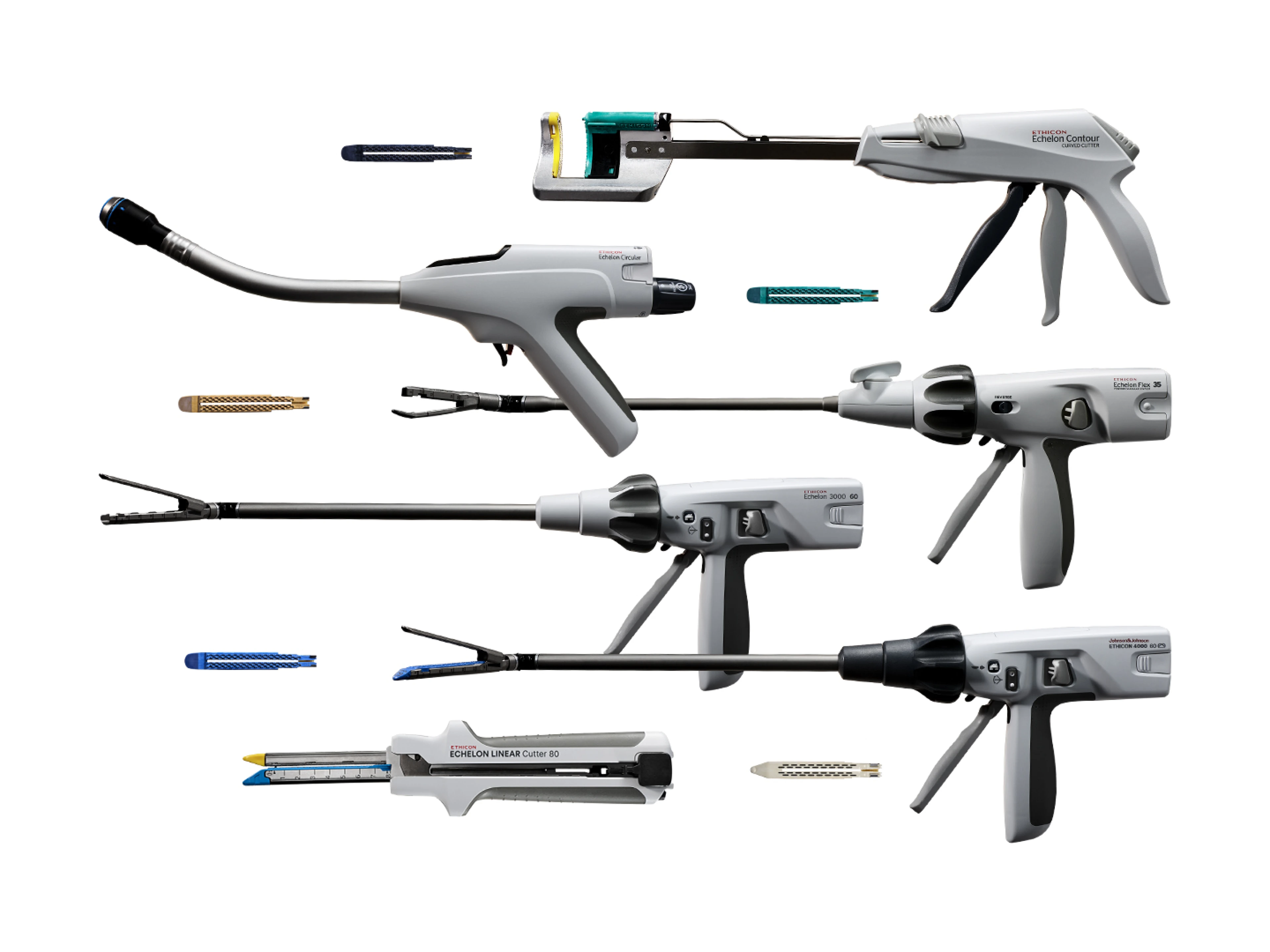
Used in medicine, these work on the same principle but with extreme precision. Skin staplers have no anvil. Pre-formed staples are driven into the skin and bend inward automatically, faster than sutures for closing wounds. Linear surgical staplers fire rows of titanium staples while cutting tissue in between, used in bowel or lung surgery. Circular staplers create ring-shaped staple lines for reconnecting hollow organs like the colon.
Troubleshooting Common Issues

Even the best staplers fail sometimes. Here is how to fix the most frequent problems.
Staple Jam
Cause is debris in the needle groove, bent rail, or misaligned shrapnel. Fix by opening the head, removing stuck staples with tweezers, cleaning the guide rail, and checking for dents. Reassemble firmly.
Twisted or Floating Staples
Cause is loose hinge pin, worn pusher, or weak spring. Fix by tightening connections, replacing the push spring, and ensuring the shrapnel is centered in the support plate.
Empty Shot
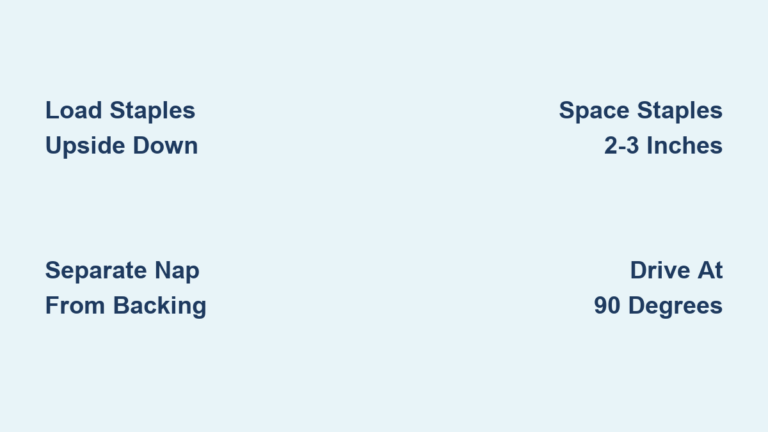
Cause is push spring lost elasticity or staple strip loaded backward. Fix by reloading staples with points facing down. Replace the spring if it does not rebound.
Incomplete Penetration
Cause is too many sheets, dull driver pin, or weak force. Fix by reducing stack thickness or switching to a heavy-duty model. Sand or replace the driver pin if it is worn.
Inconsistent Clinching
Cause is worn anvil or misaligned anvil setting. Fix by flipping the anvil to the correct mode. Replace if grooves are chipped or flattened.
Loading Staples Correctly
A common mistake leads to half the jams. Here is how to load it right.
Step-by-Step Reload
- Lift the head by pulling up on the rear.
- Insert the staple strip into the magazine with points facing down.
- Push the strip all the way forward until it stops.
- Close the head firmly.
Some models have a nail slot outlet button. Press it to release the magazine for easier loading. After inserting staples, slide the magazine back until it clicks. Pro tip: Do not wait until the stapler is empty. Reload early to avoid dry-firing, which damages the anvil and driver.
Maintenance for Longevity
A well-maintained stapler lasts years. Follow these steps.
Regular Cleaning
Dust and paper fibers build up in the magazine. Every few months, open the head, wipe the needle groove with a dry cloth, and blow out debris with compressed air.
Lubrication Points
Apply a drop of light machine oil to the hinge pin, driver plate rails, and pusher track. Do this sparingly because too much oil attracts dirt.
Spring and Anvil Check
Test the push spring by pressing the handle and releasing. It should snap back instantly. If slow, replace the spring. Inspect the anvil monthly. If bending becomes uneven, replace it.
Why the Stapler Still Matters
Despite digital documents, staplers remain essential. In offices, they bind contracts, invoices, and reports. In schools, they handle assignments and project work. In medicine, they close surgical incisions. In publishing, they create booklets and catalogs. Even printers with integrated staplers rely on the same core mechanism, just automated.
In 2012, 80 million dollars worth of staplers were sold in the United States. Swingline dominates the American market. Demand stays strong due to legal and medical requirements for physical records.
Historical Evolution of the Stapler
The stapler did not appear overnight. It evolved over decades. In 1866, George McGill invented the bendable brass paper fastener. In 1877, Henry R. Heyl patented the first machine to insert and clinch a staple. In 1879, McGill Single-Stroke Staple Press became the first commercial success. In 1901, the word stapler appeared in Munsey’s Magazine. In 1941, Four-Way Stapler was introduced, able to staple, tack, pin, or function like pliers.
Stapleless Alternatives
Not all fastening requires metal. Stapleless staplers use a punching mechanism to cut a flap in the top sheet and tuck it into a slot below. No holes, no metal, just folded paper. They are environmentally friendly and reusable.
Choosing the Right Stapler
Match the tool to the task. For office use, a desk stapler handles 20 to 50 sheets. Long-reach models work for thick reports. Flat clinch models suit archival documents. For high volume, electric staplers reduce hand fatigue. Heavy-duty models with metal bodies handle 100-plus sheets. For special projects, saddle staplers create booklets and tacking mode works for bulletin boards.
Key Takeaways for Understanding How Staplers Work
The stapler is more than a desk accessory. It is a triumph of mechanical design. From the spring-loaded pusher to the anvil precise bend, every component ensures a reliable bind. The three-stage process of driving, penetration, and clinching happens in under a second. Understanding these mechanics helps you troubleshoot jams, maintain your tool, and choose the right model for any task. Whether you are using a basic office model or a surgical stapler, the principle remains the same: force, penetration, and deformation. Now that you know how it works, you can use it better, fix it faster, and appreciate the quiet efficiency of this everyday essential.
Frequently Asked Questions About How Staplers Work
What is the main mechanism inside a stapler?
A stapler works using a lever system. When you press the handle, it pivots around a hinge pin and transfers force through a driver plate to push a staple out of the magazine. The staple then pierces the paper and bends against the anvil to lock the pages together.
How does the anvil shape the staple?
The anvil is a metal plate with a curved groove. When the staple legs contact the anvil, the groove redirects them inward or outward, depending on the setting. This bending action is what clinches the staple and holds the paper securely.
Why do some staplers jam frequently?
Staple jams usually happen because of debris in the needle groove, a bent guide rail, or a misaligned shrapnel. Weak springs or loading staples backward also cause jams. Regular cleaning and proper loading prevent most issues.
What is the difference between flat stapling and saddle stapling?
Flat stapling places paper flat on the base and drives the staple perpendicular to the edge. Saddle stapling uses a V-shaped saddle to fold paper and staple through the spine, ideal for booklets and brochures.
Can staplers be used for anything besides paper?
Yes. Heavy-duty staplers bind cardboard and wood. Tacking mode lets you staple into bulletin boards or walls. Surgical staplers close wounds in medical settings. Some industrial models attach materials in manufacturing and packaging.