How a Carton Stapler Works: Simple Guide
If you have ever watched a warehouse worker seal dozens of boxes in minutes with a sharp thud and a flash of metal, you have seen a carton stapler in action. These industrial tools are the backbone of fast, secure packaging in shipping, logistics, and manufacturing. But how does a carton stapler work? At its core, it drives heavy-duty staples through overlapping cardboard flaps, locking them together with a clinched seal that resists tampering and ensures durability during transit. This guide breaks down the mechanical sequence, explores pneumatic versus manual models, and reveals how to get the best performance from your stapler.
Pneumatic Stapler Core Components
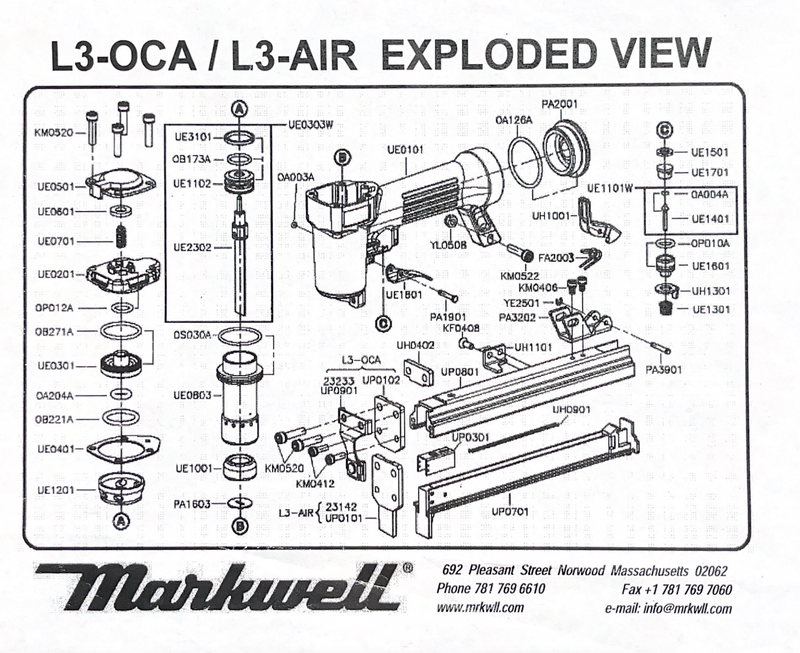
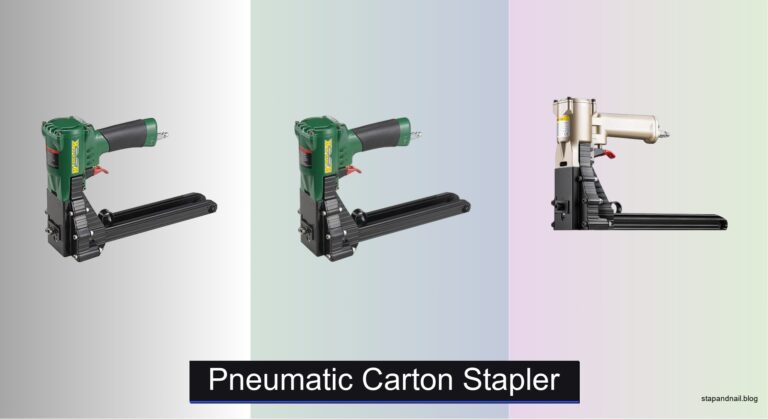
A pneumatic carton stapler relies on compressed air to generate the force needed to penetrate thick corrugated cardboard. Its internal system is engineered for speed and reliability, with each component playing a critical role in the stapling cycle.
Staple Magazine and Spring Pusher
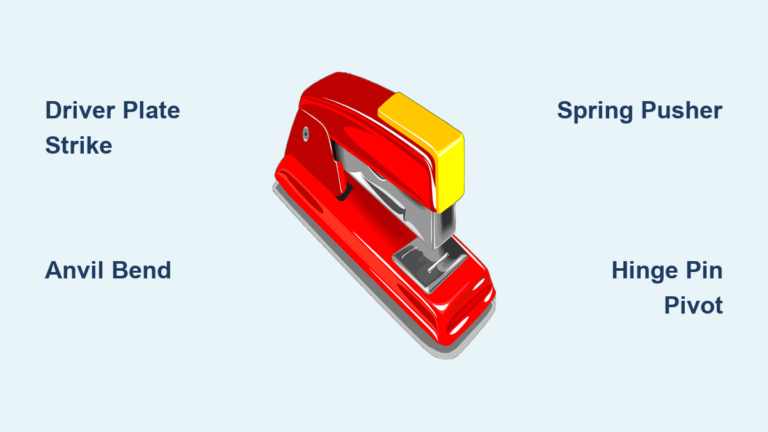
The staple magazine holds a full strip of connected staples, typically around 100 units. Inside, a spring-loaded pusher applies constant forward pressure, ensuring the next staple is always ready for firing. This design eliminates delays between shots and reduces the chance of misfeeds during high-volume operations.
Driver Blade and Piston Assembly
The driver blade sits directly below the magazine and makes contact with the leading staple. When activated, it is pushed downward by the piston, which is powered by compressed air. This linkage converts air pressure into linear motion, driving the staple through the cardboard with precision and consistent force.
Air Cylinder and Trigger Mechanism
Pulling the trigger opens an internal valve, allowing compressed air at 70 to 100 PSI to enter the air cylinder. The sudden pressure forces the piston forward in milliseconds. When the trigger releases, the air exhausts and a reset spring returns the piston and driver blade to their starting position, ready for the next cycle.
Base Plate as Staple Anvil
The base plate, located beneath the work surface, serves as the anvil. As the staple legs pass through the cardboard, they hit the base plate, which forces them to bend inward. This clinching action locks the flaps together securely and prevents the staple from pulling out during handling.
The Stapling Process Step by Step
Using a pneumatic carton stapler is quick, but the internal sequence involves several coordinated mechanical actions that happen in under one second.
Connect Air Supply and Set Pressure
Attach the air hose to a compatible compressor and set the pressure between 70 and 100 PSI. The exact setting depends on cardboard thickness. Thicker materials require higher pressure for complete penetration.
Load the Staple Strip
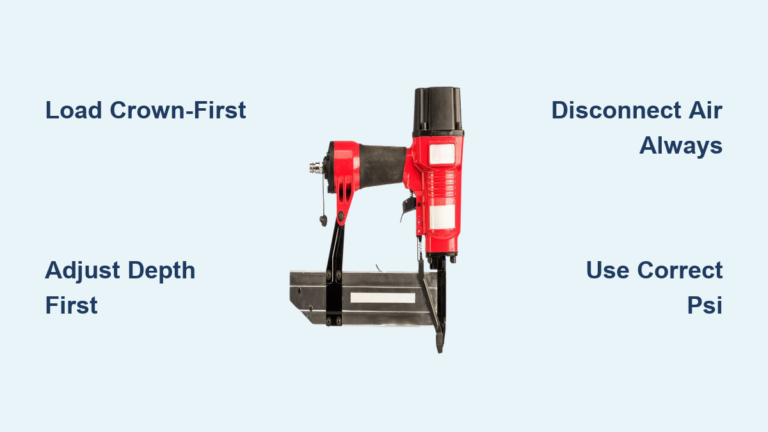
Insert the correct staple strip into the magazine with the crown facing forward and legs pointing down. Push it all the way in until it stops, then close and lock the cover securely.
Position and Fire the Stapler
Place the base plate under the bottom flap and align the driver blade with the top flap. Squeeze the trigger. Compressed air drives the piston forward, pushing the driver blade and staple through both cardboard layers. The staple exits the bottom and contacts the base plate, causing the legs to curl inward and clinch the flaps shut.
Automatic Reset and Ready for Next Shot
When you release the trigger, the piston retracts automatically. At the same time, the spring pusher advances the next staple into position. The tool is now ready for the next shot, with cycle time typically under one second.
Choosing the Right Staple Size
Using the correct staple ensures clean penetration without damaging the box or its contents. Matching staple length to cardboard thickness is critical for a secure seal.
Staple Length Guidelines
Staples come in several standard lengths suited for different carton types. The 5/8-inch size works well for medium-duty single or double-wall boxes. The 3/4-inch size is best for thick, double-walled, or densely packed cartons. Lighter materials or partial seals typically use 7/16-inch to 9/16-inch staples.
What Happens with Wrong Size Staples
Too short a staple results in an incomplete clinch, leaving the seal weak and prone to failure. Too long a staple causes over-penetration, potentially damaging contents inside the box or creating a safety hazard. Always test on scrap material before sealing actual shipments.
Depth Adjustment on HB3515 and HB3518

Models like the HB3515 and HB3518 feature a side-mounted depth adjustment knob that controls how far the staple drives into the cardboard. This adjustment is essential for achieving the perfect clinch without crushing the material.
How to Adjust the Depth
Pull the knob outward and slide it left or right to control penetration depth. Set the knob fully right for half-inch thick material to ensure full clinch without crushing. Set it left for thinner stock to reduce impact force and prevent jamming or material damage.
Why Depth Adjustment Matters
Proper depth adjustment increases seal quality and extends tool life. It prevents staple deformation, reduces jams, and ensures each seal is consistent across all cartons being processed.
Loading Staples: HB3515 and HB3518 Procedure
Both models share the same straightforward loading process, which takes only seconds once you know the steps.
Open and Inspect the Magazine
Unclip the latch and swing the magazine open. Inspect the interior for debris or leftover staples that could cause jams. A clean magazine ensures reliable feeding.
Insert the Staple Strip Correctly
Slide the staple strip into the guiding channel, making sure the crown faces forward and legs point down. Push it all the way in until it stops against the back of the magazine.
Lock Cover and Test Feed
Close the cover and push it forward until it clicks into place. Cycle the tool once over scrap material to confirm the first staple feeds correctly before beginning production sealing.
Coil Stapler versus Strip-Fed Models

Not all industrial staplers use straight staple strips. Some use coiled designs for higher capacity and continuous operation in demanding environments.
Higher Capacity with Coil Design
Coil staplers hold up to 200 to 300 staples in a spiral wire formation. This reduces reload frequency significantly, making them ideal for continuous production lines where downtime must be minimized.
Same Pneumatic Power Principle
Coil models still run on 70 to 100 PSI air pressure and use the same piston-driven mechanism as strip-fed models. The main difference lies in the feed mechanism, which pulls staples from the coil using a rotating sprocket or feed arm rather than a spring pusher.
Weighing the Trade-Offs
Coil staplers offer fewer reloads and faster throughput, which is advantageous for fixed assembly stations. However, they are heavier, less maneuverable, and have more complex mechanics. Strip-fed models remain more flexible and portable for mobile use.
Hand-Operated Stapler Mechanics
When compressed air is not available, manual staplers offer a reliable alternative for lighter-duty applications.
Leverage-Based Driving Force
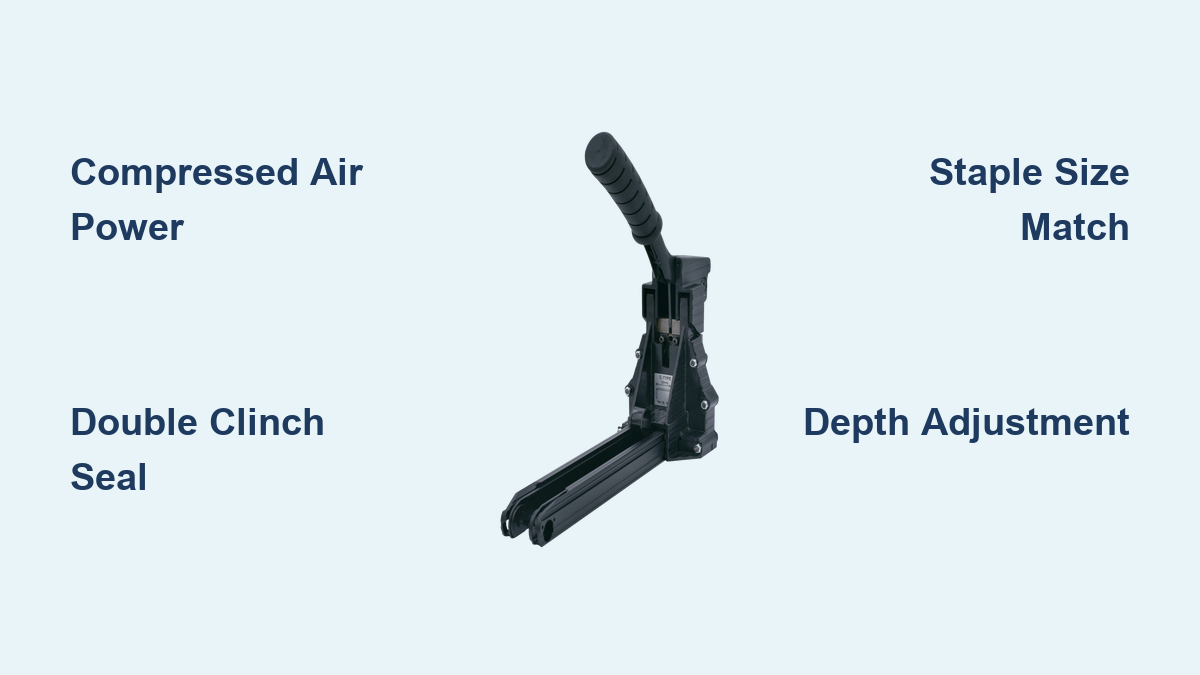
Manual carton staplers use a lever mechanism. Pressing the handle down activates the driver blade via mechanical linkage. The user force is amplified through the handle length, allowing penetration of standard cardboard without external power.
More Effort Required
Without pneumatic assistance, each staple requires full hand pressure. This makes manual models slower and more tiring for high-volume tasks, but they are perfect for low-frequency use or remote locations without access to compressors.
Limited Speed and Adjustability
Most hand staplers lack depth control and fire at about 10 to 20 staples per minute, far below pneumatic rates. However, they are durable, lightweight, and require no maintenance beyond occasional cleaning.
Achieving a Secure Double-Clinched Seal
A proper staple does not just pierce the material. It creates a mechanical lock that resists pulling, vibration, and tampering.
What Is Double Clinching
After passing through the cardboard, the staple legs hit the base plate and bend inward at 90 degrees or more, embedding into the inner layer. This creates a mechanical lock that distributes holding force along the entire staple length.
Common Sealing Mistakes to Avoid
Misalignment causes partial penetration or bent staples that compromise seal integrity. Incorrect depth setting leads to loose seals or crushed boxes. Wrong staple size results in jams or inadequate hold. Always test on a sample box before sealing live shipments.
Industrial Applications and Use Cases
Carton staplers are essential in high-speed, high-reliability environments where consistent sealing directly impacts operational efficiency.
Order Fulfillment and 3PL Centers
In fulfillment hubs, speed is everything. Pneumatic staplers allow workers to seal dozens of boxes per hour with consistent quality, reducing labor time and errors in the packaging process.
Manufacturing and Assembly Lines
Integrated into packaging stations, staplers ensure uniform closure of product boxes before labeling and shipping. Their durability supports 24/7 operation with minimal downtime.
Freight and Distribution Warehouses
When boxes are handled repeatedly, a tamper-resistant seal is crucial. Staples provide stronger closure than tape, especially for heavy or valuable cargo that undergoes multiple handling stages.
Performance Metrics at a Glance
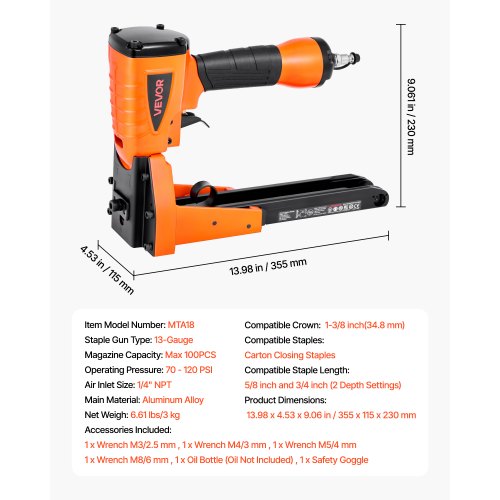
Understanding key specifications helps match the tool to the task and ensures proper setup.
Operating Pressure Requirements
The 70 to 100 PSI range delivers optimal force without over-stressing internal components. Use a regulator to maintain consistent pressure throughout the workday.
Stapling Speed and Efficiency
Experienced operators can fire a staple every one to two seconds, sealing a standard carton in under 10 seconds. This equates to up to 60 staples per minute in continuous operation.
User Effort Comparison
Pneumatic models reduce fatigue during long shifts significantly. Manual tools require full hand strength per staple, making them unsuitable for repetitive industrial use.
Maintenance for Longevity and Reliability
Even rugged industrial tools need regular care to perform well over time and avoid unexpected downtime.
Clean the Magazine Regularly
Dust, cardboard fibers, and old staple fragments accumulate in the magazine and cause jams. Wipe the magazine channel with a dry cloth or use compressed air every few days in heavy-use environments.
Lubricate Moving Parts Monthly
Apply a few drops of pneumatic tool oil into the air inlet to keep the piston and cylinder lubricated. This prevents wear and ensures smooth firing cycle after cycle.
Inspect Hoses and Fittings
Check the air hose for cracks, leaks, or kinks. Replace damaged sections immediately to maintain pressure and prevent safety hazards during operation.
Use OEM Staples Only
Aftermarket or off-size staples may not feed correctly or could damage the driver blade. Stick to manufacturer-recommended staples for best performance and longest tool life.
Comparing Stapler Types: Which Is Right for You
Choosing the right stapler depends on volume, infrastructure, and mobility needs. Each type offers distinct advantages for different operational contexts.
Pneumatic Staplers for High Volume
Pneumatic staplers deliver fast, consistent results with minimal user effort. They are ideal for production lines and high-volume packaging operations. The trade-off is the requirement for an air compressor and hose setup.
Coil Staplers for Maximum Uptime
Coil staplers offer fewer reloads and continuous operation, making them perfect for assembly-line integration. They are bulkier and more expensive, so they are best suited for fixed stations rather than mobile use.
Hand-Operated Staplers for Portability
Manual staplers require no power source and are easy to move around. They have low cost and minimal maintenance needs. However, they are slow and physically demanding, making them suitable only for light, mobile jobs.
Frequently Asked Questions About Carton Staplers
What is the ideal air pressure for a pneumatic carton stapler?
Most pneumatic carton staplers operate optimally at 70 to 100 PSI. Adjust within this range based on cardboard thickness. Thicker materials need higher pressure, while thinner materials work better at lower settings.
How do I prevent staple jams in my carton stapler?
Keep the magazine clean and free of debris. Use only manufacturer-recommended staples in the correct size. Ensure proper depth adjustment and avoid over-driving staples into hard materials.
What is the difference between the HB3515 and HB3518 models?
The HB3515 uses 5/8-inch staples designed for medium-duty cartons. The HB3518 uses 3/4-inch staples suited for thicker, double-walled corrugated materials. Both share the same ergonomic design and loading procedure.
Can a carton stapler seal all types of cardboard?
Carton staplers work best on corrugated cardboard with overlapping flaps. They are not suitable for thin paper, plastic wrap, or materials without sufficient thickness for clinching.
How often should I lubricate my pneumatic carton stapler?
Lubricate moving parts monthly with pneumatic tool oil applied through the air inlet. In high-volume environments, consider lubricating more frequently to prevent wear.
What makes a staple seal tamper-resistant?
The double-clinched configuration bends staple legs inward at 90 degrees or more, embedding them into the inner cardboard layer. This creates a mechanical lock that resists pulling, vibration, and tampering.
Key Takeaways for Understanding Carton Staplers
A carton stapler works by combining mechanical force with precision engineering to create strong, tamper-resistant box seals. Pneumatic models use compressed air to drive staples at high speed, delivering up to 60 staples per minute with minimal effort. Manual versions rely on hand leverage for lighter tasks. Key components including the driver blade, piston, and base plate work together to fire and clinch each staple securely. Models such as the HB3515 and HB3518 offer depth control and easy loading, making them ideal for professional environments. Matching the tool to your workflow, using correct staple sizes, and performing regular maintenance ensures efficiency, durability, and safety with every staple.