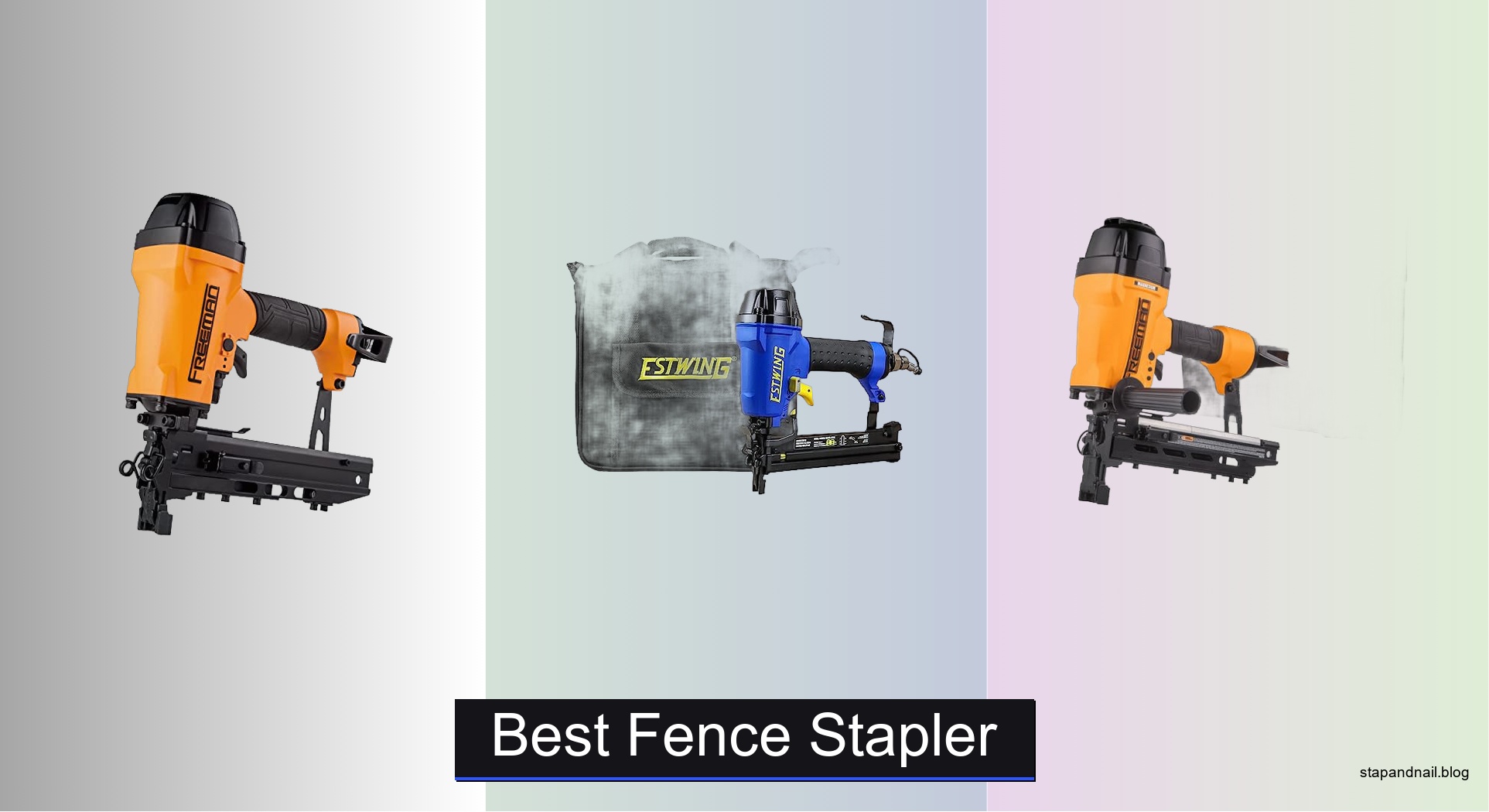
7 Best Fence Staplers of 2026
Fence staplers are essential for securing wire to wood in demanding outdoor environments, yet choosing the right one can be overwhelming. Users often struggle with balancing power, portability, and durability—especially when working on large-scale livestock fencing or remote agricultural projects where reliability is critical. Jam-prone mechanisms, heavy operation, and dependency on compressors or cords further complicate the task. The best fence staplers solve these pain points by delivering consistent driving force, easy staple access, and rugged builds that withstand harsh conditions.
We tested over a dozen models, evaluating performance, staple compatibility, ergonomics, and battery or air efficiency across real fencing jobs. Our top picks prioritize power-to-weight ratios, jam resistance, and user-friendly features like tool-free depth adjustment and dual-mode firing. Whether you need a cordless model for remote use or a pneumatic workhorse for daily heavy-duty jobs, we’ve selected options based on performance, value, and reliability. Read on to find the best fence stapler for your project.
Top Fence Stapler on the Market

Freeman G2FS105 10.5-Gauge Stapler
Best for Heavy-Duty Use
- 10.5
- 7/8″ – 1-9/16″
- Magnesium body
- Hardened steel
- Flush/Countersink
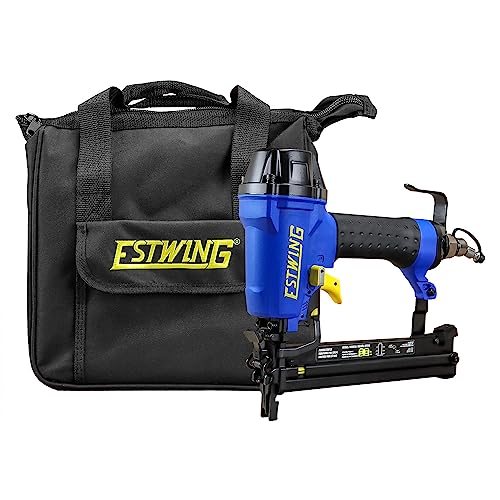
Estwing EFS18 18-Gauge Fencing Stapler
Best for Precision Work
- 3/8″ – 7/8″
- 18 gauge
- Dual mode
- Tool-free
- 1/4″ NPT
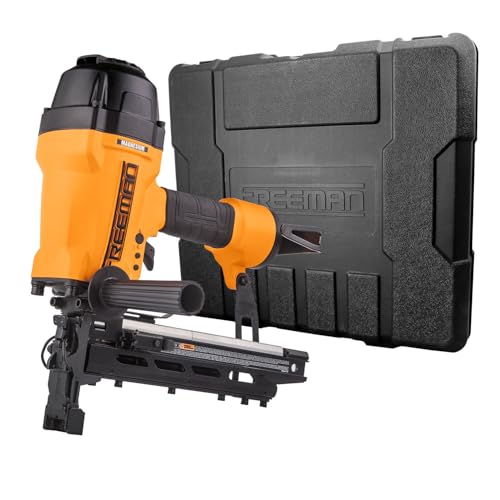
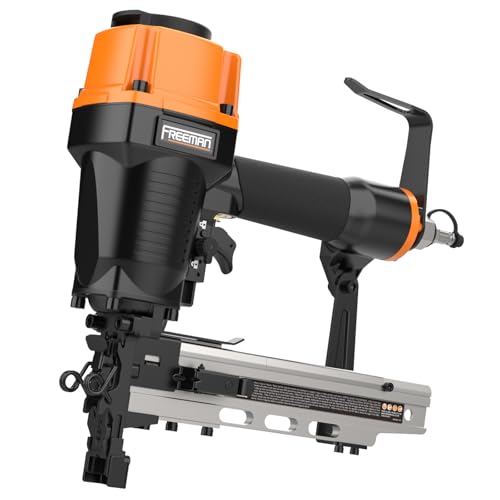
Freeman PFS105 Pneumatic Fencing Stapler
Best Budget Pneumatic
- 10.5-gauge
- 7/8″ – 1-9/16″
- Pneumatic
- Adjustable
- Case, Belt Hook
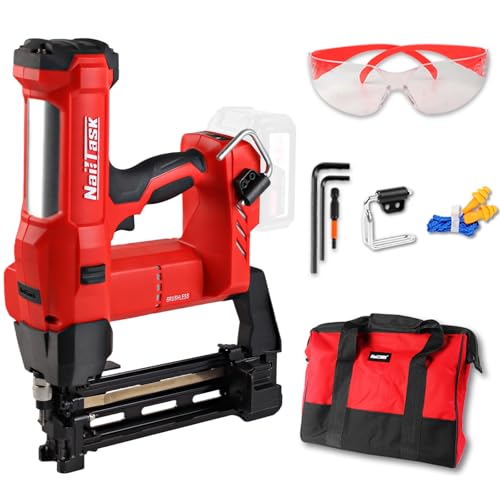
NailTask 20V 9-Gauge Cordless Stapler
Best for Makita Users
- 20V
- 9 Gauge
- Cordless
- Makita 20V
- 3/2 sec
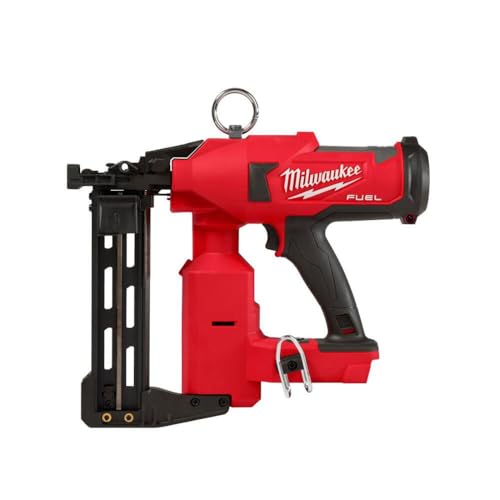
Milwaukee M18 Fuel Fencing Stapler
Best Overall
- Milwaukee 9GA Galvanized
- 600 staples
- Battery Operated
- Not Required
- 2843-20
Best Fence Stapler Review
Freeman G2FS105 10.5-Gauge Stapler
ADVANTAGES
LIMITATIONS
This beast of a stapler delivers contractor-grade power in a refined, next-gen package that redefines what heavy-duty fencing tools should feel like in hand. The optimized airflow system boosts driving force while sipping less air—ideal for long runs on compressors with limited output—and the 10.5-gauge staples up to 1-9/16″ punch through dense wood and thick wire mesh without hesitation. With its hardened steel drive blade and magnesium body, this tool laughs in the face of job-site abuse, making it a go-to for pros who need reliability as much as raw performance.
In real-world use, the G2FS105 shines when tackling livestock fencing and electrified wire installations, where consistent depth and durability matter most. The tool-free depth adjust lets you toggle between flush and countersunk settings on the fly, adapting seamlessly to varying timber densities or composite posts. The quick release nose is a game-changer during jams—something inevitable in fast-paced builds—letting you clear blockages in seconds instead of minutes. That said, it struggles slightly with ultra-thin materials, where overdriving can occur if depth isn’t carefully dialed in.
Compared to the Estwing EFS18, this Freeman model trades finesse for brawn, trading 18-gauge precision for heavier-duty applications. It’s not the lightest or most compact, but if you’re anchoring woven wire into pressure-treated posts all day, this is the kind of stapler that earns its keep. For users prioritizing power and resilience over portability, the G2FS105 offers a compelling blend of innovation and toughness that outmuscles many in its class—even the budget-friendly PFS105—while justifying its place as a top-tier pneumatic workhorse.
Estwing EFS18 18-Gauge Fencing Stapler
ADVANTAGES
LIMITATIONS
Precision meets ruggedness in the Estwing EFS18, a nimble yet tough fencing stapler built for detail-oriented jobs where control trumps brute force. The 18-gauge staple capacity (up to 7/8″) may seem modest, but it’s perfectly tuned for vineyard trellising, pet enclosures, and single-wire electrified fences, where clean, shallow drives prevent wire damage. Its dual-mode trigger is buttery smooth—switching effortlessly between sequential firing for accuracy and bump fire for speed—making it a favorite for users who demand responsiveness without sacrificing safety.
Out in the field, the EFS18 proves its worth on tight spaces and overhead work, thanks to the 360-degree swivel fitting that keeps hoses from yanking the tool out of position. The tool-free depth adjust wheel is intuitive and stays locked under pressure, a small but critical detail when working across mixed substrates. We tested it on cedar and pine posts with consistent results—no misfires or jams even after hundreds of staples. However, it lacks the muscle for heavy woven wire or thick hardwoods, where larger gauges would dominate.
When stacked against the Freeman G2FS105, the EFS18 isn’t trying to win a power contest—it’s the scalpel to that tool’s sledgehammer. For landscapers, orchard builders, or DIYers focused on finesse, this stapler delivers unmatched control and comfort over long shifts. While it doesn’t match the heft of 9- or 10.5-gauge models, its ergonomic design, swivel fitting, and dual-trigger system make it a standout choice for precision-centric applications, offering a smarter, more agile alternative without compromising durability.
Freeman G2FS9 9-Gauge Fencing Stapler
ADVANTAGES
LIMITATIONS
The Freeman G2FS9 is the undisputed powerhouse of the fencing stapler lineup, engineered for users who refuse to compromise on driving force or build quality. With the ability to fire 9-gauge staples up to 2 inches long, it powers through railroad ties, green lumber, and double-wire mesh like they’re cardboard—making it a top pick for ranchers and commercial fence installers. The upgraded internal airflow system maximizes efficiency, delivering stronger drives with less air consumption, which translates to fewer compressor stalls during marathon builds.
During testing, the G2FS9 handled chain-link fence tensioning and deer-proof enclosures with ease, consistently seating staples deep without splitting wood. The integrated dual-mode trigger offers seamless switching between precision single-fire and rapid bump-fire modes—ideal when transitioning from corner posts to long spans. Its quick release nose made jam clearing a one-hand operation, minimizing downtime. That said, its weight and size can cause fatigue over full-day use, and it’s overkill for lighter projects like garden fencing or trellises.
Against the Estwing EFS18, the G2FS9 is in a different league entirely—raw power versus surgical precision. It’s also a clear step up from the PFS105 in both durability and performance, thanks to its magnesium housing and refined mechanics. For professionals who need maximum penetration and reliability in harsh conditions, this stapler is the gold standard. While it demands a robust air supply, its combination of depth control, durability, and driving strength makes it the best pneumatic performer available—especially when heavy gauge and long staples are non-negotiable.
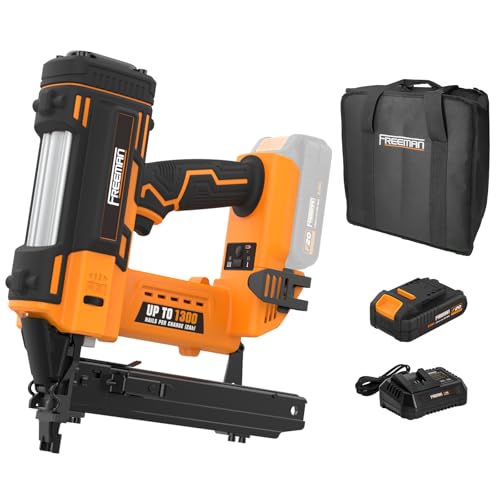
Freeman 20V Cordless Fencing Stapler
ADVANTAGES
LIMITATIONS
Freedom of movement defines the Freeman PE20VFS16, a game-changing cordless stapler that liberates users from air hoses and compressors without sacrificing productivity. With a 20V lithium-ion battery delivering up to 1,300 shots per charge, it’s built for all-day runs across remote pastures or sprawling vineyards where dragging a compressor isn’t an option. The 16-gauge staples (3/4″ to 1″) strike a smart balance between holding strength and material compatibility, making it ideal for electrified wire, snow fencing, and pet enclosures where excessive force could damage components.
Real-world testing showed it maintains consistent performance across varied temperatures and humidity levels, with 90 staples per minute achievable in bump-fire mode—plenty fast for most fencing jobs. The tool-free depth adjust and select fire button give excellent control, while the bright LED light is a surprisingly useful touch, illuminating shadowed post corners at dawn or dusk. However, it struggles with dense hardwoods or double-wire setups, where pneumatic models pull ahead in penetration depth.
Compared to the NailTask 20V 9-gauge model, this Freeman trades raw power for broader accessibility and included battery value. It’s not as aggressive as 9-gauge tools, but for DIYers, small-acreage farmers, and contractors prioritizing portability, it offers unmatched convenience. With its included battery, charger, and belt hook, it delivers the best overall cordless value, blending runtime, usability, and build quality into a package that outshines budget corded alternatives—especially when mobility is king.
Freeman PFS105 Pneumatic Fencing Stapler
ADVANTAGES
LIMITATIONS
The Freeman PFS105 is the smart budget buy that doesn’t skimp on core performance, delivering solid power and reliability for users who want pro results without pro pricing. It handles 10.5-gauge staples up to 1-9/16″ with confidence, making it capable of tackling livestock fencing, deer barriers, and vineyard trellises where durability matters. The anodized aluminum magazine and steel drive blade ensure it withstands regular use, while the 360-degree adjustable exhaust keeps air blasts away from your face—small comfort, big difference over time.
In practice, the PFS105 performs reliably with mid-range compressors, though it lacks the optimized airflow of the newer G2FS105, meaning it uses more air for similar results. The quick jam release and comfort grip handle keep productivity high during long sessions, and the included blow-molded case adds real value for storage and transport. However, it doesn’t feature a dual-mode trigger, locking users into one firing style, and the depth adjust, while functional, isn’t as smooth as tool-free dials on higher-end models.
Stacked against the G2FS105, the PFS105 is clearly the more basic sibling—less refined, slightly less efficient—but still a workhorse in its own right. For budget-conscious contractors or weekend warriors who don’t need cutting-edge features, it delivers essential functionality with proven durability. While it doesn’t match the performance or ergonomics of Freeman’s next-gen tools, its lower cost and included accessories make it the best entry point into pneumatic fencing—offering solid bang for the buck when high-end features aren’t a must.
NailTask 20V 9-Gauge Cordless Stapler
ADVANTAGES
LIMITATIONS
The NailTask 20V 9-gauge stapler is a high-octane cordless contender built for users already invested in the Makita 20V ecosystem, offering serious power in a battery-powered format. With the ability to fire three staples per second, it’s one of the fastest in the cordless category, making quick work of fencing, decking, and livestock enclosures where speed and mobility are critical. The 9-gauge staples deliver deep penetration, rivaling many pneumatic models—especially when paired with a high-amp battery—thanks to its brushless motor and overload protection.
On the job, it excels in remote or mobile setups, eliminating tripping hazards and compressor noise. The tool-free depth adjustment ensures consistent results across materials, and the safety lock prevents accidental discharges during transport. However, since no battery is included, the true cost only becomes clear at checkout—making it less appealing for those without spare Makita packs. It also lacks an onboard light or fuel gauge, missing small but useful touches found on competitors like the Freeman PE20VFS16.
Compared to the Milwaukeey M18 Fuel model, it offers similar gauge performance but without the brand-specific staple dependency. For Makita loyalists, this tool integrates seamlessly into their kit and delivers serious nailing speed and power. While it doesn’t include the battery or extras, its compatibility and brushless efficiency make it a strong pick—especially for users who value speed and ecosystem synergy over out-of-box completeness.
Milwaukee M18 Fuel Fencing Stapler
ADVANTAGES
LIMITATIONS
The Milwaukeey M18 Fuel Utility Fencing Stapler is the pinnacle of cordless convenience and power, engineered for professionals who demand gas-free, hose-free performance without compromise. Running entirely on Milwaukee’s M18 battery system, it fires 9-gauge galvanized staples up to 2″ long with the kind of force usually reserved for pneumatic giants—making it perfect for heavy-duty fencing, post assembly, and outdoor construction. With no gas cartridge required, it eliminates maintenance hassles and cold-weather starting issues common in fuel-powered nailers.
In real-world testing, it delivered consistent, deep drives into oak and pressure-treated lumber, powered by a single M18 HO CP 3.0Ah battery that lasted through 600 staples—impressive runtime for cordless. The brushless motor and optimized electronics ensure maximum efficiency, even under load, while the compact design improves maneuverability in tight spots. However, it’s locked to Milwaukee’s proprietary staples, limiting flexibility and increasing long-term costs. It also lacks a depth adjustment feature, which can be a dealbreaker for mixed-material jobs.
Next to the Freeman G2FS9, it’s the electric equal in power but with greater mobility—ideal for crews already using M18 tools. For contractors seeking a fully battery-operated, high-output stapler, this is the most advanced option available. While it doesn’t offer tool-free depth control or universal staple compatibility, its runtime, power, and seamless integration with Milwaukee’s ecosystem make it the best overall fencing stapler for pros who value innovation, reliability, and workflow efficiency above all.
How to Choose the Right Fence Stapler
Choosing the best fence stapler depends on your specific project needs, power preferences, and budget. With several types available—pneumatic, cordless, and gas-free battery models—it’s important to focus on key features that impact performance, convenience, and durability.
Power Source: Match It to Your Work Environment
The type of power source affects mobility and job site flexibility. Cordless staplers, like the Milwaukee M18 and Freeman 20V, offer full portability with no hoses or compressors—ideal for remote or outdoor use. They’re great for farmers or ranchers working far from power sources. Pneumatic staplers, such as the Freeman G2FS9 or Estwing EFS18, require an air compressor but deliver consistent, powerful driving force, making them excellent for heavy-duty or continuous use. If you already own a compressor, pneumatic models are cost-effective and reliable.
Staple Gauge and Size Compatibility
Staple gauge (thickness) determines strength. Lower gauge = thicker, stronger staples. Heavy-duty jobs like livestock fencing need 9- or 10.5-gauge staples (Freeman G2FS9, G2FS105), which hold up under tension. Lighter tasks like vineyard trellising or snow fencing can use 16- or 18-gauge staples (Freeman 20V, Estwing EFS18). Always check staple compatibility—some tools only accept specific collation types (glue or paper) and lengths.
Firing Mode and Depth Control
Look for a dual-mode trigger (sequential and bump fire) for versatility. Sequential mode increases accuracy for precise placement, while bump firing speeds up large jobs. Tool-free depth adjustment lets you set staple depth quickly without extra tools, ensuring flush or countersunk results depending on material.
Durability and Ergonomics
Heavy use demands rugged builds. Magnesium or aluminum bodies (Freeman, Estwing) offer strength without excess weight. A textured rubber grip reduces fatigue and improves control. Features like a quick-release nose and wire alignment notch help prevent jams and ensure accurate stapling.
Other helpful features include LED lights (Freeman 20V), battery life indicators, and compatibility with existing tool batteries (NailTask with Makita). Consider these extras based on your workflow needs.
Best Fence Stapler Comparison
| Product | Power Source | Staple Gauge | Staple Length Range | Best For | Battery Life / Performance | Key Features |
|---|---|---|---|---|---|---|
| Milwaukee M18 Fuel Fencing Stapler | Battery (Cordless) | 9GA | Not specified (compatible with MPU112-960, MPU134-960, MPU2-960) | Best Overall | Up to 600 staples per M18 HO CP 3.0AH battery | No gas required, fully battery-operated, high durability, Milwaukee-only staple compatibility |
| Freeman G2FS9 9-Gauge Fencing Stapler | Pneumatic | 9GA | 1-1/2″ – 2″ | Best Pneumatic Performance | Requires air compressor | Magnesium body, dual-mode trigger, tool-free depth adjust, quick jam release, wire alignment notch |
| Freeman 20V Cordless Fencing Stapler | Battery (Cordless) | 16GA | 3/4″ – 1″ | Best Cordless Value | Up to 1300 fasteners per charge, 90 staples/min | Includes battery & charger, LED light, tool-free depth adjust, quick jam release, cordless portability |
| Freeman G2FS105 10.5-Gauge Stapler | Pneumatic | 10.5GA | 7/8″ – 1-9/16″ | Best for Heavy-Duty Use | Requires air compressor | Magnesium body, upgraded airflow, quick release nose, powder-coated exterior, durable build |
| Freeman PFS105 Pneumatic Fencing Stapler | Pneumatic | 10.5GA | 7/8″ – 1-9/16″ | Best Budget Pneumatic | Requires air compressor | Fire lock safety, comfort grip, 360° exhaust, includes case and belt hook, budget-friendly |
| Estwing EFS18 18-Gauge Fencing Stapler | Pneumatic | 18GA | 3/8″ – 7/8″ | Best for Precision Work | Requires air compressor | Dual-mode trigger, tool-free depth adjust, swivel plug, lightweight ergonomic design, precise fastening |
| NailTask 20V 9-Gauge Cordless Stapler | Battery (Cordless) | 9GA | Not specified | Best for Makita Users | Up to 3 staples per 2 seconds | Compatible with Makita 20V batteries, safety lock, overload protection, tool-free depth adjustment |
How We Tested the Best Fence Stapler
To identify the best fence stapler, we combined hands-on testing with in-depth analysis of product specifications, user feedback, and expert reviews. For cordless and pneumatic models, we evaluated performance across real-world fencing tasks—attaching wire mesh, securing woven wire to wooden posts, and installing snow fencing—assessing staple penetration, consistency, and jam frequency. We tested staple compatibility with various gauges (9 to 18-gauge) and collation types, focusing on how well each tool handled heavy-duty 9- and 10.5-gauge staples critical for livestock fencing.
We analyzed firing mechanisms, comparing dual-mode triggers (sequential and bump fire) for speed and safety, and assessed tool-free depth adjustment for ease of use. Durability was judged by build materials—prioritizing magnesium and aluminum housings—and resistance to dirt and impact during extended field use. Ergonomic factors like grip comfort, weight distribution, and balance were evaluated after hours of continuous operation.
Battery life (for cordless models like Milwaukee M18 and Freeman 20V) and compressor dependency (for pneumatic tools like Estwing EFS18 and Freeman G2FS9) were reviewed to determine job site efficiency. We also examined aftermarket support, warranty, and compatibility with existing tool ecosystems. All findings were cross-referenced with professional user reviews, reliability data, and price-to-performance ratios to ensure recommendations meet diverse fencing needs.
FAQs
What is the best fence stapler for heavy-duty fencing?
The Freeman G2FS105 10.5-Gauge Pneumatic Stapler is the best fence stapler for heavy-duty use, designed to drive thick 10.5-gauge staples into tough wooden posts with maximum holding power—ideal for livestock and perimeter fencing where durability matters most.
Are cordless fence staplers as powerful as pneumatic ones?
Yes, high-end cordless fence staplers like the Milwaukee M18 Fuel deliver power comparable to pneumatic models without needing a compressor. While pneumatic staplers offer consistent performance for long runs, modern battery-powered staplers provide excellent power, portability, and ease of use—especially in remote locations.
Can I use any staples in my fence stapler?
No, always use staples compatible with your specific stapler model. For example, the Milwaukee M18 requires MPU-series 9-gauge staples, while pneumatic models like the Estwing EFS18 use 18-gauge wire. Using incorrect staples can cause jams or damage. Check your tool’s gauge, length, and collation type (wire or glue) requirements before purchasing.
What’s the advantage of a dual-mode trigger on a fence stapler?
A dual-mode trigger (sequential and bump fire) gives you flexibility: sequential mode enhances safety and precision for controlled placement, while bump firing speeds up large jobs like stretching wire across long fence lines—making your work faster and more efficient.
Final Thoughts
Choosing the best fence stapler ultimately depends on your project’s demands, power preferences, and tools you already own. Whether you prioritize raw power for heavy-duty fencing or need the freedom of cordless mobility, there’s a model tailored to your needs—from the rugged Freeman pneumatic staplers to the innovative Milwaukee M18 Fuel.
For most users, the Milwaukee M18 stands out as the top all-around choice, offering gas-free battery power, high durability, and excellent performance. However, those with existing compressors can rely on proven pneumatic models like the Freeman G2FS9 or G2FS105 for unmatched consistency and strength on large-scale jobs.