
Fix Hitachi Framing Nailer Jammed Issue
A jammed Hitachi framing nailer can stop a job cold. Models like the NR83A2, NR83AA, and NV83A5 (now sold under Metabo HPT) are workhorses, but they jam for predictable reasons. Debris, wrong nails, low air pressure, and ribbon spring misalignment top the list. The good news? Most jams clear in under 10 minutes once you know where to look.
This guide walks you through diagnosing the jam type, clearing it safely, and preventing future issues. Whether you’re battling a frozen driver blade or a stubborn coil feed, you’ll find a step-by-step fix here.
Diagnose the Jam Type Before Disassembling

Jumping straight into disassembly wastes time. A quick visual check tells you what you’re dealing with.
Check the Driver Blade Position
Look at the nose of your nailer:
– Blade fully retracted points to a feed issue, not a mechanical lockup.
– Blade stuck halfway suggests low pressure or an internal burr.
– Blade won’t move at all means a severe jam requiring force or disassembly.
Confirm Your Model and Nail Type
Knowing your tool prevents mistakes that cause new jams:
– Stick nailers (NR83A2, NR83AA): Use 34° paper-tape collated nails.
– Coil nailer (NV83A5): Uses coiled wire-collated nails.
Mismatched nails are a leading cause of jams. Verify compatibility before proceeding.
Clear a Jam in a Stick Nailer (NR83A2 / NR83AA)
Stick nailers jam when debris blocks the channel or when the feed mechanism binds. Follow these steps to clear the jam without damaging your tool.
Disconnect Air and Empty the Magazine
Safety first:
– Unplug the air hose completely.
– Remove all nails from the magazine.
This prevents accidental firing and releases spring tension.
Remove the Magazine Assembly
The magazine blocks access to the jam:
– Locate the two Allen screws under the depth adjustment knob.
– Loosen them with a 4mm Allen wrench.
– Gently pry the magazine away from the nose using a flathead screwdriver.
Free the Driver Blade
Once the magazine is off, you can reach the blade:
– If the blade is stuck behind a nail, push it down manually with a screwdriver.
– For stubborn jams, use a nail set and hammer to tap the blade downward.
– Ensure the blade moves fully to the bottom of its stroke.
Extract the Jammed Nail
Pull the stuck nail out of the nose channel. Inspect it for bending. Check the channel for debris, torn paper tape, or adhesive buildup.
Reassemble and Test
Put the tool back together carefully:
– Reattach the magazine, aligning the rails precisely.
– Tighten the Allen screws securely.
– Reconnect air and dry-fire the tool 2–3 times to reset the piston cycle.
Fix Ribbon Spring Misalignment (NR83A2)
The NR83A2 has a known weak point: the ribbon spring near the nailer head. After removing the securing bolt for maintenance, the spring often slips out of alignment and won’t let the bolt back in.
Recognize the Symptoms
You’ll know the spring is misaligned when:
– The bolt won’t go back in after reassembly.
– Spring coils bind against the rail.
– The nail strip stops advancing mid-feed.
Realign the Spring with a Metal Rod
Paperclips bend too easily. Use a small nail or thin metal rod instead:
1. Insert the rod into the bottom coil of the spring.
2. Gently pry to uncoil and expose the bolt hole.
3. Hook the hole and pull the spring slightly backward to align it with the rail.
4. Slide the bolt through while holding tension with the rod.
5. Tighten the bolt, but do not overtighten or you’ll deform the spring.
Check for the Metal Support Clip
Some NR83A2 units require a small metal clip on the bolt to hold spring tension. If your clip is missing or fell out during disassembly, reinstall it before tightening the bolt.
Clean the Rail After Every Use
Sawdust and resin build up fast in the spring area. Wipe the rail and spring clean after each job to prevent binding.
Resolve Driver Blade Freeze-Up (NR83AA)

The NR83AA can suffer a complete ram lockup, especially when using 8D nails in hardwoods or running at marginal pressure.
Why the Blade Freezes
Three causes account for most NR83AA freeze-ups:
– Air pressure below 110 PSI prevents the piston from completing its cycle.
– Metal burrs in the guide channel lock the ram mid-stroke.
– Poor-quality nails misfeed and wedge under the blade.
Test for a Pressure-Related Jam
Before disassembling, rule out low pressure:
– Set your compressor to 110–120 PSI.
– Dry-fire the tool. If it cycles normally, low pressure was the culprit.
Free a Stuck Blade
If the blade won’t move on its own:
– Tap it down with a nail set and hammer.
– If there’s still no movement, do not use a sledgehammer. You risk bending the housing or damaging internal components.
– For new units with total lockup, return the tool for exchange. Internal burrs are a known defect in some production batches.
Replace Worn Parts if Jams Persist
When jams keep coming back:
– Replace the driver blade.
– Inspect the magazine for wear or damage.
– Switch to premium nails. Many pros report fewer jams with Senco, Simpson, or Bostitch fasteners.
Clear a Coil Nailer Jam (NV83A5)
Coil nailers jam for different reasons than stick nailers. Lubrication deficits and deformed coils are the usual suspects.
Stop and Isolate the Tool
- Disconnect the air supply.
- Remove all nails from the magazine.
Reset the Driver Blade
- Tap the blade downward with a nail set and hammer.
- Alternatively, use an old driver blade as a drift to push the current blade down.
- Make sure the blade reaches the bottom of its stroke.
Remove the Stuck Fastener
Once the blade is bottomed out, extract the jammed nail from the nose. Check for bent nails or twisted coil alignment.
Lubricate the Nose Cylinder
Coil nailers need oil to run smoothly:
– Apply 10–15 drops of pneumatic oil into the nose before each use.
– Without oil, the piston drags, causing slow feeds and repeat jams.
Prevent Future Jams: Address the Root Causes
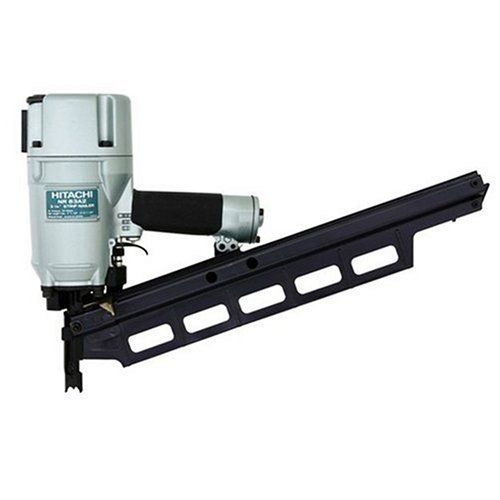
Most jams are avoidable. Fix the underlying cause and you’ll spend more time building and less time troubleshooting.
Match Your Nails to the Tool
Never mix nail types:
– 34° vs. 28° collation angles are not interchangeable.
– Paper-tape and wire-collated nails require different tools.
– Framing and roofing nail shank diameters differ.
Always verify your nail specs match the manufacturer’s recommendations.
Trim Nail Stick Ends for Smoother Feeding
The adhesive ends of paper-tape strips are bulky and jam-prone:
– Use a razor knife to trim the first and last inch of each stick.
– This removes excess paper and adhesive that cause binding.
Avoid These Operational Mistakes
User error causes a surprising number of jams:
– Don’t slam the follower. Press firmly but gently when closing the magazine.
– Never double-load. Wait until the magazine is empty before inserting a new strip.
– Load nails correctly. Strips go in nail heads first, with the tape on the correct side. Backward loading jams the tool instantly.
Maintain Proper Air Pressure
Running at 80 PSI is a common mistake:
– Use 110–120 PSI for reliable cycling.
– Test with a gauge; compressor dials are often inaccurate.
– If a jam occurs, try increasing pressure to 110 PSI and dry-firing 2–3 times before assuming mechanical failure.
Clean and Lubricate Regularly
Routine maintenance prevents most jams:
– Coil nailers: Add 10–15 drops of oil before each session.
– Stick nailers: Wipe the rail and spring area after every job.
– Weekly: Blow out dust with compressed air.
Handle End-of-Strip Jams
The last 2–3 nails in a stick often wobble and misfire because the feed spring loses tension.
Why It Happens
When only a few nails remain, the spring can’t push them firmly into position. Loose nails tilt and jam in the firing channel.
Fixes That Work
- Reload when 5–6 nails remain instead of running the strip empty.
- Tighten the feed spring if your model allows adjustment.
- Trim stick ends to reduce bulk that contributes to wobble.
When to Replace or Return the Tool
Some jams signal problems you can’t fix in the field.
Return New Units with Total Lockup
If a brand-new NR83AA or NR83A2 has a frozen ram:
– Do not force it. Excessive force causes more damage.
– Exchange it immediately. Internal burrs are a known quality control issue in some batches.
Bypass Slow Warranty Centers
Big-box stores often exchange tools faster than mail-in warranty service. Rental departments may have technicians who can diagnose on the spot. If you bought the nailer as part of a kit, check the store’s policy before assuming you must return everything together.
Quick Troubleshooting Checklist
| Symptom | Likely Cause | Fix |
|---|---|---|
| Blade stuck mid-cycle | Low pressure or burr | Increase to 110+ PSI; disassemble if stuck |
| Spring won’t re-engage | Misaligned ribbon spring | Use nail to uncoil and align |
| Jam at end of strip | Weak spring tension | Reload early; trim stick ends |
| Slow feeding (coil) | No lubrication | Add 10–15 drops of oil |
| Repeated jams | Wrong nails or poor quality | Verify specs; use premium nails |
| Total lockup (new unit) | Internal burr | Return for replacement |
Frequently Asked Questions About Hitachi Framing Nailer Jams
Why does my Hitachi framing nailer keep jamming with 8D nails?
The NR83AA model is known for jamming with 8D sheathing nails, especially in hardwoods. Low air pressure (below 110 PSI) makes the problem worse. Try increasing pressure to 110–120 PSI, switching to a premium nail brand, or using a different nail size if jams persist.
What air pressure should I use for a Hitachi framing nailer?
Run your Hitachi framing nailer at 110–120 PSI. Operating at 80 PSI is below the minimum requirement and causes the piston to stall mid-cycle, leading to jams. Use a gauge to verify pressure since compressor dials are often inaccurate.
How do I fix a ribbon spring that won’t realign on my NR83A2?
Use a small nail or thin metal rod (not a paperclip) to uncoil the spring and expose the bolt hole. Hook the hole, pull the spring slightly backward to align it with the rail, then slide the bolt through while holding tension. Check for a missing metal support clip before tightening.
Can I use a sledgehammer to free a frozen driver blade?
No. Using a sledgehammer risks bending the ram or cracking the housing. For a stuck blade, tap it down with a nail set and hammer. If it still won’t move, the tool likely has an internal burr or defect. Return new units for exchange rather than forcing them.
How often should I oil my Hitachi coil nailer?
Apply 10–15 drops of pneumatic oil into the nose cylinder before each use. Lack of lubrication is the top cause of slow feeding and jams in NV83A5 coil nailers. Stick nailers need less oil but still benefit from occasional lubrication.
Why does my nailer jam at the end of a nail strip?
The feed spring loses tension when only 2–3 nails remain. These loose nails wobble and fail to align with the firing channel. Reload when 5–6 nails are left, tighten the feed spring if adjustable, or trim the stick ends to reduce bulk.
Key Takeaways for Fixing a Jammed Hitachi Framing Nailer

A jammed Hitachi framing nailer is frustrating but rarely a deal-breaker. Focus on three things: correct nails, proper pressure (110–120 PSI), and regular maintenance. For stick models, master the ribbon spring realignment technique using a metal rod. For coil models, never skip the oil.
If a new tool jams hard out of the box, exchange it. Forcing a locked ram causes more damage and wastes your time. Keep this guide handy, and you’ll clear most jams in under 10 minutes and get back to work.