How to Identify a Bostitch Framing Nailer
You’ve found a framing nailer at a yard sale or inherited one from a job site, but you can’t tell whether it’s a genuine Bostitch framing nailer or an off-brand imitation. This uncertainty matters because the wrong parts, wrong fasteners, or unverified authenticity can cost you time and money on the jobsite. Bostitch has been building durable fastening tools since 1896, and since Stanley Works acquired the company in 1986 (now Stanley Black & Decker), the brand has remained a top choice for professionals.
This guide gives you a clear, step-by-step process to identify a Bostitch framing nailer with confidence. You’ll learn where to look for model numbers, how to verify authenticity, and what to do with that information once you have it.
Locate the Model Number on Your Framing Nailer
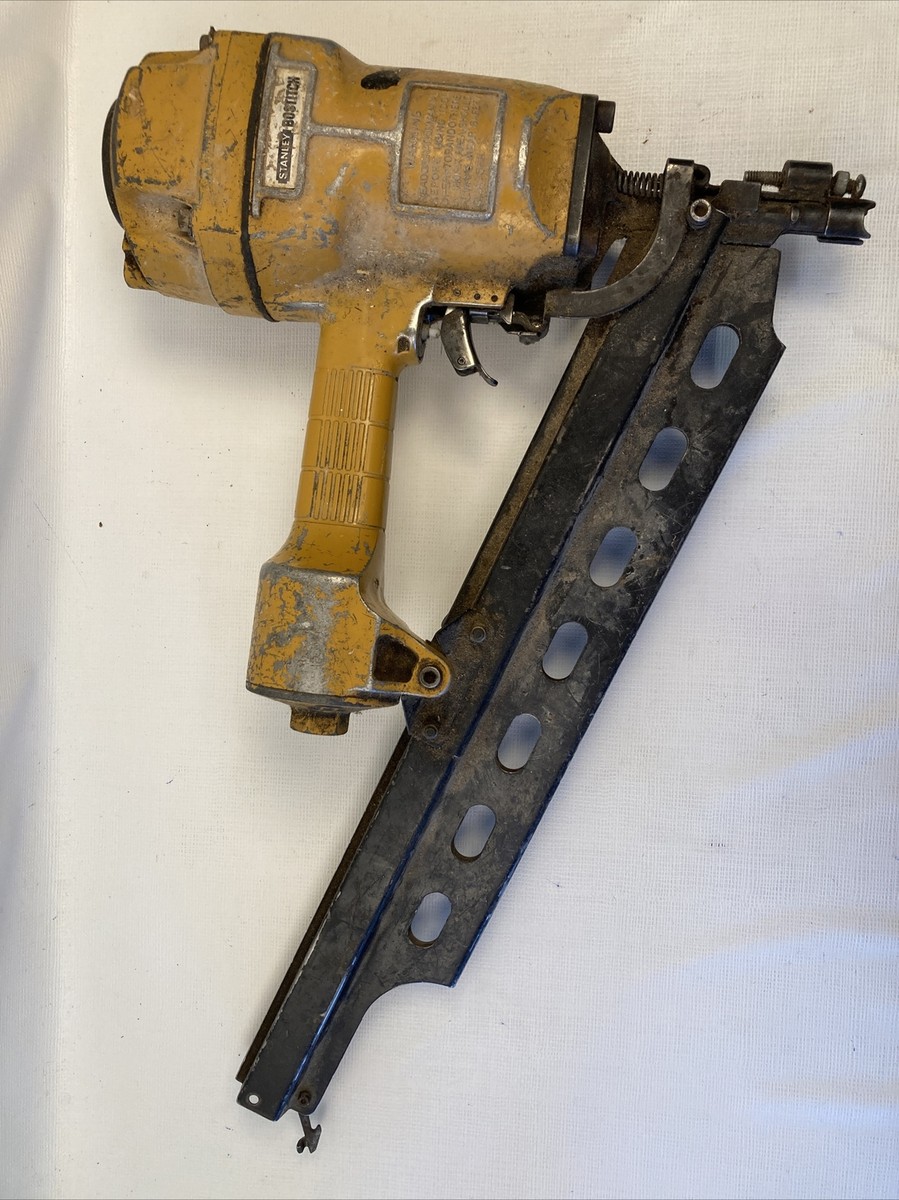
The fastest way to identify any Bostitch tool is through its model number. This unique code tells you exactly which generation, design, and configuration you have.
Common Places to Find the Stamp or Label
Bostitch usually stamps or prints the model number in one or more of these areas:
- Tool body housing: Often on the top, side, or near the main frame
- Nameplate or label: A metal plate or adhesive sticker with specs
- Magazine or nail tray: Near the loading area for fasteners
- Trigger housing or handle base: Frequently stamped on newer models
Look closely under dirt, grease, or paint. Many users overlook the number because it is covered in debris from jobsite use.
Write Down the Exact Model Number
Once you spot it, record the full model number exactly as shown. Letters and numbers are not interchangeable, so accuracy matters from the start.
Recognize Key Bostitch Model Names
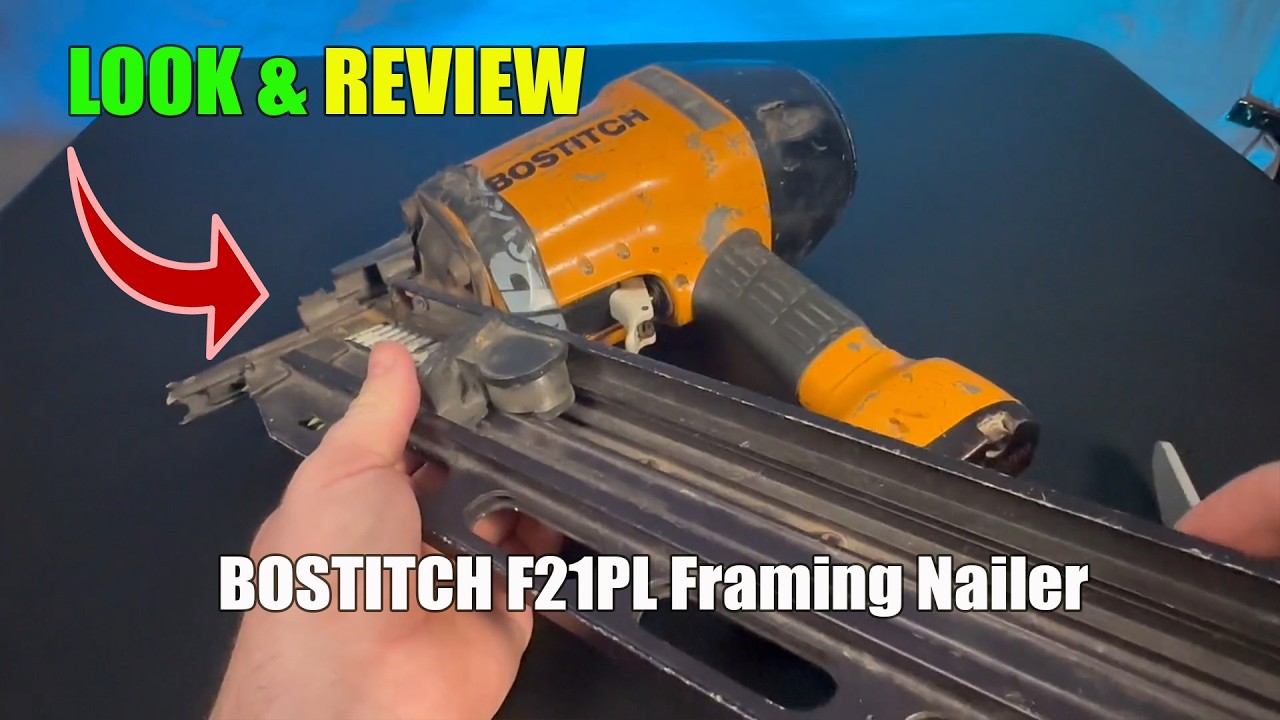
Some Bostitch framing nailers carry model names that appear in manuals and parts systems. Recognizing these names helps you cross-check your tool quickly.
Documented Bostitch Framing Models
The following models are widely referenced in Bostitch parts systems:
| Model | Description |
|---|---|
| BIGBERTA | Heavy-duty pneumatic framing nailer built for durability |
| BRT130 | Compact framing nailer accepting 30 degree clipped head nails |
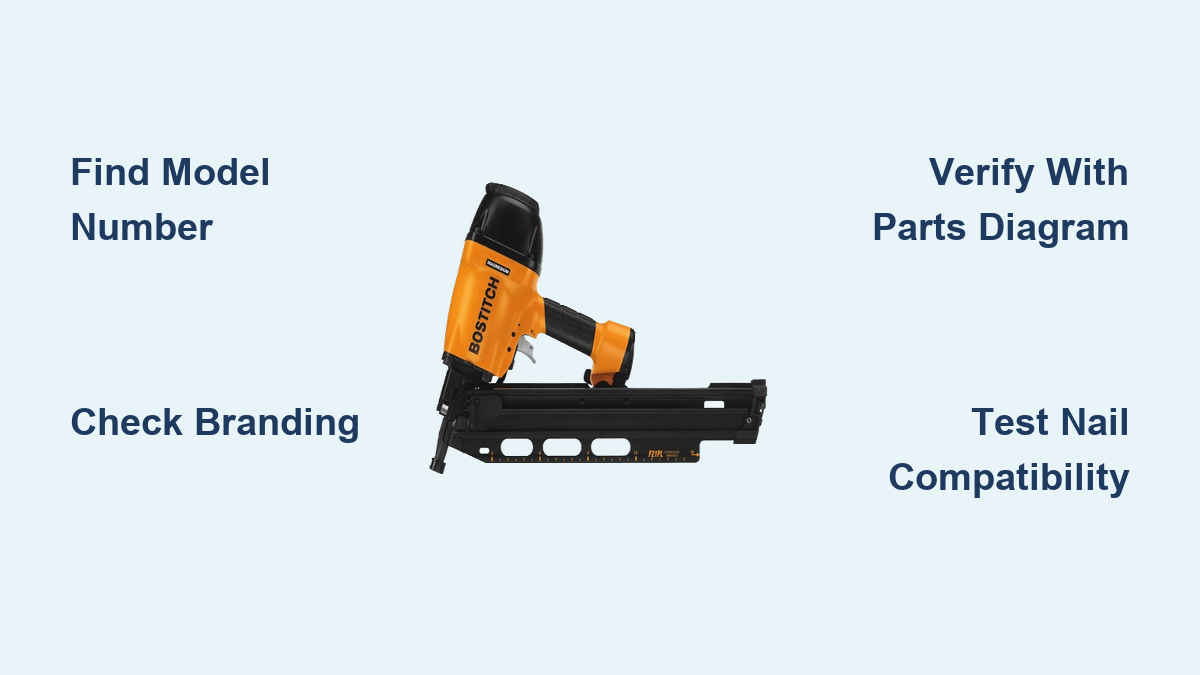
| F21PL | 21 degree full-round head framing nailer common on construction sites |
If your tool matches one of these names by number and appearance, you’ve likely confirmed its identity.
Verify Bostitch Brand Markings
A real Bostitch framing nailer always shows clear branding. This serves both as proof of authenticity and as a traceability marker.
Look for the Bostitch Logo and Name
Check the tool body for:
– The Bostitch name stamped or printed clearly
– The distinctive logo, often featuring a stylized “B”
– Stanley Black & Decker branding on tools produced after 1986
If branding is missing, faded, or scratched off, the tool may be refurbished, counterfeit, or rebranded. Cross-check the model number more carefully in these cases.
Spot Manufacturing Era Indicators
Tools made before 1986 were standalone Bostitch products. Those built after carry subtle signs of Stanley ownership:
– Updated fonts or label designs
– Inclusion of Stanley part numbers or compliance codes
– Packaging or manuals showing both Bostitch and Stanley logos
These cues don’t affect performance, but they help confirm the tool’s era and legitimacy.
Use Online Parts Lookup Tools to Confirm Identification
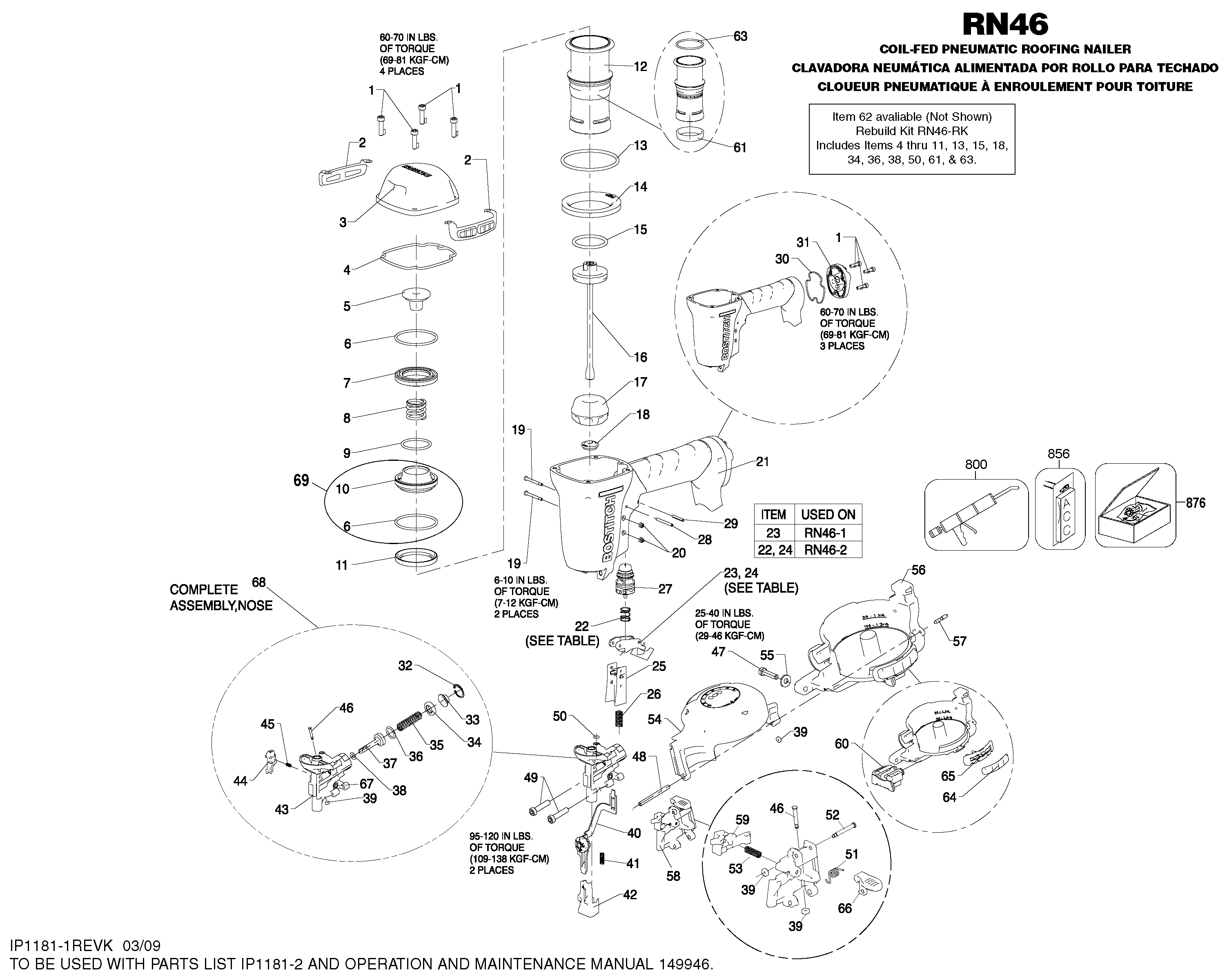
Once you have the model number, verify it through official parts systems. This step is what separates a true Bostitch from a look-alike tool.
Search Trusted Parts Databases
Visit the Stanley Bostitch website or other parts lookup platforms and enter your model number. You should be able to:
– Pull up an exploded parts diagram
– See compatible fasteners and accessories
– Confirm manufacturer support status
If your model returns a detailed diagram with labeled components, it is a genuine Bostitch.
Match Physical Design to the Diagram
Compare your tool against the exploded view:
– Does the magazine angle match (21°, 28°, or 30°)?
– Is the nose design identical for full-round or clipped-head nails?
– Are the trigger and depth adjuster positions consistent with the diagram?
Even small differences can suggest a different model or a non-Bostitch tool.
Check Fastener Compatibility for Clues
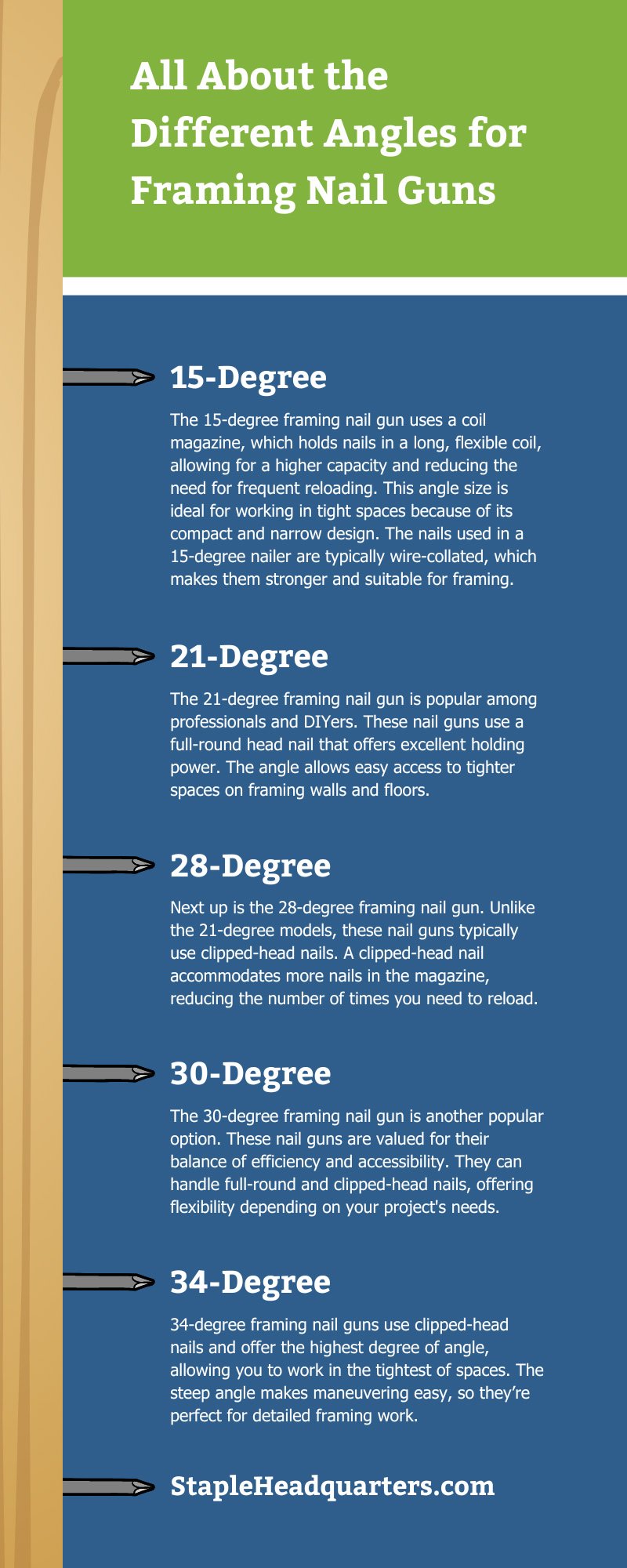
If the model number is missing or unclear, the nail type and angle can help narrow down what you’re holding.
Identify the Magazine Angle
Look at the nail tray:
– 21°: Full-round head nails, often plastic collated
– 28° to 30°: Clipped-head nails, usually wire collated
– 34°: Less common, used in compact models
Bostitch framing nailers most commonly use 21° and 30° magazine angles.
Determine Nail Length and Gauge
Most Bostitch framing nailers accept:
– 2″ to 3-1/2″ nails
– .113″ (102) or .131″ (113) shank diameter
Check the magazine label. If the number is gone, measure a nail from head to tip to recover this information.
Troubleshoot Missing or Damaged Labels
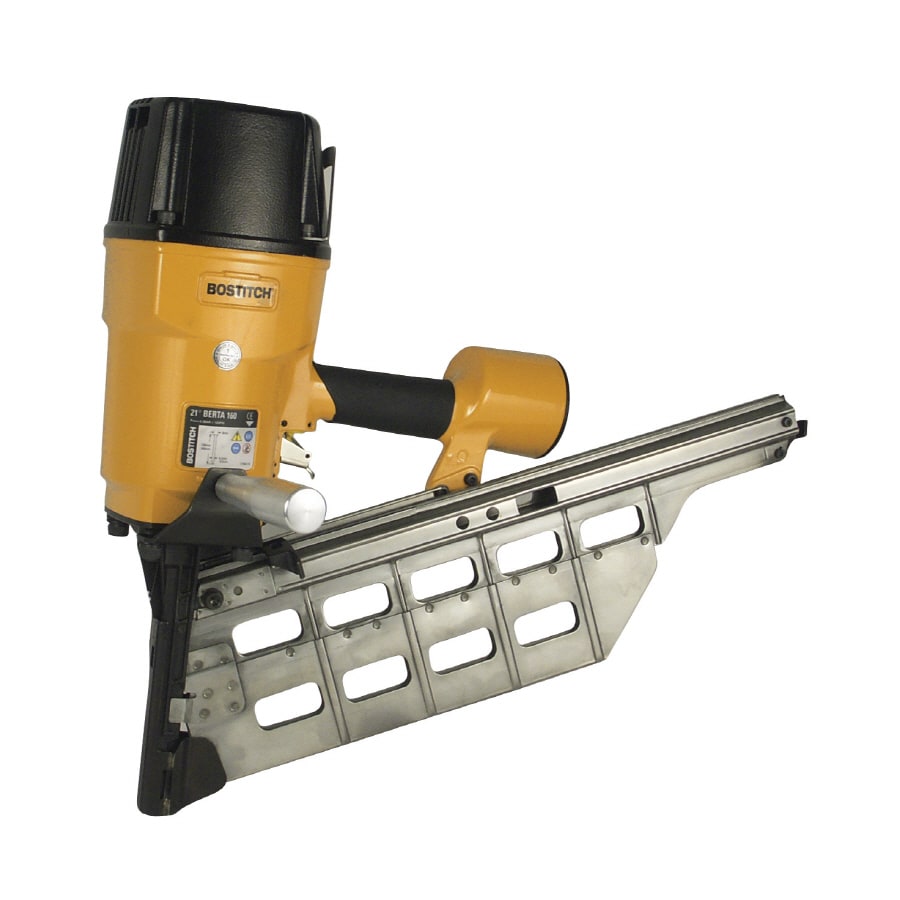
Sometimes the model number is worn off, painted over, or missing. In these cases, you can still identify the tool through visual cues.
Use Distinctive Design Features
Even without a number, key features can point to a specific model:
– BIGBERTA: Large body, robust nose, red bumper, 30° magazine
– F21PL: Sleek aluminum housing, 21° full-round head design
– BRT130: Lightweight, short body, angled magazine, rear exhaust
Take clear photos and search online using descriptive keywords based on these features.
Contact Bostitch Customer Support
If you remain stuck, reach out to Bostitch Customer Service with:
– Clear photos of the side, nose, magazine, and handle
– Nail type and size used
– Any partial numbers or visible markings
Support staff can often identify the model from images or refer you to technical diagrams.
Spot Red Flags of Counterfeit Tools
Not every tool sold as “Bostitch-style” is authentic. Fake or rebranded tools appear frequently in secondhand markets.
Warning Signs of Non-Genuine Nailers
Be cautious if you notice:
– Missing or blurry model numbers
– Inconsistent font or logo placement
– No match in official parts databases
– No manufacturer warranty or documentation
– A price that seems too good to be true
Bostitch tools are built for professionals. If the nailer feels flimsy or jams often, it may not be the real deal.
Why Accurate Identification Matters
Knowing your exact model affects real-world performance, safety, and value.
Order Correct Replacement Parts
Using the wrong O-ring, driver blade, or valve can lead to:
– Misfires
– Air leaks
– Internal damage
With the right model number, you can confidently replace nose components, seals, trigger valves, and magazine springs.
Maintain Warranty and Resale Value
A confirmed model helps you:
– File warranty claims that require proof of model and purchase
– Earn more when reselling, since verified tools command higher prices
– Get service centers to accept the tool for repairs
Keep Your Nailer Running at Peak Performance
Once you’ve identified the model, follow model-specific maintenance to extend its service life.
Daily Maintenance Essentials
All Bostitch framing nailers benefit from:
– Daily cleaning of the nose and magazine
– Lubrication with 2 to 3 drops of pneumatic tool oil
– Air filter checks when paired with a compressor
Some models need extra attention:
– BIGBERTA: Check bumper wear regularly
– F21PL: Inspect the latch mechanism for debris
– BRT130: Clean the exhaust port to prevent clogging
Proper Storage Practices
- Store in a dry case or pouch
- Drain moisture from air lines before each use
- Cover the nose when not in use to prevent dust buildup
Frequently Asked Questions About Bostitch Framing Nailers
Where is the model number on a Bostitch framing nailer?
The model number is typically stamped on the tool body housing, on a nameplate or label, near the magazine, or on the trigger housing or handle base. Check under dirt or grease if you don’t spot it right away.
How do I verify a Bostitch framing nailer is genuine?
Verify authenticity by confirming the model number appears in an official parts database, checking for clear Bostitch and Stanley Black & Decker branding, and comparing the tool’s design to an exploded parts diagram.
What are the most common Bostitch framing nailer models?
The most commonly referenced Bostitch framing nailers are the BIGBERTA, BRT130, and F21PL. Each has documented parts diagrams and specific fastener compatibility.
What nail angles do Bostitch framing nailers use?
Bostitch framing nailers most commonly use 21° and 30° magazine angles. Some compact models may use 34°, but 21° and 30° are the industry standards for the brand.
Can I identify a Bostitch nailer without a model number?
Yes. Use visual cues like magazine angle, body shape, nose design, and bumper color to match against known models. Contact Bostitch support with photos for further help.
Key Takeaways for Identifying Your Bostitch Framing Nailer
The most important step in identifying a Bostitch framing nailer is locating and verifying the model number. From there, cross-reference using official parts diagrams, visual comparisons, and fastener specs to confirm the tool’s authenticity. Once you have a confirmed model, you can order the right parts, perform proper maintenance, and protect the tool’s resale value.
Your next step is simple: grab a cloth, clean the most common stamping locations on your nailer, and write down the exact model number. With that one piece of information, the rest of the identification process falls into place.