Fix Paslode Nailer Not Firing Issue
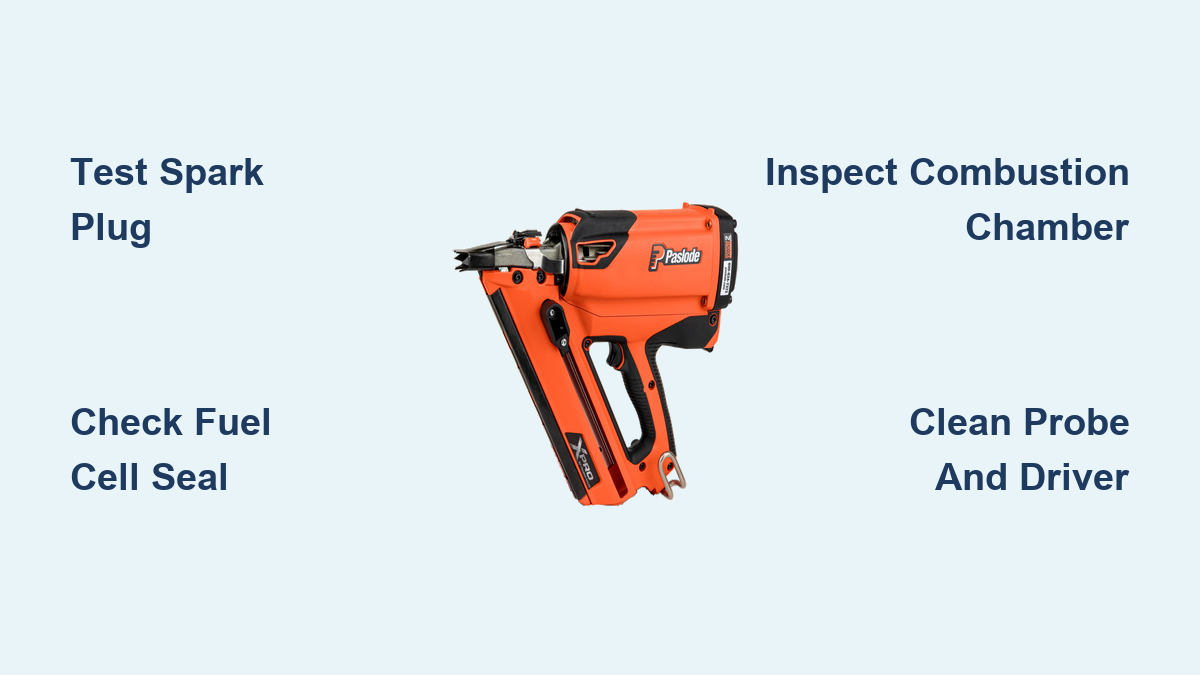
If your Paslode nailer not firing problem has you stuck mid-project, you’re not alone. This frustrating issue strikes even when the tool appears functional: battery charged, fan spinning, green light glowing, yet no nail drives and no ignition sound. The root cause usually hides in the fuel delivery, ignition, combustion chamber, or mechanical systems. The good news? Most firing failures are diagnosable with systematic troubleshooting.
This guide walks you through every angle of the problem, from quick power checks to deep ignition diagnostics. You will learn how to identify why your Paslode won’t fire even when the fan runs, how to inspect for dangerous chamber damage, and when professional service becomes mandatory. We also cover when upgrading to a cordless electric nailer makes more sense than another repair.
Confirm Basic Power and Fuel
Before diving into complex repairs, verify the fundamentals. A Paslode nailer not firing often has a simple root cause that takes minutes to identify.
Check Battery and Fan Operation
The fan spinning when you press the nose tip confirms the battery is charged and the trigger circuit is active. This is a critical diagnostic clue:
- Green battery light means power is present.
- Fan spinning means the basic electrical system works.
- No ignition sound means the problem lies downstream in fuel, spark, or combustion.
Do this now:
1. Press the nose tip against a work surface.
2. Listen for the fan to ramp up (1 to 2 second delay).
3. Watch for a blue flash inside the chamber if visible.
4. If the fan runs but no spark or bang occurs, move to ignition and fuel checks.
Verify Fuel Cell Compatibility and Seal
Even new fuel cells can cause failure if incompatible or defective. This is a frequently overlooked cause of firing problems.
Critical checks:
– Ensure the fuel cell is specifically rated for your model (for example, the IM200F18 uses Paslode IM350 fuel).
– Confirm the fuel cell piercer inside the tool punctures the canister. If it does not, no fuel enters the chamber.
– Inspect for leaks by smelling around the fuel compartment after installation. A strong fuel odor indicates a bad seal or damaged cell.
Pro tip: Try a different brand-new cell, even if your previous ones were new. Batch defects happen. If three different cells fail, the issue is in the tool itself.
Diagnose the Ignition System

No spark means no fire. No fire means no nail. The ignition system is the heart of your Paslode’s firing cycle.
Test for Spark at the Plug
The spark plug must generate a strong arc to ignite the fuel-air mixture. A weak or absent spark prevents combustion entirely.
Steps to check:
1. Remove the spark plug using a 5/8″ socket or wrench.
2. Reconnect the ignition wire.
3. Hold the plug’s metal body against the tool’s cylinder to ground it.
4. Press the nose tip and watch for a bright blue spark across the gap.
If no spark appears:
– Replace the spark plug, which is a common wear item.
– Check the gap: it should measure 0.020 to 0.025 inches (0.5 to 0.6 mm) using a feeler gauge.
– Look for carbon buildup or oil fouling and clean with a wire brush if the contamination is mild.
Inspect the Ignition Module and Wiring
If a new plug still yields no spark, the ignition module or wiring may be faulty. This requires closer examination.
What to do:
– Visually inspect wires for cracks, burns, or loose connections.
– Ensure the module (the black box near the fan) is securely mounted and not cracked.
– Check for corrosion on electrical contacts.
Warning: Replacing the ignition module requires precision. If you have replaced both circuit boards and the spark plug with no success, stop. The fault may be a deeper electrical issue. Seek authorized Paslode service.
Check Combustion Chamber Integrity
A cracked or holed combustion chamber is a silent killer. It lets pressure escape, preventing the piston from driving the nail even when ignition occurs.
Look for Chamber Cracks or Holes
This is a safety-critical inspection that demands immediate attention if damage is found.
How to inspect:
1. Remove the nose cap and driver blade.
2. Shine a bright flashlight into the combustion chamber.
3. Use a magnifier if needed for closer examination.
4. Look for pinholes, hairline cracks, or thinning metal, especially near the spark plug or fuel injector.
If damage is found:
– Stop using the tool immediately.
– Do not attempt to weld or patch the chamber.
– Contact Paslode support or an authorized repair center.
– Replace the entire chamber assembly or the tool.
Why it matters: A compromised chamber can fail catastrophically under pressure, risking serious injury.
Clean the Combustion System
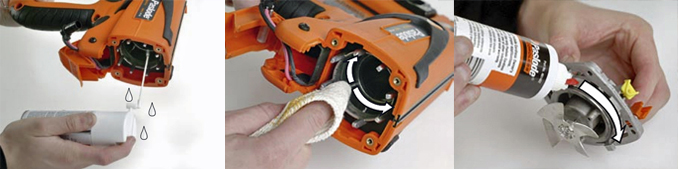
Carbon buildup, varnish, and debris can choke the combustion cycle and prevent firing. Regular cleaning restores proper function.
Clean the Chamber and Air Filter
Tools needed:
– Compressed air
– Soft brush (nylon or brass)
– Paslode cleaning gel (optional)
– Clean rag
Steps:
1. Remove the fuel cell and battery.
2. Unscrew the spark plug and fuel injector.
3. Spray or brush out carbon deposits from the chamber walls.
4. Blow out the air intake filter, since a clogged filter disrupts the air-fuel mix.
5. Wipe the piston head and cylinder bore gently.
Pro tip: Perform this cleaning after every 5,000 nails or daily on heavy job sites.
Fix Poor Piston Retraction

If the nailer fires but the piston does not retract fully, especially in softwoods like pine, it can prevent the next cycle from completing.
Identify Retraction Failure Signs
- Tool fires once, then will not reset.
- Driver blade sticks halfway up.
- Works fine in hardwoods but fails in pine.
Replace Worn Piston Seals
A degraded piston seal leaks combustion pressure, robbing the tool of retraction force.
How to fix:
1. Disassemble the cylinder following the manual.
2. Remove the piston and inspect the O-ring or seal.
3. Look for cracks, hardening, or flattening.
4. Replace with a Paslode OEM seal; do not improvise.
Also check:
– The probe rod for bends or burrs.
– The guide channel for sawdust or resin buildup.
– The trigger return spring, since a weak spring prevents the tool from resetting.
Clear Probe Jamming
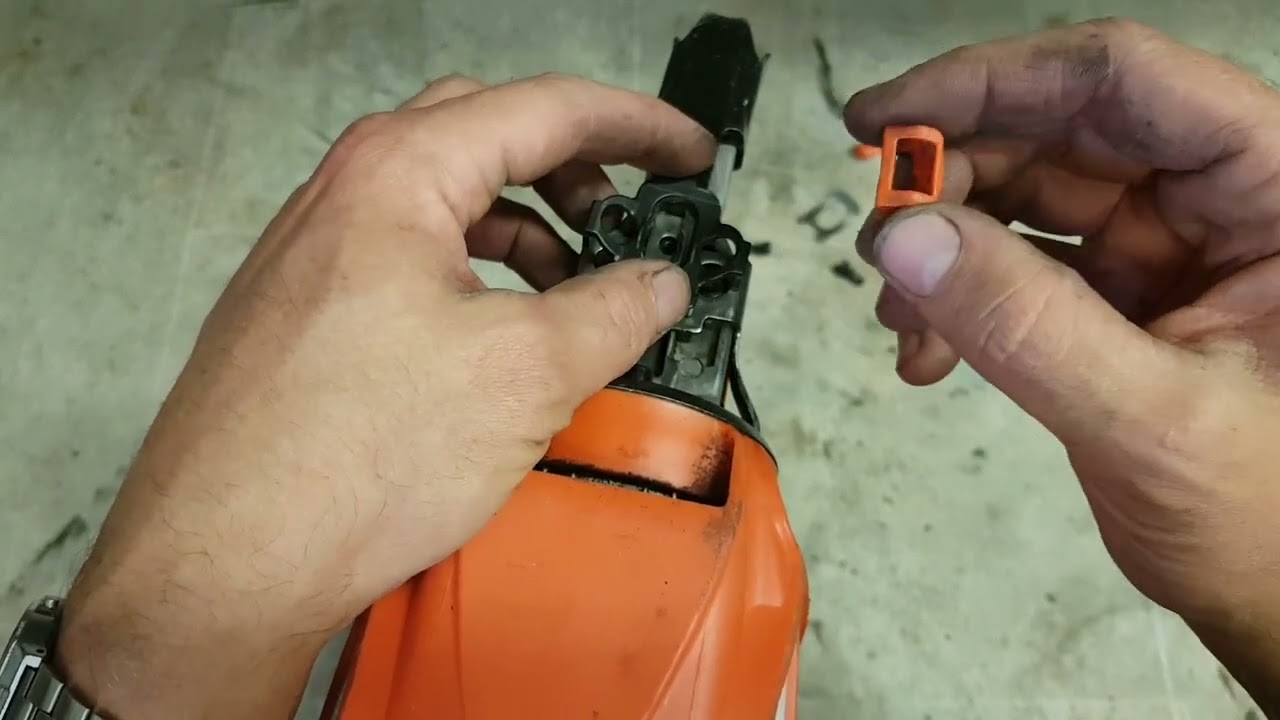
A jammed probe prevents the tool from cycling, mimicking a “not firing” issue. This is a common mechanical failure.
Disassemble and Clean the Probe
Steps:
1. Remove the nose cap and driver blade.
2. Extract the probe rod carefully.
3. Use a dry brush and compressed air to clean the probe channel.
4. Inspect the probe for bends or metal fatigue.
5. Apply one drop of Paslode lubricating oil. Never use WD-40 or grease.
Reassembly tip: Ensure the probe moves freely before reattaching the nose cap. If it sticks, realign or replace the component.
Prevent Future Firing Failures
Avoid downtime with a simple, effective maintenance routine. Prevention is far easier than repair.
Follow Paslode Maintenance Protocol
| Task | Frequency |
|---|---|
| Clean combustion chamber | Every 5,000 nails or daily |
| Inspect spark plug and gap | Weekly or every 2,000 nails |
| Replace fuel injector filter | Every 10,000 nails |
| Check piston seal | Every 6 months or 5,000 nails |
| Lubricate probe and driver | After each cleaning |
Never use:
– Non-Paslode nails (wrong diameter causes jams)
– Generic oils (can degrade seals)
– Damaged or expired fuel cells
When to Replace or Upgrade

Despite best efforts, some Paslode nailers develop chronic ignition or chamber issues that resist repair. Knowing when to quit saves time and money.
Signs It Is Time to Move On
- Replaced both circuit boards and the spark plug, still not firing.
- Chamber damage found, and repair cost exceeds tool value.
- Frequent downtime on critical jobs.
Consider Cordless Electric Alternatives
Many pros are switching to cordless electric nailers from brands like DeWalt and Milwaukee for better reliability.
Why they win:
– No fuel cells to buy or leak.
– No spark plugs to gap.
– Fewer moving parts means fewer failures.
– Consistent performance in all wood types.
While gas nailers offer raw power, electric models now match them in most framing and roofing tasks with far less hassle.
Frequently Asked Questions About Paslode Nailer Firing Problems
Why is my Paslode nailer not firing but the fan still spins?
A spinning fan confirms the battery and trigger circuit work. The problem lies downstream in the fuel cell, ignition system, or combustion chamber. Check the fuel cell seal first, then test for spark at the plug.
Can a bad fuel cell cause a Paslode nailer to not fire?
Yes. An incompatible, defective, or improperly seated fuel cell prevents fuel from entering the combustion chamber. Even new cells can have batch defects, so try a different cell before assuming the tool is faulty.
How do I know if my Paslode combustion chamber is cracked?
Inspect the interior walls with a bright flashlight and magnifier. Look for pinholes, hairline cracks, or thinning metal near the spark plug or fuel injector. If found, stop using the tool immediately.
What causes poor piston retraction in softwoods like pine?
Pine provides less recoil resistance than hardwoods. Combined with worn piston seals that leak combustion pressure, the piston cannot return fully. Replace the piston seal and ensure the trigger return spring is functional.
How often should I clean my Paslode nailer?
Clean the combustion chamber after every 5,000 nails or daily on heavy job sites. Inspect the spark plug weekly and replace the fuel injector filter every 10,000 nails for optimal performance.
When should I stop repairing and replace my Paslode nailer?
If you have replaced both circuit boards and the spark plug without success, or if chamber damage is found, further repair is unlikely to help. Contact authorized Paslode service or consider upgrading to a cordless electric nailer.
Key Takeaways for Fixing a Paslode Nailer That Will Not Fire
A Paslode nailer not firing is almost always traceable to one of four systems: fuel delivery, ignition, combustion chamber integrity, or mechanical cycling. Start with the basics by confirming battery power, fan operation, and fuel cell compatibility. Move to spark testing if those check out, and always inspect the combustion chamber for cracks before assuming an electrical fault. Poor retraction and probe jamming are mechanical issues that respond well to seal replacement and thorough cleaning.
Your immediate action plan: test the spark plug first, verify the fuel cell piercer is puncturing the canister, and inspect the chamber with a flashlight. If all three pass but the tool still fails, contact authorized Paslode service rather than continuing to replace parts blindly. For chronic reliability issues, evaluate whether a cordless electric nailer better fits your workflow.