
Fix Metabo Framing Nailer Jammed Issue
A Metabo framing nailer jammed mid-job can stop your project cold. Whether you’re framing walls, building a deck, or sheathing a roof, a stuck nail in the nose halts progress and risks damaging your tool if cleared incorrectly. The most common failure is a nose jam where the driver blade locks above a bent or misfed fastener.
This guide covers both coil-fed models like the Metabo HPT NV83A5 and stick/paper-tape models, with proven steps to safely extract jams, diagnose root causes, and prevent future issues. Follow these procedures to get back to work in under five minutes without harming internal components.
Disconnect Power and Clear the Magazine
Isolate the Energy Source First
Before touching the nailer, cut all power. For pneumatic models, pull the air hose from the compressor, then press the trigger to bleed residual air from the cylinder. This step prevents accidental cycling while you work.
For cordless or fuel-cell models, remove the battery and fuel cartridge. Even though Metabo’s primary framing tools are pneumatic, always confirm zero energy remains in the system before proceeding.
Empty All Remaining Fasteners
Leaving nails in the magazine creates a hazard. Loose fasteners can eject when you release the follower spring or invert the tool. Slide the follower back completely and remove every nail, whether in coil or strip form.
Visual cue: Check the follower spring at the back of the magazine. If compressed, the tool is still loaded. Release it fully before opening the nose assembly.
Clear a Coil Nailer Jam (Metabo HPT NV83A5)

Force the Driver Blade Downward
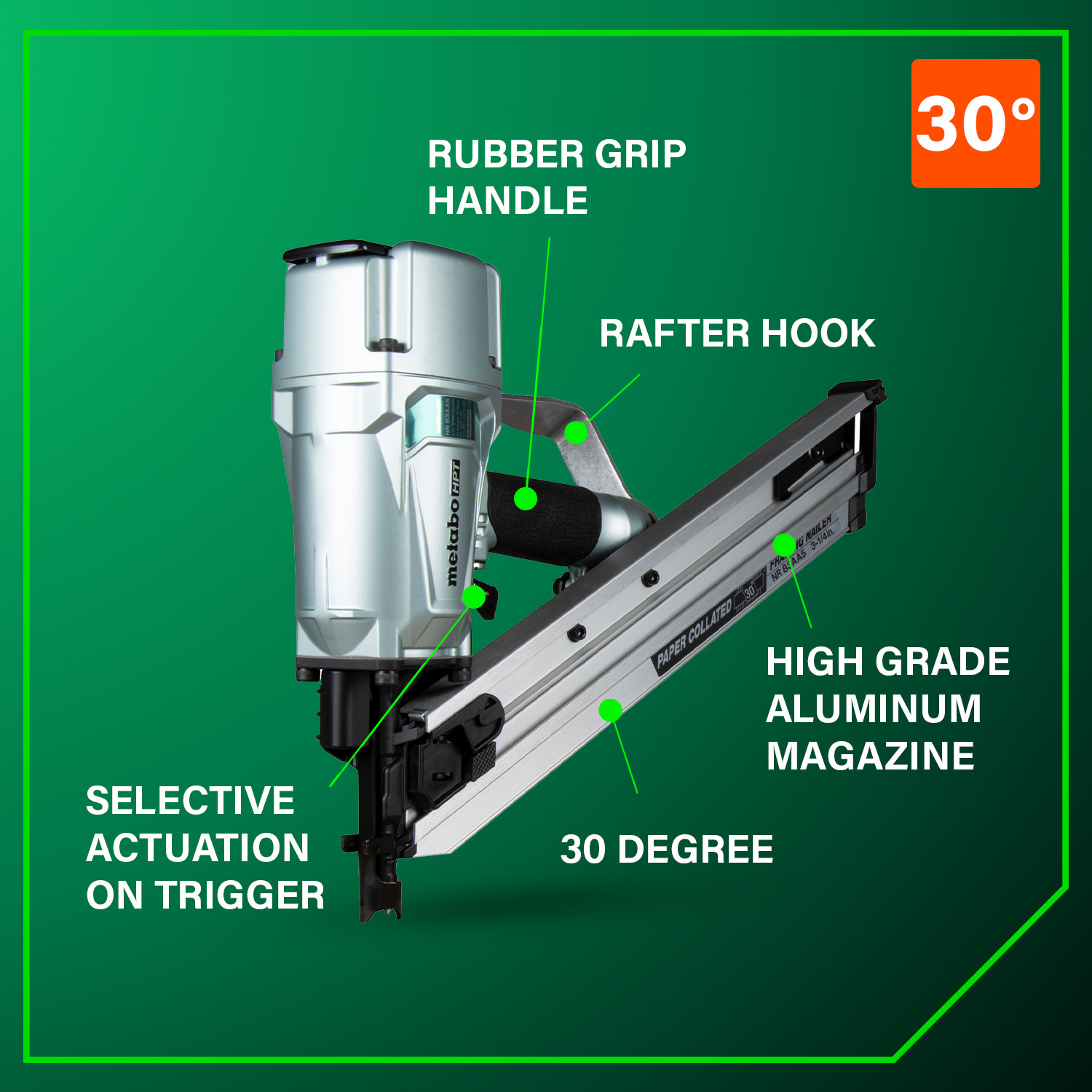
The NV83A5 coil framing nailer uses a pneumatic system where jams typically trap the driver blade above a misfed nail. You do not need to remove screws. Simply drive the blade down to free the obstruction.
- Look into the nail exit channel to locate the nose opening.
- Place a nail set punch or an old driver blade against the top of the stuck driver.
- Strike the punch firmly with a hammer to push the blade fully downward.
- Pull the freed nail out of the nose channel with pliers.
Pro tip: Wrap the punch with tape or use a soft-faced hammer to protect the tool’s finish.
Inspect for Debris and Add Oil
After clearing the nail, check the nose for metal fragments or shank pieces. Wipe the driver blade and cylinder walls with a clean, lint-free cloth. Then apply 10 to 15 drops of pneumatic oil into the air inlet or directly into the cylinder.
Warning: Never use WD-40 or motor oil. These products degrade seals and attract dust, creating sludge that causes recurring jams.
Clear a Stick Nailer Jam (Paper-Tape Models)

Remove the Screws Beneath the Depth Dial
Stick nailers using paper-collated strips require partial disassembly. The depth adjustment dial on the nose conceals two Allen-head screws that hold the magazine and nose together.
- Loosen both screws with the correct hex key (usually 3mm or 4mm).
- Gently pry the magazine and nose assemblies apart with a flathead screwdriver.
- Expose the driver blade and the jammed nail behind or beneath it.
Push the Blade Down and Extract the Nail
Insert a screwdriver or nail set against the top of the driver blade. Apply downward pressure to force the blade past the obstruction. If resistance is high, tap the tool lightly with a hammer to break the bind.
Once the blade reaches its lowest point, grip the nail with needle-nose pliers and pull it straight out.
Avoid twisting: Rotating the nail can scratch the cylinder wall or bend the blade tip.
Reassemble and Test Fire
Align the magazine and nose assemblies, then tighten both Allen screws securely. Loose screws cause misalignment and future jams. Reconnect the air supply, load a test nail, and fire into scrap wood to confirm free cycling.
Diagnose the Root Cause of the Jam
Check for Damaged or Incorrect Fasteners
Recurring jams often trace back to the nails themselves. Verify the following before reloading:
- Angle mismatch: Using 28° nails in a 34° nailer causes immediate jams. Confirm the angle on your nail packaging.
- Coil deformation: Dropped or crushed coils lose their circular shape and feed poorly. Discard misshapen coils.
- Wet paper tape: Moisture warps collation strips, misaligning nails. Store fasteners in a dry location.
Quick test: Lay a nail strip flat on a table. If it curls or twists, the collation is compromised.
Avoid Slamming the Follower
Slamming the magazine follower shut shocks the nail strip, breaking glue bonds or shifting nails out of alignment. Always close the follower with firm, controlled pressure.
Inspect the Driver Blade for Damage
Remove the nose assembly and run your finger along the driver blade edge. If it catches or feels warped, the blade is bent. Compare it to a new blade if possible. A bent blade binds in the cylinder and causes repeated jams.
Replace damaged blades with Metabo OEM parts. Aftermarket versions may not fit precisely and can cause new problems.
Prevent Future Metabo Nailer Jams
Lubricate Daily with Pneumatic Oil
Daily oiling is the single most effective prevention step for coil framing nailers. Apply pneumatic tool oil at these intervals:
- Every morning before work begins
- Every two to three hours during heavy use
- Immediately after clearing any jam
Drip oil into the air inlet or nose channel, then fire the tool into scrap wood to distribute the lubricant.
Consequence of skipping: Without oil, metal-on-metal friction slows the piston. The driver fails to reset fully, and the next nail jams.
Clean the Nose and Magazine Weekly
Sawdust and debris accumulate in the nose cone and magazine track. Disassemble the nose periodically, wipe all internal surfaces with a dry cloth, and blow out fine dust with compressed air. Make cleaning part of your end-of-day routine.
Verify Nails Before Loading
Always confirm the following specifications match your tool:
- Collation type (wire versus paper)
- Angle (30°, 33°, or 34°)
- Length and shank diameter
Using framing nails in a roofing nailer, or mixing collation types, leads to jams and internal damage.
What to Do When Jams Keep Returning

Inspect the Piston and O-Rings
If jams persist after clearing and lubricating, deeper issues may exist. Disassemble the nose and cylinder, then check the piston O-rings for cracks or swelling. Look for scratches inside the cylinder walls, which indicate a bent blade previously rubbed against the surface.
Damaged seals reduce air pressure and slow the driver. Replace O-rings with Metabo-specified parts to restore proper cycling.
Test Air Pressure and Hose Condition
Low PSI causes incomplete cycles and partial drives. Ensure your compressor delivers between 90 and 120 PSI. Check the hose for kinks, leaks, or blockages. Attach a regulator with a gauge directly to the nailer for accurate readings.
Rule of thumb: If nails only go halfway in, the cause is usually low pressure or lack of oil, not mechanical failure.
Handle New Tool Jams Carefully
Contact Support Before Disassembly
If your brand-new Metabo nailer jams out of the box, stop using it immediately. Do not disassemble beyond basic clearing steps. Manufacturing defects or shipping damage, such as a bent driver blade, fall under warranty coverage. Forcing repairs can void that protection.
Keep the original box and receipt. Metabo typically offers three to five year tool warranties. Contact customer service or your retailer for guidance before attempting further troubleshooting.
Final Checklist After Clearing a Jam
- Air hose disconnected and pressure released
- Magazine fully emptied
- Jammed nail removed safely
- Driver blade moves freely up and down
- Nose and cylinder wiped clean
- 10 to 15 drops of pneumatic oil applied
- Correct nails loaded (angle, length, collation)
- Test fire successful on scrap wood
Frequently Asked Questions About Metabo Framing Nailer Jams
Why does my Metabo framing nailer keep jamming?
The most common causes are insufficient lubrication, incorrect nail angle or collation type, and damaged fasteners. Coil nailers require 10 to 15 drops of pneumatic oil daily. Verify that your nails match the tool’s specified angle and collation before loading.
How do I unjam a Metabo HPT NV83A5 coil nailer?
Disconnect the air hose and empty the magazine. Place a nail set punch against the top of the stuck driver blade and tap it firmly with a hammer to drive the blade downward. Pull the freed nail out with pliers, then apply pneumatic oil before testing.
Can I use WD-40 on my framing nailer?
No. WD-40 and motor oil degrade rubber seals and attract dust, creating abrasive sludge inside the cylinder. Use only high-quality pneumatic tool oil designed for nailers.
What pressure should my Metabo framing nailer run at?
Most Metabo pneumatic framing nailers operate between 90 and 120 PSI. Running below this range causes incomplete cycles and jams. Attach a regulator with a gauge to verify consistent pressure.
Is it safe to disassemble a new nailer under warranty?
No. If a brand-new tool jams, contact Metabo customer service or your retailer first. Disassembling beyond basic clearing steps can void the warranty. Keep your receipt and original packaging for warranty claims.
Key Takeaways for Clearing a Metabo Framing Nailer Jam
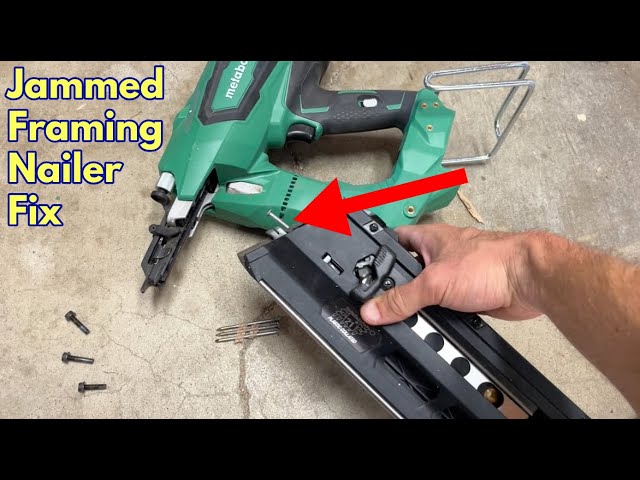
A jammed Metabo framing nailer is fixable in minutes when you follow the right procedure. Always disconnect power and empty the magazine before opening the nose. Use a nail set and hammer to drive the driver blade downward, then extract the obstruction with pliers.
Daily lubrication with 10 to 15 drops of pneumatic oil prevents the majority of recurring jams. Match your fasteners to the tool’s specifications and avoid slamming the follower during loading. For persistent issues, inspect the driver blade, O-rings, and air pressure before assuming a major fault.
Keep a nail set, hex key, and oil bottle in your tool bag so you can address jams immediately on the jobsite.