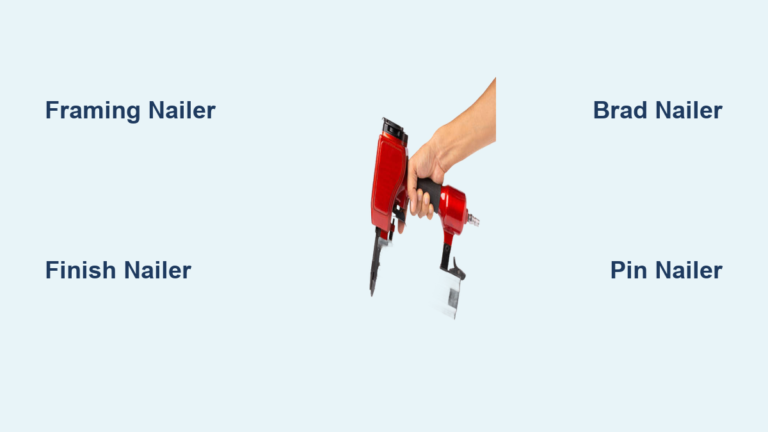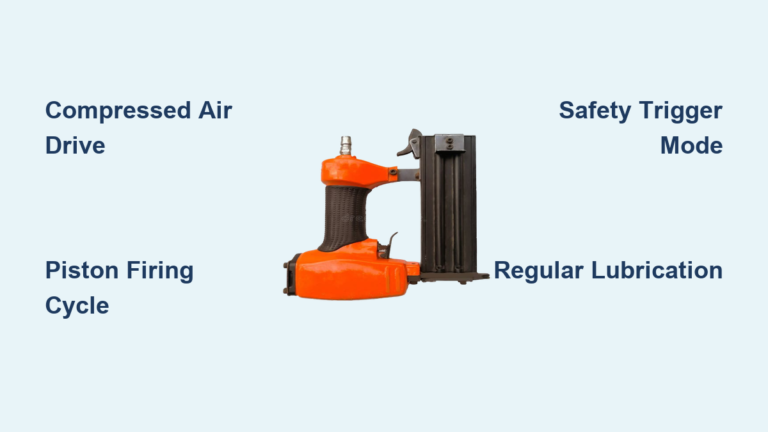

Nailer Buying Guide: Choose the Right One
If you’re tackling a home renovation, building a deck, or installing trim, a nailer can save you hours of manual labor. But with so many types, power sources, and features on the market, choosing the right one isn’t always simple. Whether you’re a weekend DIYer or a seasoned contractor, this nailer buying guide breaks down everything you need to know to make a confident purchase.
You’ll learn how to match the right nailer to your material, avoid common mistakes like wood splitting or fastener buckling, and understand the trade-offs between portability, power, and cost. By the end, you’ll know exactly which model fits your needs without overspending or underperforming on the job.
Power Source: Match to Your Workspace

Your work environment determines whether you need a corded, cordless, pneumatic, or gas-powered nailer. Each option delivers power differently, and the right choice depends on where and how you work.
Pneumatic Nailers: Power and Precision
Pneumatic nail guns use compressed air delivered from a compressor through a hose. They remain the top choice for contractors because of their consistent power, high-speed cycling, and long-term durability. Ideal for framing, roofing, and flooring, they deliver strong, repeatable blows shot after shot.
- Best for: High-volume jobs, production framing, shop work
- Pros: Reliable performance, lower long-term cost, lightweight design
- Cons: Tethered to a compressor, requires regular oiling and moisture management
- Pro Tip: Use a compressor delivering at least 1.2 CFM to prevent lag between shots
Cordless Battery Nailers: Ultimate Portability
Modern lithium-ion cordless nailers like the Milwaukee FUEL and SENCO FUSION systems offer gas-free, hose-free operation with power that rivals pneumatic models. They’re perfect for finish work on ladders or remote job sites where dragging a hose isn’t practical.
- Best for: Trim, cabinetry, punch lists, overhead work
- Pros: No hoses or cords, excellent maneuverability
- Cons: Limited shots per charge (around 600), heavier than air-powered models
- Pro Tip: Carry a spare battery to power through full-day projects
Gas-Powered Nailers: Power Without the Compressor
These hybrid tools combine a rechargeable battery with a disposable gas canister to create a small combustion explosion that drives each nail. They deliver high driving force without a hose, making them popular for outdoor framing and roofing on large sites.
- Best for: Roofing, decking, framing on compressor-free job sites
- Pros: High power output, no compressor required
- Cons: Expensive fuel cells, loud operation, heavier than other types
- Note: Fuel costs add up quickly, so budget for ongoing expenses
Corded Electric Nailers: Simple and Stationary
Plug-in electric nailers use a motor to release a spring-loaded hammer that drives the nail. They’re a solid option for light-duty DIY tasks performed near an outlet.
- Best for: Baseboards, light trim, small household repairs
- Pros: Unlimited runtime, low maintenance, affordable price point
- Cons: Cord restricts mobility, less power than pneumatic or gas models
- Ideal User: Weekend warriors working at a stationary workbench
Nailer Types: First Fix vs. Second Fix
Nailers fall into two broad categories based on when they’re used during construction. Understanding this distinction helps you narrow your search quickly.
First Fix Nailers: For Hidden, Structural Work
First fix nailers are used during rough framing and substructure work where the nails won’t be visible. These heavy-duty, high-power tools prioritize strength and speed.
Framing Nailers: Build the Skeleton
Framing nailers drive large nails up to 3.5 inches into studs, joists, and sheathing. They come in several magazine angles, including 15°, 21°, 28°, 30°, and 34°, each affecting capacity and access to tight spaces.
- Nail size: 2″ to 3.5″ (50–90mm)
- Gauge: 0.113″ (10–11 gauge), clipped or full-round head
- When to use: Wall framing, decking, subfloors, fencing
- Code Note: Many building codes require full-round-head nails (15° or 21°) for structural framing, so check local regulations before buying
15-Degree Framing Nailers
- Best for: High-capacity jobs like sheathing and roofing
- Holds: 200–300 nails (coil)
- Weight: Approximately 3.6kg without nails
- Use Case: Trade pros covering large areas quickly
30–34-Degree Framing Nailers
- Best for: Tight spaces between studs or in corners
- Holds: Two strips of nails (around 80 total)
- Advantage: Slim profile for confined access
- Limitation: Often use clipped-head nails, which may not meet code for structural framing
Roofing Nailers: Fast and Reliable
Designed specifically for shingle installation, roofing nailers fire nails rapidly with precision. The RCN45 model, for example, delivers 34% more power than standard models and features a cap feed system for underlayment fastening.
Siding Nailers: Flush Fastening
Siding nailers ensure nails sit flush without denting vinyl, fiber cement, or wood boards. Models like the SCN65 (32–65mm nails) and SCN65C (15° collation) include critical depth control to prevent cracking exterior materials.
Joist Hanger Nailers: Precision in Tight Spots
These specialty tools drive nails into metal connectors like joist hangers and hurricane ties with an exposed tip for accurate placement. The MCN65(LM) is a PTIA award-winning option designed for professionals who need to hit connector holes precisely.
Second Fix Nailers: For Visible, Refined Work
Second fix nailers are used in finishing stages where precision, minimal damage, and clean appearance matter most.
Finish Nailers: Strong Hold, Clean Finish
Finish nailers are the workhorses of trim work, driving nails that hold tight while leaving small holes. Available in 15-gauge and 16-gauge options, each serves different purposes.
- 15-Gauge (Angled): Thickest finish nail at 0.072″ diameter, best for stairs, railings, and hardwoods
- 16-Gauge (Straight): Thinner at 0.0625″ diameter, ideal for baseboards, crown molding, and MDF
Hardwood Finish Nailers
- Purpose: Extra drive force for dense woods like oak or maple
- Risk: Can split thin or soft wood, so use only on thick stock
- Model Example: The PIERCE 15 Gauge is built specifically for solid hardwood applications
Brad Nailers: Lightweight and Discreet
Brad nailers use 18-gauge nails (brads) that are perfect for delicate trim and thin materials. With a diameter of approximately 0.0475″ and lengths from 1/4″ to 2.5″, they leave tiny holes that often require no filler.
- Best for: Base shoe, paneling, crafts, temporary fastening
- Advantage: Minimal surface damage, easy to hide
Hardwood Brad Nailers
- Upgrade: More power than standard brad nailers
- Why: Prevents brad buckling in hard maple or oak
- Use Case: Staircase trim, custom mantels, thick moldings
Cordless Brad Nailers
- Best for: Small jobs, punch lists, ladder work
- Pros: No hose, easy handling
- Ideal For: DIYers avoiding compressor setup
Pin Nailers: Invisible Fastening
Pin nailers use 23-gauge headless pins ranging from 15–35mm for ultra-fine work. With low holding power, they rely on glue for strength and leave virtually no visible mark.
- Best for: Holding glue-ups, securing veneer, decorative moldings
- Model Example: The P635B is lightweight and compact, making it great for tight spaces
- Pro Tip: Use only when appearance matters more than structural strength
Nail Gauge and Magazine Angles Explained
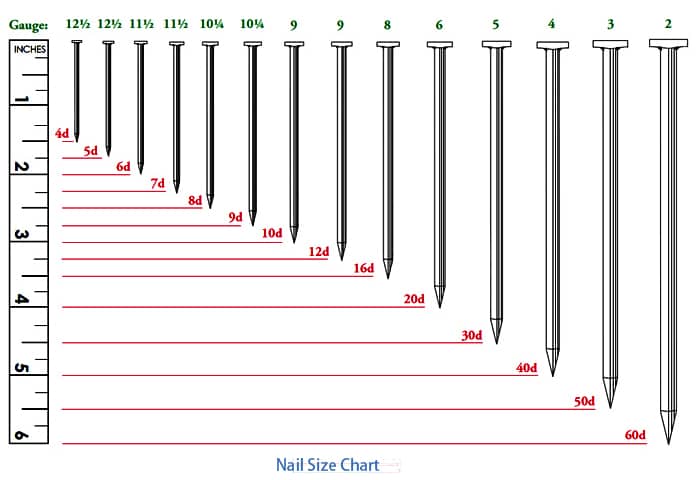
Understanding gauge and magazine angles helps you match the right fastener to your material and access needs.
Nail Gauge: Thicker vs. Thinner
| Gauge | Nail Diameter | Best Use Case |
|---|---|---|
| 15-Gauge | 0.072″ | Heavy trim, stairs, railings |
| 16-Gauge | 0.0625″ | Baseboards, casings, MDF |
| 18-Gauge | 0.0475″ | Delicate trim, crafts, paneling |
| 23-Gauge | Pin (headless) | Glue-ups, fine molding |
Rule of Thumb: Lower gauge numbers mean thicker nails and stronger holding power.
Magazine Angles: Access and Capacity
The magazine angle refers to how nails are collated inside the tool, not the driving angle. Nails always drive straight regardless of magazine design.
- 15°: Full-round-head nails, high capacity (coils), heavy, best for framing
- 21°: Full-round-head nails, lighter than 15°, better for tight spots
- 28°–34°: Clipped-head nails, compact, ideal for tight corners
- Warning: Some building codes ban clipped-head nails for structural framing
Key Features That Matter

Beyond power source and nail type, certain features dramatically affect usability and results on the job.
Firing Modes: Control vs. Speed
Sequential Firing
- How It Works: Press the nose against the workpiece, then pull the trigger for each nail
- Best For: Precision work, finish carpentry, safety-focused tasks
- Advantage: Prevents accidental double-firing
Contact (Bump) Firing
- How It Works: Hold the trigger and “bump” the nose against the work surface to fire
- Best For: Framing, high-speed production environments
- Risk: Higher chance of accidental discharge
- Safety Tip: Use only when you need speed and can maintain a controlled stance
Depth Adjustment
This feature lets you dial in exactly how deep the nail sits, which is critical when working with different materials.
- Softwood: Sink slightly below the surface for a clean finish
- Hardwood/Treated Lumber: Avoid over-driving to prevent splitting
- Tool-Free Adjustment: A premium feature that allows quick changes between materials
Anti-Dry Fire Protection
This mechanism prevents firing when the magazine is empty, protecting both the driver blade and your workpiece from damage.
Exhaust Direction
Rear- or side-exhaust systems blow air away from your face and work area, keeping your line of sight clear and reducing debris on fresh paint.
No-Mar Tip and Belt Hook
- No-Mar Tip: Rubber or plastic tip prevents scratching finished surfaces
- Belt Hook: Adjustable for left- or right-handed users, great for job site mobility
Material-Specific Recommendations

Matching your nailer to your material prevents frustration and ensures professional results.
Softwood and Engineered Wood (MDF, Plywood)
- Best Tools: 16-gauge finish nailer or 18-gauge brad nailer
- Why: Minimizes splitting and provides a clean finish
- Avoid: 15-gauge on thin MDF, which can cause blowout
Hardwoods (Oak, Maple, Cherry)
- Best Tools: Hardwood-specific brad or finish nailer
- Why: Standard nailers may buckle brads or under-drive fasteners
- Nail Choice: 15-gauge finish nails for strong joints
Treated Lumber and Decking
- Decking: Do not use standard nail guns on composite boards, as they split easily
- Solution: Use hidden fasteners or screws instead
- Subflooring: Use a framing or dedicated decking nailer like the PN65M-DOD
PVC and Composite Trim
- PVC Trim: A 15-gauge finish nailer can work, though screws often perform better
- Composite Boards: Avoid nail guns entirely due to cracking risks
- Best Practice: Follow the manufacturer’s recommended fasteners
Metal Connectors
- Only Use: A joist hanger nailer with an exposed tip
- Why: Ensures nails hit connector holes precisely
- Standard Nailers Fail: They can’t reach tight spaces or align correctly with metal hardware
Where to Buy and What to Consider
Your purchasing decision involves more than just picking a model. Where you buy and whether to buy new, used, or rent all affect long-term satisfaction.
Buying Options Compared
| Option | Pros | Cons |
|---|---|---|
| Local Hardware Store | Test weight and balance, expert advice, nearby service center | Limited selection |
| Big-Box Store | Immediate availability, wide range of popular models | Staff may lack specialized expertise |
| Online Retailers | Best prices, full specs, customer reviews | Can’t handle the tool before buying |
New vs. Used: Is It Worth It?
- New: Full warranty, customer support, and parts availability make this the recommended choice
- Used: Save money upfront, but verify that the model is still supported, service parts are available, and the tool hasn’t been abused or modified
Rent vs. Buy
- Rent If: You have a one-time project like a deck build, limited storage space, or a tight budget
- Buy If: You’ll use the tool frequently, work professionally, or want long-term value
Maintenance and Safety Tips
Proper care extends tool life and keeps you safe on the job.
Keep It Running Smoothly
- Pneumatic Tools: Add 2–3 drops of air tool oil daily to reduce friction and wear
- Battery Tools: Store at 40–60% charge and avoid extreme temperatures
- Storage: Remove all nails, disconnect power sources, and store in a dry case
Safety First
- Always Wear: Safety goggles to protect against flying debris
- Keep Fingers Clear: Off the trigger when you’re not actively nailing
- Watch the Hose/Cord: Prevent tripping hazards on busy job sites
- Point Away: Never aim the tool at yourself or bystanders
Troubleshooting Common Issues
| Problem | Likely Cause | Fix |
|---|---|---|
| Nail Buckling | Not enough power for hardwood | Switch to a hardwood-specific nailer |
| Wood Splitting | Nail too thick, no pilot hole | Use a higher gauge nail or pre-drill |
| Inconsistent Depth | Wrong PSI or depth setting | Adjust pressure and depth dial |
| Jamming | Damaged nails or dirt in magazine | Clear the jam per manual and use quality fasteners |
Frequently Asked Questions About Nailers
Do all nail guns use the same nails?
No. Nail guns vary by gauge (thickness), length, collation angle, and head type. Using the wrong nail can damage your tool or produce poor results. Always match fasteners to your specific nailer model.
What oil should I use for my nail gun?
Air-powered nailers require low-viscosity air tool oil for regular lubrication. Electric, gas, and battery models typically use detergent oil, but always check your owner’s manual for the manufacturer’s recommendation.
Can I use a nail gun for composite decking?
No. Nail guns tend to cause splitting and cracking in composite boards. Use hidden fasteners or screws designed specifically for composite decking instead.
What is the best angle for framing in tight spaces?
A 30-degree or 34-degree angled framing nailer offers the slimmest profile and best access to tight corners and between studs. Just remember that these often use clipped-head nails, which may not meet local building codes.
How many shots can a cordless nailer fire per charge?
Most modern cordless nailers deliver approximately 600 shots per charge, though this varies based on material density, nail size, and battery condition. Carrying a spare battery is wise for full-day projects.
What is the difference between 15, 16, and 18 gauge nailers?
A 15-gauge nailer is the thickest and strongest, ideal for structural trim like stairs and railings. A 16-gauge offers balanced strength and finish quality for general trim work. An 18-gauge brad nailer is the thinnest, perfect for delicate trim where minimal surface damage matters most.
Key Takeaways for Choosing the Right Nailer
Choosing the right nailer comes down to matching the tool to your material, job type, and work environment. Pneumatic tools dominate in raw power and long-term cost efficiency, while cordless models win on portability and convenience. First fix nailers handle heavy structural work, while second fix tools deliver clean, precise finishes.
Invest in the right gauge, firing mode, and depth control features, and never compromise on safety gear. Whether you’re a professional contractor or a weekend DIYer, the right nail gun will make your projects faster, cleaner, and more professional. Use this nailer buying guide to cut through the noise and pick the perfect tool for your next build.