Nailer Gun Types: A Quick Guide
If you’re tackling a construction or woodworking project, a nailer gun can save hours of labor and deliver consistent, professional results. But with so many nailer gun types available, choosing the right one isn’t just about power. It’s about matching the tool to the material, fastener, and workspace. From framing massive walls to securing delicate moldings, each nailer is engineered for a specific purpose. Using the wrong type can lead to splitting wood, poor holding power, or costly rework.
This guide breaks down the nine essential nailer gun types, their fastener specs, ideal applications, and power source options. Whether you’re a DIYer upgrading from a hammer or a pro contractor selecting your next tool, you’ll learn exactly which nailer to use and why. We’ll also cover key specs like nail gauge, magazine angles, firing modes, and how to avoid common mistakes. By the end, you’ll be able to confidently select the right nailer for framing, trim, flooring, roofing, and even tight corners.
Framing Nailers for Heavy-Duty Builds
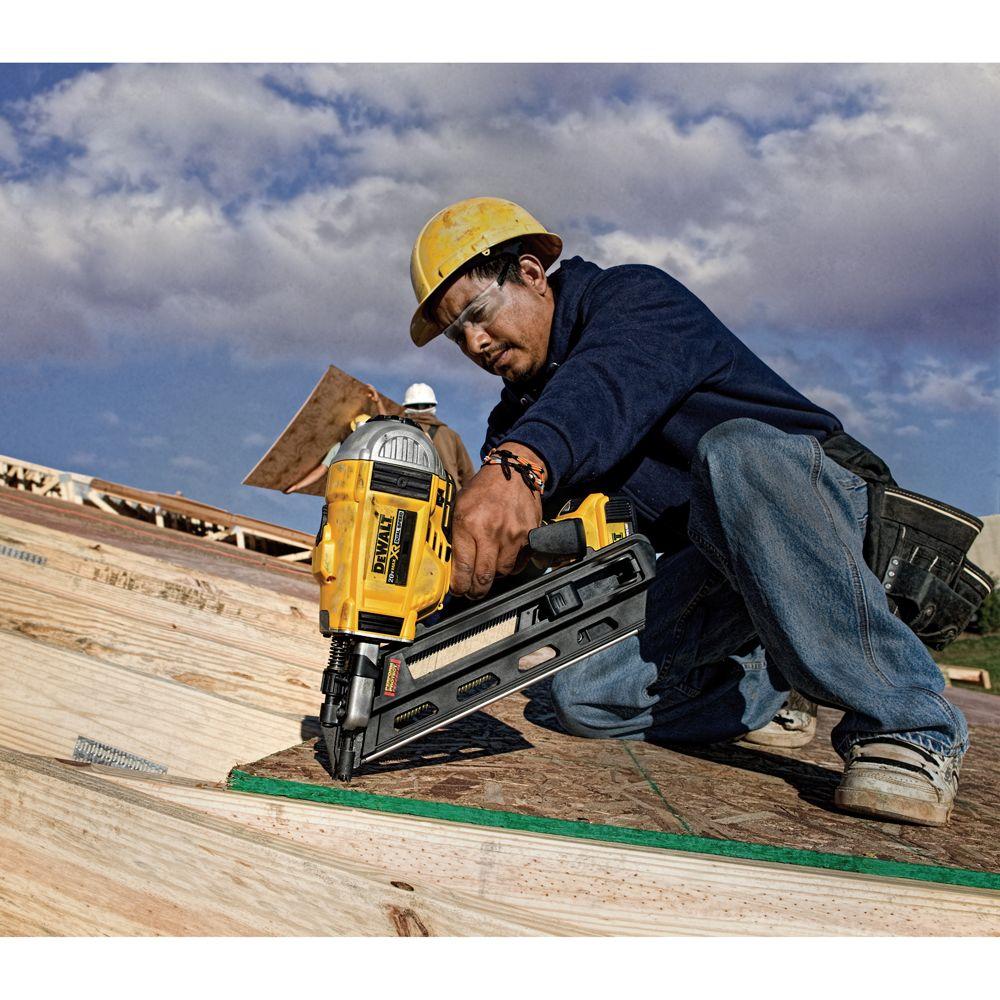
Framing nailers are the workhorses of construction, built to assemble walls, decks, and subfloors with speed and strength. They drive thick, long nails into dense lumber, making them essential for structural projects.
Choose the Right Nail Angle
Framing nailers use 15°, 21°, 28°, or 30° collation angles, each affecting nail type, capacity, and access:
- 15-degree: Holds full round-head nails, highest nail count, preferred by building codes, but heavier and harder to maneuver overhead.
- 21-degree: Still uses full heads, lighter than 15°, better for tight corners.
- 28°–30°: Uses clipped or offset heads to save space; allows dual strips for less reloading. Some codes prohibit clipped heads in structural framing.
Power and Portability Options
- Pneumatic (e.g., NuMax SFR2190): Reliable, powerful, costs ~$130. Requires an air compressor.
- Cordless (e.g., DeWalt DCN692B, Milwaukee M18): No hose, ideal for remote sites. Prices range from $389–$429.
- Gas-powered (e.g., Paslode 906300): Compressor-free, high power, great for roofs and decks. ~$399.
Pro Tip: Use sequential firing for precision, bump-fire for speed on large framing jobs.
Finish Nailers for Interior Trim Work
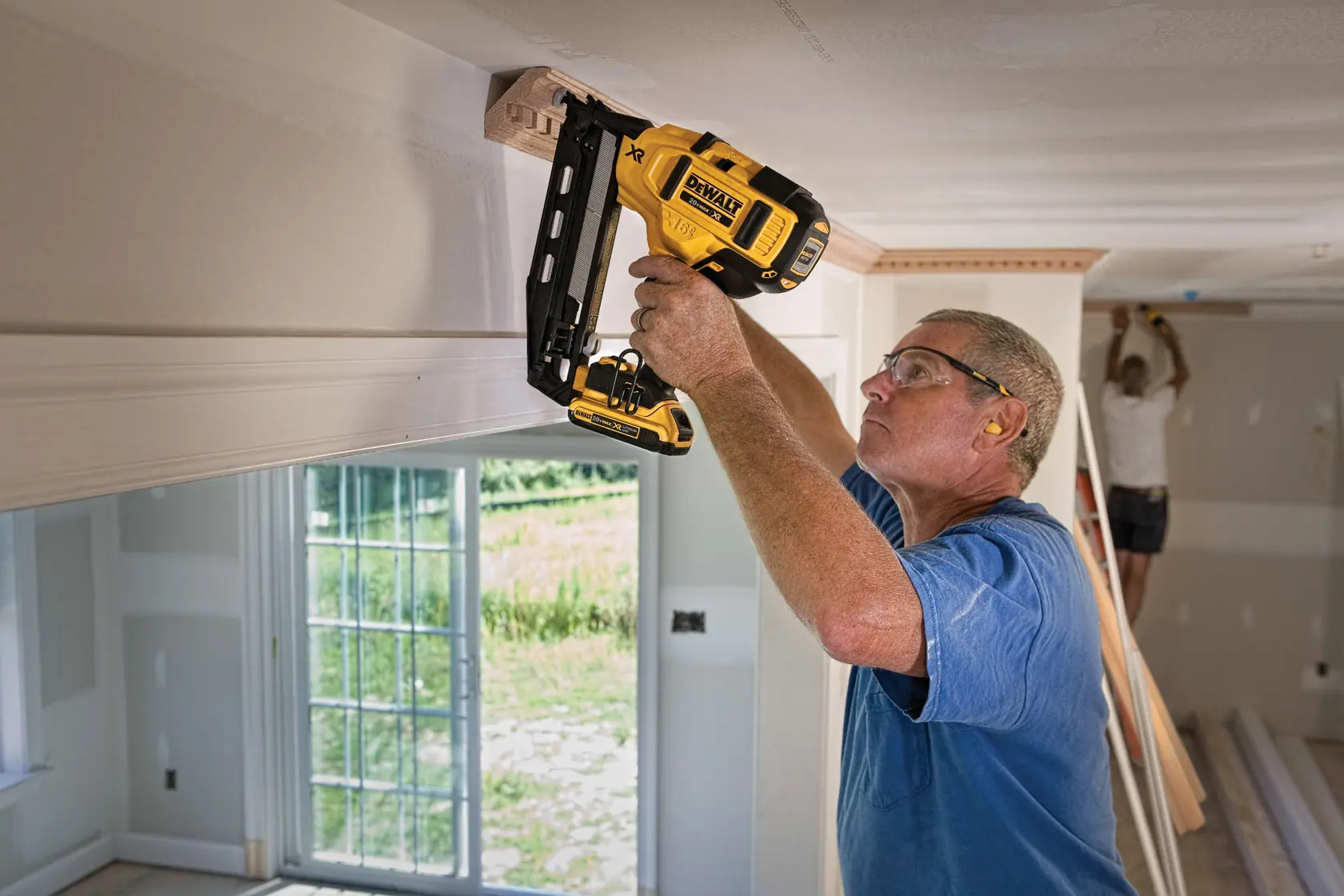
When installing baseboards, crown molding, or cabinetry, finish nailers deliver strong holding power without ruining the wood’s surface. They strike the balance between strength and discretion.
15-Gauge vs. 16-Gauge Nails
- 15-gauge: Thicker, stronger hold, ideal for dense trim. Leaves slightly larger holes.
- 16-gauge: Slightly thinner, less visible damage. Great for softer woods and detailed work.
Both require filling and sanding but offer far better grip than brad nails.
Top Models and Features
- Metabo NT65MA4: Pneumatic, selective actuation, tool-less clearing. ~$179.
- DeWalt DCN660D1: Cordless, brushless motor, LED lights. ~$419.
- Bostitch BTFP71917: Maintenance-free motor, precision driving. ~$219.
- Freeman FN1665: Compact nose, award-winning guidance system.
Avoid splitting: Pre-drill or set depth carefully when nailing near wood ends.
Brad Nailers for Light-Duty Projects
Brad nailers use 18-gauge nails, thinner than finish nails, making them perfect for delicate trim, cabinet assembly, and thin wood panels where minimal surface damage is key.
When to Use a Brad Nailer
- Reinstalling baseboards
- Securing thin moldings
- Light furniture assembly
- Paneling in tight spaces
They leave small holes, often needing no filler, and rarely cause splitting.
Recommended Models
- Makita AF506: Lightweight (2.9 lbs), aluminum body, air duster. ~$171.
- Metabo NT50AE2: Pneumatic, 360° exhaust, non-marring tip. ~$99.
- Ryobi P320: Cordless, low-nail indicator. ~$149.
- Freeman FN1850D: Ergonomic, tool-free depth adjustment.
Best for: Indoor projects where portability and precision matter.
Pin Nailers for Invisible Fastening
Pin nailers use ultra-thin 23-gauge headless pins, leaving almost no visible mark. They’re the go-to for fine woodworking where fasteners must stay hidden.
Ideal Applications
- Furniture joints
- Cabinet face frames
- Decorative moldings
- Glue assist (holds pieces while drying)
Limitation: Very low holding power. Not for structural use.
Key Features
- No filler needed: Pins are nearly invisible.
- Lightweight design: Easy to handle for detailed work.
- Model Example: Freeman P635B, compact with high maneuverability.
Use Tip: Pair with wood glue for strong, seamless joints.
Siding Nailers for Exterior Installations
Siding nailers are optimized for vinyl, fiber cement, wood siding, and fencing. They drive nails 1-1/4″ to 2-1/2″ long and often use coil-fed systems for high capacity.
Critical Features
- Depth control: Prevents cracking soft siding or over-driving into wood.
- Side-load magazine: Faster reloads on the job.
- Transparent bucket: Monitor nail levels without stopping.
Top Picks
- Bostitch N66C: Soft rubber footing protects wood. ~$329.
- Metabo NV65AH2: Air blower, lightweight (4.8 lbs). ~$397.
- Freeman PCN65: Contact actuation, tool-free depth. ~$163.
Avoid damage: Use depth control to ensure nails are flush, not sunken.
Roofing Nailers for Fast Shingle Laying
Roofing nailers are built for high-speed installation of shingles, underlayment, and house wrap. They use coil or canister magazines to minimize reloads on steep, exposed roofs.
Fastener Specs
- Nail length: 0.75″ to 1.75″
- Design: Easy to remove, unlike siding nails, since shingles are replaced often.
Performance Needs
- High driving force: For multiple shingle layers.
- Durability: Resists weather and frequent use.
- Models: RCN45 (34% more power), SCN25RBC (cap fastening system).
Safety Note: Use only in well-ventilated areas if gas-powered.
Flooring Nailers for Hardwood Installation

Flooring nailers drive cleats (L- or T-shaped fasteners) through hardwood planks and into subfloors. They’re essential for thick, solid wood flooring.
How They Work
- Pneumatic + mallet: Air pressure starts the drive; a hand mallet finishes it.
- Alternative: Staple guns for thinner flooring (less force, faster).
Cleat vs. Staple Debate
- Cleats: Better for thick hardwood, more stable.
- Staples: Faster, less force, but may not hold as well in dense wood.
Pro Tip: Rent a flooring nailer for one-time jobs. It’s expensive to buy and store.
Palm Nailers for Tight Spaces
Palm nailers fit in your hand, not in a holster. They’re designed for corners, narrow gaps, and metal connectors where standard nailers can’t reach.
Design Advantages
- Single-nail loading: Manual feed, slower but precise.
- Rounded body: Fits between joists, behind pipes.
- Reduced fatigue: Better weight balance than angling a full-size gun.
Best Use Cases
- Installing joist hangers
- Nailing in tight wall cavities
- Detail work near cabinets or trim
Ideal Pairing: Use with a framing nailer for full project coverage.
Staple Guns for Soft Materials
Staple nailers drive heavy-duty staples into upholstery, carpet, paneling, and wires, where nails would tear or split.
Why Staples Work Better
- Distribute force: Less likely to rip soft fabric.
- Less splitting: Safer for thin wood sheets.
- Versatile: Use for insulation, wiring, or furniture.
Top Models
- Arrow T50: Legendary durability. ~$32.56.
- Stanley TR150: Anti-jam, bottom-load. ~$41.39.
- DeWalt DWHTTR350: Dual-function (staples & brads). ~$22.99.
DIY Favorite: Corded or manual models are affordable and effective.
Power Sources: Air, Battery, Gas, or Cord?

The right power source affects mobility, power, and cost. Choose based on job site and frequency of use.
Pneumatic: Power and Consistency
- Pros: Most powerful, durable, low operating cost.
- Cons: Needs compressor and hose; less mobile.
- Best for: Framing, siding, high-volume work.
- Air Requirements: 70–120 PSI, specific CFM at 90 PSI.
Cordless: Ultimate Portability
- Pros: No hose, works anywhere, great for interiors.
- Cons: Battery weight, limited runtime, higher upfront cost.
- Best for: Trim, cabinets, remote locations.
- Models: DeWalt, Milwaukee, Ryobi.
Combustion (Gas): Power Without a Hose
- Pros: Pneumatic-level power, no compressor.
- Cons: Fuel cost, exhaust fumes, not for enclosed spaces.
- Best for: Roofing, framing on open sites.
- Example: Paslode XP series.
Corded Electric: Budget-Friendly Entry
- Pros: Cheap, simple, consistent power.
- Cons: Limited by cord, less powerful.
- Best for: Light DIY, occasional trim work.
Pro Choice: Pneumatic for pros, cordless for mobility.
Nail Gauge and Magazine Angles Explained
Understanding specs ensures you buy the right nails and avoid jams or damage.
Nail Gauge = Thickness
- Lower number = thicker nail:
- 10–12ga: Framing (strongest)
- 15–16ga: Finish (strong hold, visible holes)
- 18ga: Brad (light, small holes)
- 23ga: Pin (invisible, weak hold)
Magazine Angles: Not the Driving Angle
- 15°: Full round heads, high capacity, heavy.
- 21°: Full heads, lighter, better access.
- 28°–34°: Clipped heads, compact, fits tight corners.
Check compatibility: Not all nails fit all guns.
Firing Modes: Sequential vs. Bump Fire
Your trigger choice impacts safety and speed.
Sequential Firing
- How it works: Pull trigger for each nail.
- Best for: Precision, finish work, safety.
- Reduces accidents: No accidental rapid fire.
Bump (Contact) Firing
- How it works: Hold trigger, tap surface to fire.
- Best for: Framing, sheathing, speed.
- Risk: Higher chance of misfires or injuries.
Pro Tip: Many guns let you switch modes for versatility.
Coil vs. Strip Nails: Capacity vs. Convenience
Coil Nails
- High capacity: 200–300+ nails per coil.
- Best for: Roofing, siding, long runs.
- Drawback: Heavier tool, bulkier.
Strip Nails
- Lighter, easier reload: 50–100 nails per strip.
- Best for: Framing, trim, finish work.
- Faster access: Top or side load.
Choose coil for volume, strip for control.
Maintenance and Safety Must-Dos
A well-maintained nailer lasts longer and works better. Safety prevents costly injuries.
Cleaning and Lubrication
- Clean regularly: Dust clogs mechanisms.
- Oil pneumatic tools: Prevents piston wear.
- Check seals and O-rings: Replace if cracked.
Safety Gear and Practices
- Always wear safety glasses
- Use hearing protection on long jobs
- Disconnect power before clearing jams
- Use anti-dry fire triggers to prevent damage
Never point at yourself, even when unloaded.
Troubleshooting Common Nailer Problems
Fix issues fast to stay on schedule.
Jamming
- Cause: Debris, wrong nails, dry firing.
- Fix: Disconnect power, remove strip, clear with tool-less mechanism.
Misfires
- Cause: Low PSI, weak battery, misaligned nails.
- Fix: Check air pressure (70–120 PSI), recharge battery, realign strip.
Depth Issues
- Problem: Nails too deep or proud.
- Fix: Adjust depth dial; test on scrap wood first.
Inconsistent Driving
- Cause: Low air or dying battery.
- Fix: Verify PSI or swap batteries.
Pro Tip: Keep spare nails, oil, and cleaning tools on site.
How to Choose: Quick Decision Guide
| Project | Best Nailer | Fastener | Power Source |
|---|---|---|---|
| Wall Framing | Framing Nailer | 3.5″ Full Head | Pneumatic/Gas |
| Baseboards | Finish Nailer | 15/16ga | Cordless/Pneumatic |
| Cabinet Trim | Brad Nailer | 18ga | Cordless |
| Furniture | Pin Nailer | 23ga Pin | Pneumatic |
| Vinyl Siding | Siding Nailer | 2″ Coil | Pneumatic |
| Roofing | Roofing Nailer | 1.5″ Coil | Pneumatic/Gas |
| Hardwood Floor | Flooring Nailer | Cleat | Pneumatic |
| Upholstery | Staple Gun | Heavy Staple | Manual/Electric |
| Tight Corners | Palm Nailer | Single Nail | Pneumatic |
Final Tip: Rent specialty tools (flooring, roofing) for one-time jobs. Buy what you’ll use weekly.
Frequently Asked Questions About Nailer Gun Types
What is the most versatile nailer gun type for home use?
A finish nailer (15 or 16 gauge) offers the best versatility for home projects. It handles baseboards, crown molding, door casings, and cabinet trim with strong holding power. Pair it with a brad nailer (18 gauge) for delicate work, and you’ll cover most DIY needs.
Can I use a framing nailer for trim work?
No. Framing nailers drive thick, large-gauge nails that will split trim boards and leave obvious holes. They also lack the precision needed for finish work. Use a finish or brad nailer instead to avoid damaging wood and creating extra sanding work.
What is the difference between a brad nailer and a finish nailer?
Brad nailers use thinner 18-gauge nails for delicate trim and small holes. Finish nailers use thicker 15 or 16-gauge nails for stronger holding power on baseboards and heavy trim. Choose a brad nailer for thin materials and a finish nailer when you need more grip strength.
Do I need an air compressor for a nail gun?
Only pneumatic nailers require an air compressor. Cordless and gas-powered nailers operate independently. If you already own a compressor or want maximum power for heavy-duty work, go pneumatic. For portability and convenience, choose cordless.
What nail gauge should I use for baseboards?
Use 15 or 16-gauge finish nails for baseboards. These sizes provide strong holding power without excessive splitting. For thin or delicate baseboard profiles, an 18-gauge brad nailer may be sufficient and leaves smaller holes.
How do I prevent my nailer from jamming?
Keep the magazine clean, use only compatible nails, and avoid dry firing (firing without nails loaded). Oil pneumatic tools regularly and store them in dry conditions. If a jam occurs, disconnect power first, then use the tool-less clearing feature to remove debris.
Key Takeaways for Choosing the Right Nailer Gun Types
Matching the right nailer gun types to your project determines both the quality of your work and how long the tool lasts. Framing demands power and high nail capacity, while trim work requires finesse and smaller, less visible fasteners. Exterior projects like siding and roofing need coil-fed systems for volume, and tight spaces call for specialized tools like palm nailers.
Before buying, consider your most frequent projects, available power sources, and whether you’ll use the tool weekly or just once. Rent specialty nailers (flooring, roofing) for single jobs and invest in the tools you’ll reach for repeatedly. Understanding nail gauge, magazine angles, and firing modes ensures you buy compatible fasteners and work safely.
Your next step: Identify the two projects you tackle most often, then choose one nailer that handles both. Start with a finish or brad nailer for interior versatility, or a framing nailer if structural work dominates your workload.