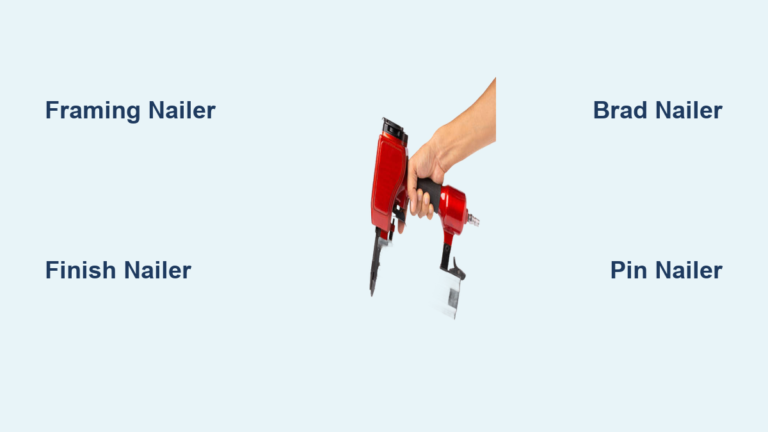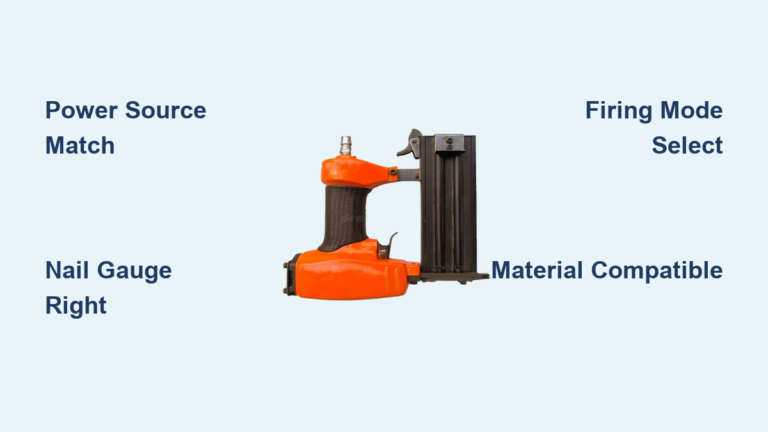

How Nailers Work: Quick Guide
You’re building a deck, framing a wall, or installing baseboards. Nails need to go in fast, straight, and deep. A hammer works, but it is slow. Enter the nailer: a tool that drives fasteners in a fraction of a second with consistent force. But how does a nailer work? Behind its simple trigger pull lies a precisely engineered system of stored energy, rapid release, and automatic reloading. Whether powered by air, electricity, or springs, every nailer follows the same core principle: convert stored energy into a focused hammering blow, then reset instantly for the next shot.
Unlike manual hammers, nailers deliver repeatable power at speeds up to 20 shots per second in high-end models. They are essential on job sites where speed and accuracy matter. In this guide, you will learn the inner workings of pneumatic, electric, cordless, and spring-loaded nailers, how their firing cycles differ, and what keeps them safe and reliable. You will also discover common failure points, safety modes, and how to choose the right type for your project.
Pneumatic Nailer Operation
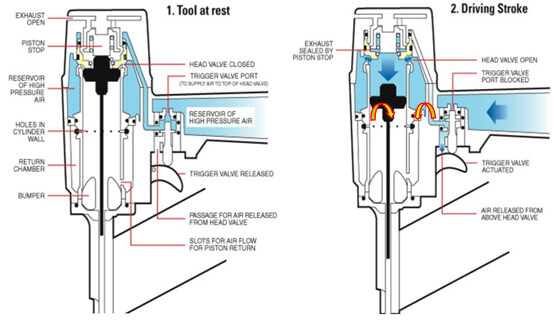
Pneumatic nailers dominate professional construction because they combine raw power, reliability, and speed. These tools rely on compressed air from an external compressor delivered through a hose. Inside, a piston-driven system converts air pressure into force with remarkable efficiency.
Air-Powered Firing Cycle
The core function of a pneumatic nailer happens in milliseconds. Here is how it works from trigger pull to reset:
1. Tool at Rest: Balanced Pressure
With the trigger released, high-pressure air flows around the head valve but is blocked from entering the main cylinder. A spring holds the head valve closed, keeping the piston in the up position. Equal pressure above and below the valve maintains stability, like a door sealed shut by balanced forces.
2. Trigger Pulled: Pressure Shift
When you press the trigger, the trigger valve opens, releasing air from the chamber above the head valve. This creates an imbalance: higher pressure now exists below the head valve, forcing it upward. Once open, pressurized air floods into the cylinder above the piston.
3. Downward Stroke: Nail Drives
The sudden rush of air above the piston pushes it down with explosive force. The piston drives the attached driver blade through the barrel, striking the nail head and firing it into the material. This entire stroke takes less than 50 milliseconds.
4. Compression and Return Air Capture
As the piston reaches the bottom, it compresses the air beneath it. This trapped air escapes through small ports into a return air chamber, storing energy for the reset phase.
5. Trigger Released: Automatic Reset
Releasing the trigger restores pressure above the head valve, closing it. With no new air entering the top of the cylinder, the pressurized air in the return chamber now pushes the piston back up. Exhaust air vents out, the next nail feeds into position, and the tool is ready again.
This cycle repeats as fast as you can pull and release the trigger, making pneumatic nailers ideal for high-volume tasks like framing or sheathing.
Key Components Inside
- Sliding Piston: The core force generator, moving up and down in the cylinder
- Driver Blade: Attached to the piston, it strikes the nail like a mechanical hammer
- Head Valve: Controls air flow to the piston and opens when the trigger is pulled
- Return Air Chamber: Captures compressed air during the downstroke to power the reset
- Trigger Valve: Initiates the cycle by venting pressure from the head valve
Without these components working in sync, the nailer would fail to fire or reset, which is why regular maintenance is critical.
Spring-Loaded Nail Gun Mechanics
Spring-powered nailers are simpler, cheaper, and require no external power source. They are ideal for light-duty jobs like trim repair or cabinetry where portability and quiet operation matter more than speed.
Mechanical Energy Storage
Instead of air or electricity, these tools use coiled springs to store energy. When you pull the trigger, a series of levers and cams compress the springs. Once tension reaches its peak, the hammer is released, striking the nail with spring-driven force.
Firing Sequence Step-by-Step
- Cam Rotates: Trigger pull turns a triangular cam
- Lever Depresses: The cam pushes one end of a lever down
- Hammer Rises: The other end of the lever lifts the hammer, compressing two main springs
- Scooper Plate Engages: A rotating plate catches a knob on the hammer, holding it in place
- Cam Releases Lever: The cam continues rotating, disengaging from the lever
- Hammer Releases: The scooper plate rotates further and drops the hammer
- Nail Fires: Springs expand instantly, driving the hammer down onto the nail
Unlike pneumatic models, spring-loaded nailers do not always cycle automatically. Some designs require manual reset after each shot, while others reload as you press the tool against the surface.
Pros and Limitations
- No hoses, cords, or batteries needed
- Lightweight and compact design
- Low cost and minimal maintenance
- Lower driving power compared to powered options
- Slower cycle time
- Not suitable for dense materials or long nails
These tools shine in DIY settings but fall short on heavy framing or production work.
Electric and Cordless Nailers

Electric nailers bridge the gap between portability and performance. They are popular in residential construction where air compressors are impractical or too noisy.
Corded Electric Nailers
Powered by standard 110V outlets, these models use an internal electric motor to drive the nail. The motor spins a rotating screw or activates a solenoid that pushes the driver blade down.
- Operation: Press the trigger, then the motor engages and the driver strikes the nail
- Depth Control: Many models allow adjustment of nail depth via a dial
- Nail Length Settings: Some support different fastener sizes automatically
These tools are lighter than pneumatic setups because there is no hose drag, but their power output is often lower. They work best for trim, molding, and light framing.
Battery-Powered (Cordless) Nailers
Using high-torque motors powered by Li-ion batteries, cordless nailers offer full mobility without sacrificing much performance.
- Power Source: 18V to 36V rechargeable battery
- Drive System: Motor drives a piston or solenoid, similar to corded models
- Cycle Speed: Slightly slower than pneumatic, but improving with newer technology
Cordless nailers are best for roofing, fencing, and deck installation, especially anywhere running a hose or cord is difficult. Despite higher upfront cost and limited runtime, these models are gaining popularity due to their ease of use and site flexibility.
Combustion Nailers: Power Without Hoses
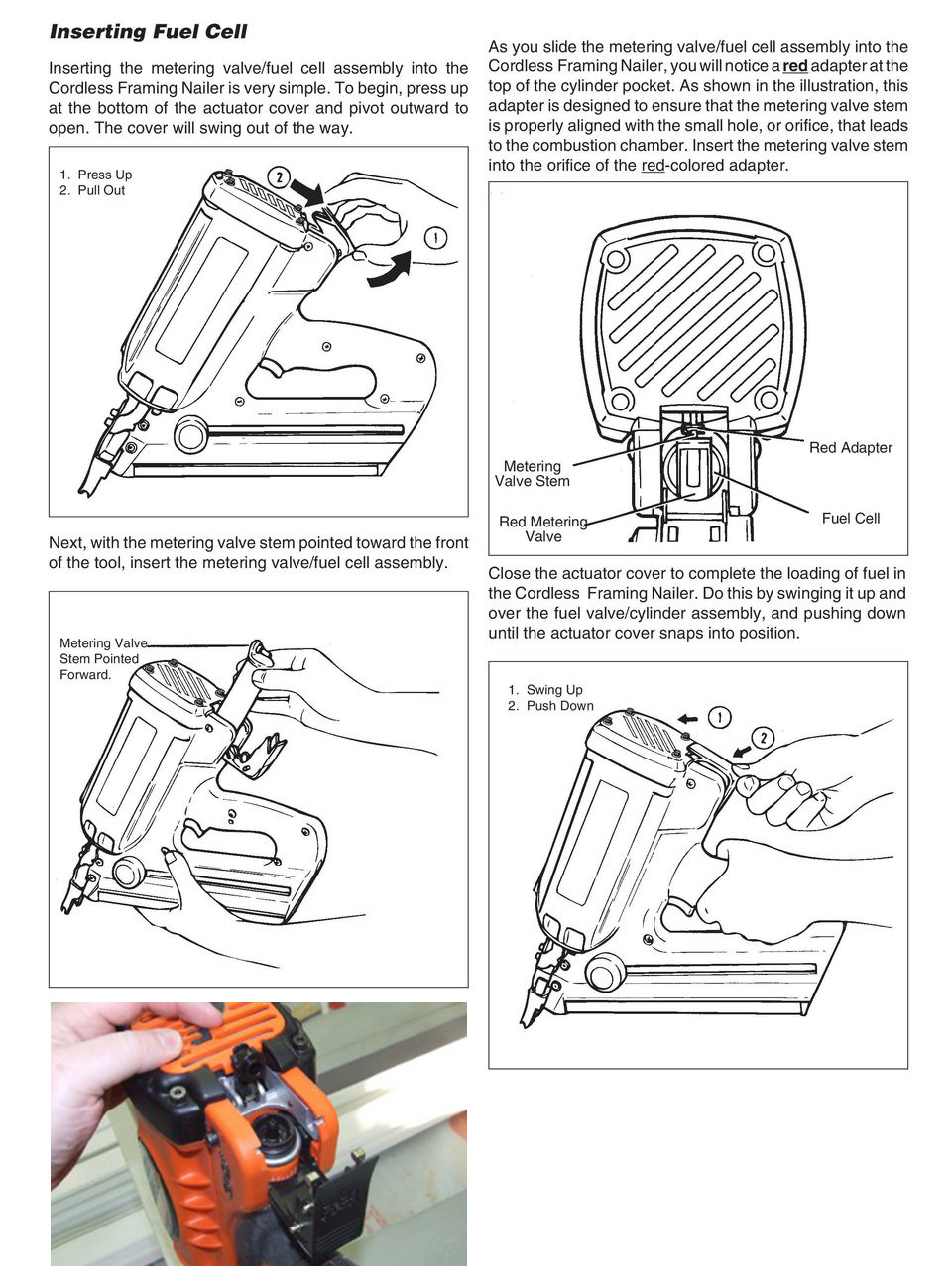
Combustion-powered nailers use a small fuel cell (usually butane) and a battery-powered spark to create a controlled explosion inside the tool. This explosion drives the piston downward, firing the nail.
- Fuel plus Spark equals Mini Explosion: Air-fuel mixture ignites, forcing the piston down
- Self-Contained System: No compressor, no cord, no battery dependency beyond ignition
- High Power Output: Comparable to pneumatic models
These tools are common in framing and decking, especially in remote locations. However, they require fuel management and produce more noise and fumes than other types.
Safety Systems and Firing Modes
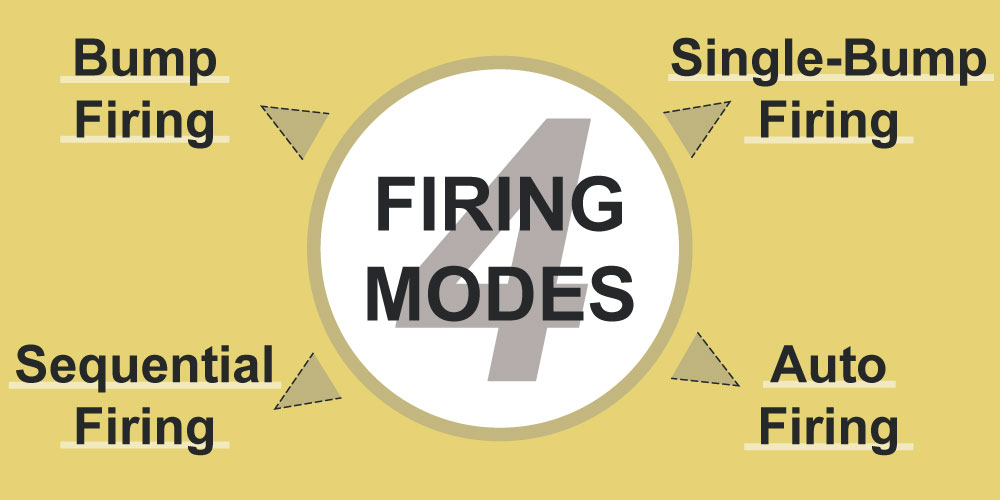
Nailers are powerful but dangerous if misfired. Modern tools include dual-trigger systems to prevent accidental discharge.
Contact Trigger (Bump Fire)
- How it works: Press the safety tip, pull the trigger, and the nail fires. Hold the trigger down and bump the tip against the surface to fire repeatedly
- Use case: High-speed nailing like roofing or sheathing
- Risk: Higher chance of unintended shots if dropped or bumped
Sequential Trigger
- How it works: Press the safety tip, pull the trigger, and the nail fires. You must release the trigger before the next shot
- Use case: Precision work like trim or cabinetry
- Safety: Much lower risk of accidental firing
Most professionals switch between modes depending on the task. Sequential is recommended for beginners.
Safety Tip Mechanism
All nailers include a contact safety tip that blocks firing unless the tool is pressed firmly against the work surface. This prevents nails from firing into the air during handling.
Maintenance and Troubleshooting
Even the best nailer will fail without proper care. Pneumatic models especially rely on clean, lubricated components to maintain speed and power.
Essential Maintenance Steps
- Lubricate Regularly: Add 3 to 5 drops of pneumatic tool oil into the air inlet daily on heavy-use sites
- Clean After Use: Remove dust and debris from magazine, cylinder, and driver
- Check O-Rings: Replace cracked or dried seals to prevent air leaks
- Inspect Hose and Fittings: Look for kinks, cracks, or loose connections
- Regulate Air Pressure: Match PSI to manufacturer specs (typically 70 to 120 PSI)
Neglecting oil leads to piston seizure, while ignoring debris causes jams and misfires.
Common Failures and Fixes
| Problem | Likely Cause | Quick Fix |
|---|---|---|
| Nail won’t fire | Clogged air passage, stuck valve | Disassemble and clean head valve |
| Weak drive | Low air pressure, worn seals | Check PSI and replace piston seals |
| Double-fire or jam | Bent nails, dirty magazine | Clear jam and inspect feed rails |
| Air leak (hissing) | Damaged O-ring or fitting | Replace seals and tighten connections |
| Trigger sticks | Debris in trigger mechanism | Clean and lubricate internal parts |
Always disconnect power or air before disassembling any nailer.
Choosing the Right Nailer

Not all nailers are equal. The best choice depends on your project’s demands.
Framing and Structural Work
- Best Tool: Pneumatic framing nailer
- Why: High power, rapid fire, durable
- Nail Size: 2 to 3.5 inch common nails
Trim and Finish Work
- Best Tool: 16-gauge finish nailer (electric or pneumatic)
- Why: Precision with minimal wood splitting
- Nail Size: 1 to 2.5 inch finish nails
Flooring and Decking
- Best Tool: Flooring nailer (pneumatic or coil-style)
- Why: Consistent angle and depth
- Nail Type: Cleats or ring-shank nails
Light Repairs and DIY
- Best Tool: Spring-loaded or cordless brad nailer
- Why: Affordable and easy to handle
- Nail Size: 5/8 to 2 inch brads
Frequently Asked Questions About How Nailers Work
What is the main difference between pneumatic and cordless nailers?
Pneumatic nailers use compressed air from an external compressor for power, delivering the highest speed and driving force. Cordless nailers rely on rechargeable batteries to power an internal motor, offering greater portability but typically less power and shorter runtime.
How fast can a pneumatic nailer fire?
High-performance pneumatic nailers can complete up to 20 full cycles per second. This rapid cycling allows professional users to drive nails far faster than manual hammering or slower automated methods.
Are spring-loaded nailers powerful enough for framing?
No. Spring-loaded nailers produce lower driving power compared to pneumatic or cordless models. They are best suited for light-duty tasks like trim repair, cabinetry, and small DIY projects, not heavy framing work.
What is the purpose of the safety tip on a nailer?
The safety tip prevents the nailer from firing unless it is pressed firmly against the work surface. This critical feature stops nails from launching into the air or at unintended targets during handling.
How often should I oil my pneumatic nailer?
Add 3 to 5 drops of pneumatic tool oil into the air inlet daily on heavy-use job sites. Regular lubrication prevents friction, wear, and piston seizure, keeping the tool firing reliably.
Can I use a cordless nailer for roofing?
Yes. Cordless nailers are ideal for roofing because they eliminate the need for hoses or cords, making them perfect for elevated or remote work. Battery technology continues to improve their driving power and cycle speed.
Final Thoughts on How a Nailer Works
So, how does a nailer work? At its heart, every nailer, whether pneumatic, electric, cordless, or spring-loaded, converts stored energy into a sudden, powerful strike. Pneumatic models use compressed air to drive a piston. Electric and cordless versions rely on motors and solenoids. Spring-powered tools store energy in coiled metal. All reset automatically or semi-automatically, allowing rapid, repeatable nailing.
Key takeaways:
– Pneumatic nailers offer the most power and speed
– Electric and cordless models trade some power for portability
– Spring-loaded nailers are simple and affordable for light tasks
– Safety triggers prevent accidental firing
– Regular cleaning and lubrication prevent jams and extend tool life
Whether you are a pro contractor or weekend DIYer, understanding how your nailer works helps you use it better, fix it faster, and stay safe on the job. Choose the right type for your project, maintain it well, and you will drive every nail with confidence.