How to Clean a Paslode Framing Nailer
A dirty Paslode framing nailer can cause frustrating misfires, jamming, and weak performance—especially on dusty job sites where debris builds up fast. If your nailer struggles to drive fasteners smoothly or seems to be losing power, a deep clean is likely overdue. Knowing how to clean a Paslode framing nailer the right way restores function and extends the tool’s lifespan. Whether you use a Paslode Impulse or cordless gas model, routine maintenance is the key to reliable operation. Below, you’ll find step-by-step cleaning procedures, the tools required, and practical tips to avoid costly mistakes.
Essential Safety Precautions
Before touching any internal components, safety must come first. A framing nailer holds pressurized parts and sharp elements that can cause serious injury if mishandled.
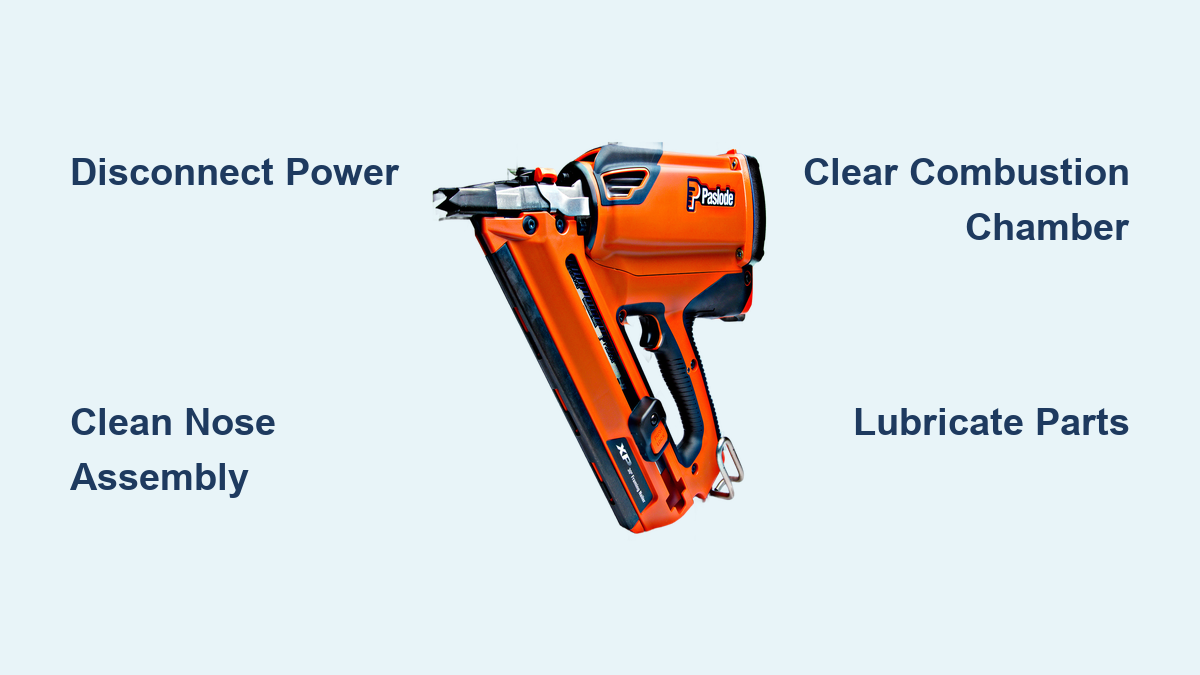
Disconnect Power Source
- For cordless models, remove the battery completely.
- For gas-powered units, take out the fuel cell.
- Pull the trigger after disconnecting power to fully depressurize the tool.
Work in a Well-Ventilated Area
Gas-powered Paslode nailers rely on flammable fuel cartridges. Always clean in an open space with good airflow, far from sparks or open flames.
Wear Protective Gear
- Put on safety glasses to shield your eyes from flying debris.
- Wear work gloves when handling internal parts.
- Use a dust mask if you’re cleaning in a debris-heavy environment.
Gather the Required Cleaning Tools
Having the right supplies on hand makes the job faster, safer, and more thorough.
Basic Cleaning Kit
- Compressed air canister for blowing out dust and debris
- Clean, lint-free cloth for wiping surfaces
- Small detailing brush or toothbrush for scrubbing tight areas
- Isopropyl alcohol (70% or higher) for dissolving sticky residue
- Needle or thin wire for clearing clogged ports
- Paslode-approved lubricant for re-oiling after cleaning
Never use WD-40 or generic household oils. They can damage internal seals and break down fuel system components over time.
Remove Debris from the Nose Assembly
The nose is where jams and buildup happen most often. A clean nose keeps fasteners aligned and firing reliably.
Clear the Nail Path
- Press the release latch to open the nose cap.
- Remove any stuck nails or fragments left inside.
- Blow compressed air through the magazine and nose to clear dust and shavings.
- Scrub around the driver blade and nail exit point with a small brush.
Inspect the O-Ring
- Check the nose O-ring for visible cracks or wear.
- Replace it if damaged to prevent misalignment and recurring jams.
Clear the Air Vent
- Locate the small vent hole near the nose piece.
- Gently clear any blockage with a needle.
- Blow air through the vent to confirm it’s fully open.
Clean the Combustion Chamber (Gas Models)
Paslode Impulse and cordless gas nailers need a clean combustion chamber for consistent ignition and full power.
Access the Combustion Chamber
- Unscrew the retaining screws and remove the top cover.
- Carefully lift the cover to expose the fan, spark plug, and chamber walls.
Remove Carbon Buildup
- Use a dry brush to gently sweep soot from the chamber walls.
- Wipe the fan blades with a cloth lightly dampened with isopropyl alcohol.
- Clean around the spark plug without touching the electrode with metal tools.
Check the Spark Plug
- Inspect for corrosion, cracks, or excessive wear.
- Blow dust away with compressed air.
- Replace the spark plug if the gap is wrong or the electrode is damaged.
Replace the spark plug every 10,000 nails as preventive maintenance to avoid unexpected ignition failures.
Clean the Magazine and Feed Mechanism

A clogged magazine causes misfeeds, slow cycling, and unnecessary downtime.
Remove the Nail Strip
- Empty every nail from the magazine.
- Pull out the feed spring and pusher plate.
Wipe Down Components
- Clean the magazine track thoroughly with a dry cloth.
- Use isopropyl alcohol on sticky tar or resin buildup.
- Inspect the feed pawl for bending or visible wear.
Reassemble and Test
- Reinsert the pusher plate and spring.
- Load a short strip of nails into the magazine.
- Manually cycle the mechanism to confirm smooth feeding.
Clean the Cooling Vents and Fan
Overheating can shut down gas-powered models mid-task, so airflow matters.
Locate Cooling Vents
- Find the vents on the side and rear of the tool body.
- These openings collect sawdust and lint during regular use.
Clear Vents with Air
- Blow compressed air through each vent to clear debris.
- Rotate the fan manually to access every blade.
- Wipe fan blades with a cloth dampened with isopropyl alcohol.
Never submerge the fan or motor housing in liquid. Moisture can destroy internal electronics and create safety hazards.
Lubricate Moving Parts After Cleaning

Cleaning strips away old oil, so re-lubrication is essential for smooth operation.
Apply Lubricant Sparingly
- Add one to two drops of Paslode-approved lubricating oil to:
- The driver blade shaft
- The piston seal area (if accessible)
- The feed mechanism pivot points
Avoid Over-Oiling
- Excess oil attracts dust and creates harmful sludge.
- Wipe away any oil pooling on visible surfaces.
Lubricate every 5,000 nails or after every thorough cleaning to keep parts moving freely.
Reassemble and Test Fire
Once cleaning is complete, proper reassembly ensures safe and reliable operation.
Reattach All Covers
- Replace the top cover and tighten every screw securely.
- Snap the nose cap back into its locked position.
- Reinstall the battery and fuel cell if removed earlier.
Perform a Test Cycle
- Load a short strip of nails into the magazine.
- Press the nailer firmly against a scrap wood block.
- Pull the trigger to fire three to five test nails.
Check for smooth firing, no misfires, a normal exhaust sound, and zero unusual vibrations. If problems remain, move to the troubleshooting section below.
Troubleshooting After Cleaning
Even a careful cleaning may not fix every issue. Here are common problems and quick fixes.
Nailer Won’t Fire
- Likely cause: dirty spark plug or clogged fuel line.
- Fix: recheck the spark plug condition and confirm the fuel cell is seated properly.
Intermittent Firing
- Likely cause: moisture in the fuel system or a weak battery.
- Fix: replace the fuel cell and battery, and always store the tool in dry conditions.
Jamming After Cleaning
- Likely cause: misaligned nose assembly or a damaged O-ring.
- Fix: recheck nose alignment and replace the O-ring if needed.
Preventative Maintenance Tips
A few simple habits will keep your Paslode nailer running like new for years.
Clean After Every Job
- Spend five minutes blowing out dust and wiping down the tool.
- Prevents buildup that leads to costly failures later.
Store Properly
- Place the nailer in a dry, dust-free case.
- Remove the fuel cell and battery for long-term storage.
Follow the Maintenance Schedule
| Task | Frequency |
|---|---|
| Clean nose and magazine | Every 1,000 nails |
| Clean combustion chamber | Every 5,000 nails |
| Replace spark plug | Every 10,000 nails |
| Lubricate moving parts | Every 5,000 nails |
When to Seek Professional Service
Some problems go beyond the scope of routine cleaning.
Signs You Need a Repair
- Persistent misfires even after a thorough cleaning
- Gas leakage from the fuel chamber
- Broken or visibly damaged internal components
- Electrical faults in the trigger system
Bring your Paslode nailer to an authorized service center if you suspect internal damage or if the tool fails to operate after cleaning.
Frequently Asked Questions About Cleaning a Paslode Framing Nailer
How often should I clean my Paslode framing nailer?
Clean the nose and magazine every 1,000 nails. Perform a deeper cleaning of the combustion chamber every 5,000 nails. Quick wipe-downs after each job also help prevent buildup.
Can I use WD-40 on my Paslode nailer?
No. Avoid WD-40 and generic household oils. They can damage internal seals and degrade fuel system components. Use only Paslode-approved lubricating oil.
What causes a Paslode nailer to jam after cleaning?
Jams after cleaning usually come from a misaligned nose assembly or a worn O-ring. Recheck the nose alignment and replace the O-ring if it shows any damage.
How do I know when to replace the spark plug?
Replace the spark plug every 10,000 nails as preventive maintenance. Also replace it if you notice corrosion, cracks, an incorrect gap, or ignition problems.
Is it safe to submerge any parts in cleaning solution?
No. Never submerge the fan, motor housing, or any electronic components in liquid. Moisture damages electronics and creates safety risks. Use isopropyl alcohol on a cloth instead.
What should I do if my nailer still misfires after cleaning?
If misfires continue after a thorough cleaning, inspect the spark plug and fuel cell connection. Persistent problems may require professional service at an authorized Paslode repair center.
Key Takeaways for Cleaning Your Paslode Framing Nailer
Regular cleaning is the single best way to keep your Paslode framing nailer reliable on the job. Start with safety by disconnecting power and depressurizing the tool. Clear debris from the nose, magazine, and combustion chamber using compressed air, brushes, and isopropyl alcohol. Re-lubricate moving parts with Paslode-approved oil, and reassemble carefully before test firing. Build a habit of quick cleanups after each job, and follow the maintenance schedule to prevent most common issues. Pick up your cleaning kit today and give your nailer the routine care it deserves.